









The Economic Implications of Industrial Action in the Banking Sector
The announcement of a three-day nationwide bank strike scheduled for September 28 to September 30, 2026, by the United Forum of Bank Unions (UFBU) marks a significant moment for the Indian financial landscape. As the organization representing roughly 90 percent of the banking workforce prepares to halt operations, the Finance Ministry and the Reserve Bank of India (RBI) have initiated contingency measures to mitigate the potential fallout. Industrial action of this scale creates ripples across the economy, impacting everything from retail consumer transactions to institutional treasury management.
For the Indian banking system, timing is a critical factor. The proposed strike coincides with the half-yearly closing period—a phase defined by rigorous financial reconciliation, provisioning for bad assets, and finalization of quarterly accounts. Given the importance of the September 30 deadline for institutional balance sheets, the strike presents operational challenges that extend beyond simple retail inconvenience. By proactively coordinating with the Controller General of Accounts and regional banking offices, the government is attempting to compartmentalize these risks to ensure that the systemic integrity of the financial sector remains intact during this period of labor unrest.
Strategic Disbursement of Government Salaries and Pensions
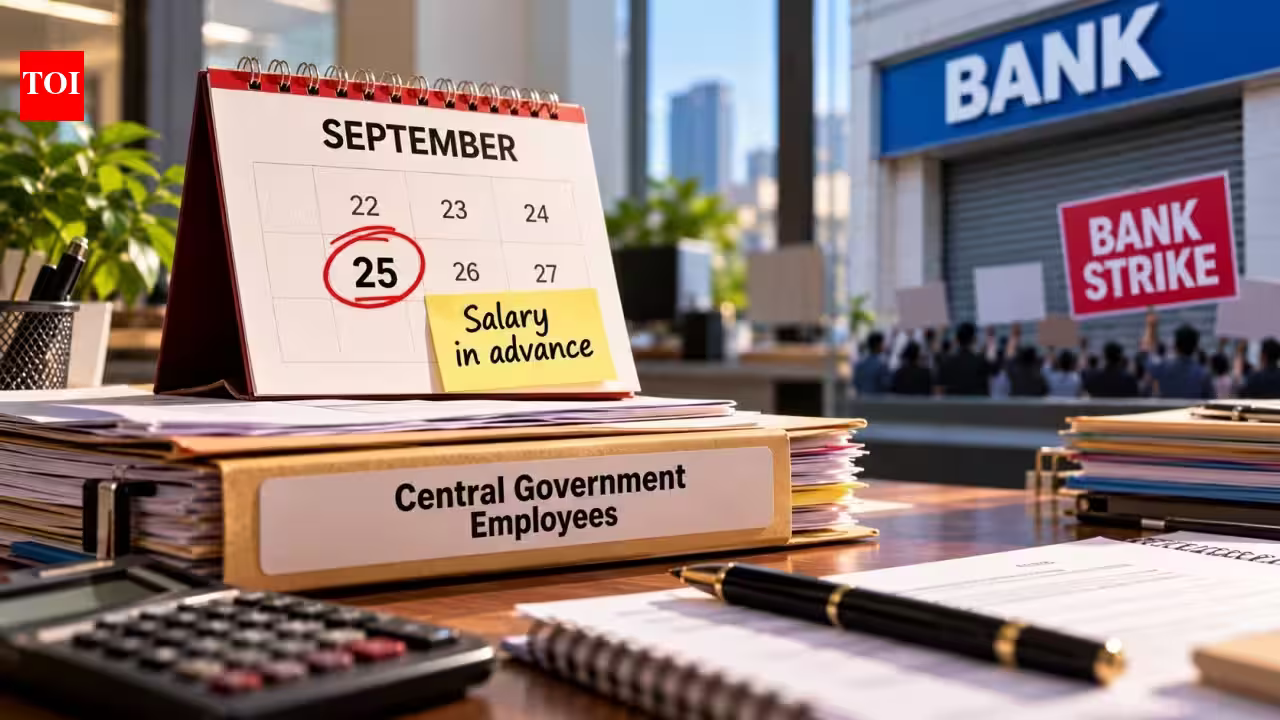
A key component of the government’s mitigation strategy is the acceleration of salary and pension payments. Recognising that a prolonged banking shutdown could hinder the financial stability of millions of central government employees and pensioners, the Ministry of Finance has issued clear directives to release these funds on September 25, 2026. This administrative maneuver serves a dual purpose: it provides liquidity to citizens before the disruption begins and reduces the pressure on branch tellers who would otherwise face a surge in footfall immediately preceding the strike.
The directive covers a wide spectrum of the state’s workforce, including the defense, postal, and telecommunications sectors. By mandating the disbursement of industrial wages and pensions ahead of schedule, the state aims to dampen the immediate impact of the strike on households. Crucially, the government has categorized these payouts as advances, with formal adjustments slated for the subsequent month. This structured approach allows the state to maintain fiscal continuity while signaling to public sector workers that their primary financial needs are being prioritized, even as labor negotiations remain gridlocked.
Operational Continuity and the Role of Digital Banking
In response to the expected labor shortage, the Ministry of Finance has issued an extraordinary directive to keep banks open on Sunday, September 27, 2026. This decision, approved by the RBI, reflects the urgency of maintaining operational flow during the days leading up to the strike. By utilizing the weekend to process transaction backlogs and clear the path for the end-of-month closure, the authorities are effectively shortening the “gap” in banking services.
Beyond physical branch operations, there is an industry-wide pivot toward digital channels. Public sector banks have disseminated comprehensive advisories urging customers to utilize UPI, internet banking, mobile applications, and ATMs. The Indian financial sector’s rapid digital transformation over the past decade acts as a primary buffer in this scenario. While physical cash transactions and specific branch-based clearances may suffer, the robustness of the Unified Payments Interface (UPI) ensures that the retail economy can continue to function. For the average consumer, this represents a significant shift from past eras, where a bank strike effectively paralyzed all financial movement. Today, the focus is on maintaining high-volume, low-friction digital participation.
Addressing the Core Demands of Bank Unions
The rationale behind the UFBU’s call to action lies in long-standing grievances that reflect broader trends in the Indian labor market. Chief among these is the demand for a five-day banking week. As the global service sector moves toward more flexible working arrangements, bank unions argue that their workforce, which operates under high-pressure conditions, deserves a standardized work-life structure. This demand is increasingly common in professional sectors where performance expectations have risen alongside digital demands.
Beyond the five-day work week, the unions are advocating for substantive improvements to pension benefits. Specifically, they are pushing for a uniform dearness allowance formula for all pensioners and the integration of employees currently under the National Pension System (NPS) into the older, defined-benefit architecture of the Old Pension Scheme (OPS). These demands mirror a growing national debate regarding the adequacy of post-retirement security. The persistence of these issues suggests a fundamental disconnect between the evolving workforce expectations and the current institutional framework. Resolution will likely require prolonged tripartite negotiations between the government, management, and union leadership, as the financial implications of switching pension models are significant for the long-term sustainability of public sector bank balance sheets.
Market Insights and Long-Term Stability
For market analysts, the upcoming strike is a litmus test for the resilience of the Indian banking sector. The ability of the RBI and Finance Ministry to maintain essential services under duress is a critical indicator of institutional maturity. While the strike will undoubtedly cause temporary friction, the combination of proactive treasury management and the widespread adoption of digital finance has significantly lowered the risk of widespread panic or economic paralysis.
However, the event also highlights the fragility of the human-capital component in a sector undergoing rapid technological transition. As banks continue to automate, the labor unions are clearly signaling that they demand a corresponding update in their working conditions and benefits. The outcome of the September 2026 strike will serve as a baseline for future labor negotiations in the public sector. For policymakers, the challenge is to balance the need for modernization and efficiency with the requirement to maintain a motivated and secure workforce. The government’s decision to advance salaries and keep branches open on the weekend is a tactical success, but the underlying tensions regarding pension reform and working hours remain a long-term variable that will continue to influence sector stability. As the industry moves closer to the September 30 closure date, the focus will remain on the efficacy of these contingency measures and the potential for a negotiated settlement that prevents further escalations in the coming fiscal quarter.
Disclaimer: This content is auto-generated for informational purposes only.
Source: Read Original News