







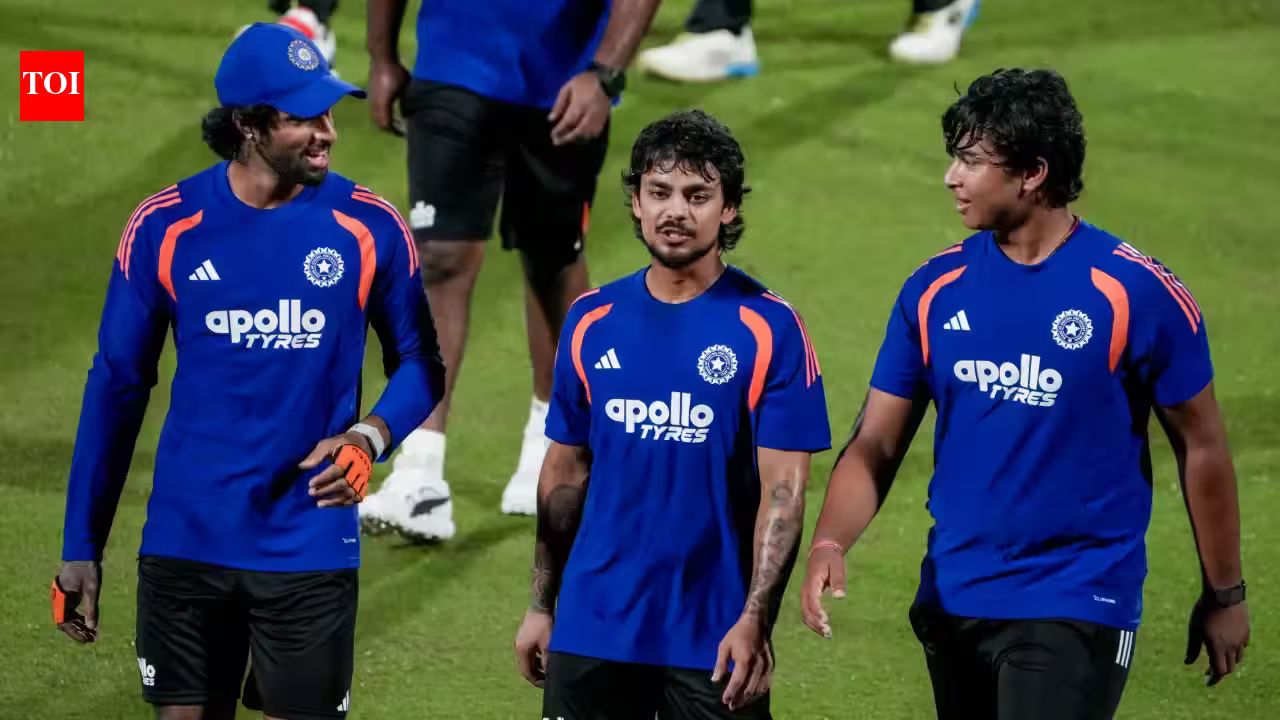
CRITICALLY-ACCLAIMED former Indian batter Mohammad Kaif has set the domestic cricket circuit abuzz with a bold, high-stakes prediction that could redefine the hierarchy of India’s T20 International lineup within the next half-year. As the landscape of modern cricket continues to shift toward hyper-aggressive strike rates and multi-dimensional skill sets, Kaif argues that the meteoric rise of teenage sensation Vaibhav Sooryavanshi is not merely a subplot, but an inevitable disruption to the current establishment.
According to Kaif, the emergence of Sooryavanshi will force a difficult conversation regarding the long-term viability of current stalwarts, specifically pointing toward vice-captain Tilak Varma and power-hitter Shivam Dube. While sentiment often dictates selection in the early stages of a talent’s career, Kaif believes the numbers are reaching a tipping point that no selector can afford to ignore.
The “Six-Month” Ultimatum
Speaking candidly on his YouTube channel, Kaif laid out the cold reality of professional sports: pedigree is no match for performance. “I understand that Tilak is the vice-captain, but vice-captains have also been dropped before,” Kaif noted. “I do not want to go there, but Shivam Dube is not scoring in every game and still has to prove himself. Fielding is also his weakness, and he is not a proper bowling all-rounder. After six months, either Tilak or Dube will be out. You will have to remove one, and Sooryavanshi will play. I am saying this right now.”
Kaif’s urgency stems from the tactical evolution he has observed in Sooryavanshi. Beyond his exploits in the T20 format, the youngster has shown a keen understanding of team needs by expanding his skill set to include bowling, a trait he demonstrated during the Duleep Trophy. By adding overs to his repertoire, Sooryavanshi is effectively making himself a “three-dimensional” prospect in an era where captains value the flexibility of part-time bowling options.
Analyzing the Statistical Explosion
The case for Sooryavanshi is not built on hype, but on overwhelming numerical evidence. In his first six T20Is of 2026, the teenager accumulated 193 runs at a staggering strike rate of 189.22, maintaining an average of 32.17. Perhaps more telling is the frequency of his boundary-hitting: he finds the rope every 3.4 deliveries and clears the fence once every 7.2 balls.
His performance in the Indian Premier League (IPL) further solidified his credentials as a generational talent. Finishing the season with 776 runs and a remarkable 72 sixes, Sooryavanshi struck at 237.51, a figure that places him in the highest echelon of T20 strikers globally. For a player who was initially earmarked as a “prospect for the future,” he is behaving very much like a cornerstone of the present.
The Dilemma: Varma vs. Dube
The scrutiny facing Tilak Varma and Shivam Dube is nuanced. Varma has maintained a respectable 2026 T20I record, scoring 395 runs at an average of 35.91. However, detractors point to the timing of his output. Much of his production occurred in dead-rubber matches or against lower-tier international bowling attacks. Furthermore, Varma has occasionally struggled to maintain tempo against spin, leading to stagnation in the middle overs. While he has proven his worth as a finisher against high-quality pacers like Jofra Archer, his role remains a subject of debate.
Shivam Dube, conversely, provides the raw power that is often the hallmark of a T20 middle-order specialist. With 415 runs in 2026 and a T20 World Cup performance that saw him strike at nearly 170, he is a known quantity. Yet, his utility as a bowler has been severely limited. Having bowled only 26 overs in 23 matches with an economy rate exceeding 12, Dube is currently functioning as a “batting all-rounder” who rarely contributes with the ball. As Kaif highlighted, if Sooryavanshi matures into a reliable part-time bowler, Dube’s primary advantage—his power-hitting—may no longer be enough to offset his deficiencies in the field and his limited impact with the ball.
A New Era of Aggression
The fundamental tension between the three players is one of style versus substance. Tilak Varma represents the “composed constructor,” a player who can adapt to collapsing wickets and anchor an innings. Shivam Dube represents the “specialized enforcer.” Vaibhav Sooryavanshi, however, appears to represent the future of T20 cricket: a high-octane aggressor who prioritizes boundary-hitting while simultaneously trying to add value as a bowler.
As the international calendar intensifies, the Indian team management will face a dilemma: do they stick with the established chemistry of the current squad, or do they embrace the raw, explosive potential of a teenager who is statistically outperforming his peers?
Kaif’s prediction serves as a wake-up call. The standard for inclusion in the Indian T20I side is being rewritten by the likes of Sooryavanshi. Whether or not the selectors pull the trigger in six months remains to be seen, but the numbers suggest that the gap between the established veterans and the young prodigy is closing faster than anyone anticipated. For Varma and Dube, the clock is ticking, and the message from the sidelines is clear: stay ahead, or step aside.
Disclaimer: This content is auto-generated for informational purposes only.
Source: Read Original News