








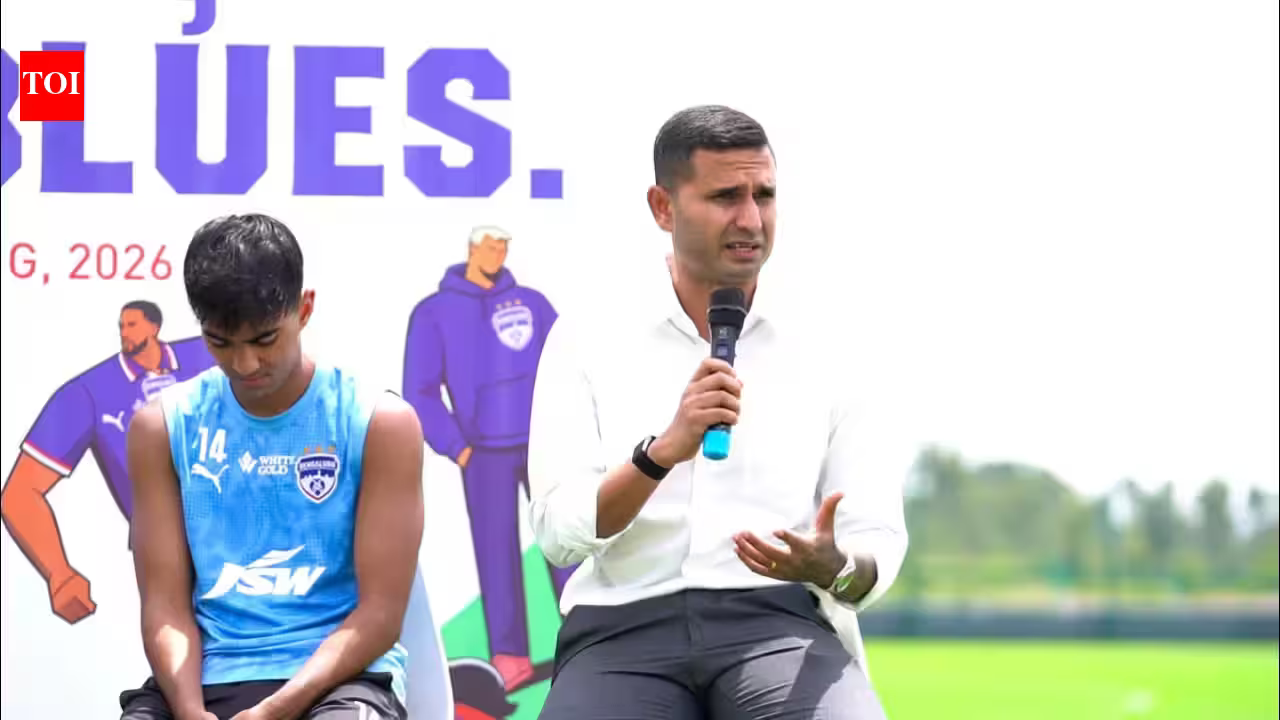
BENGALURU: As the Indian Super League (ISL) prepares for a transformative season, the landscape of domestic football is undergoing a seismic shift. With the league moving toward a club-led governance model, the pressure on individual organizations to shoulder commercial risks and strategic planning has never been higher. At the heart of this transition stands Bengaluru FC’s Director of Football, Darren Caldeira, who believes that while the shift presents daunting challenges, it is the necessary path toward long-term sustainability.
In an exclusive sit-down, Caldeira offered a candid assessment of the new era of the ISL, the realities of club economics, and why Bengaluru FC remains committed to an academy-first philosophy rather than chasing quick-fix solutions.
The Shift to a Club-Led Model
For years, the ISL was governed by Football Sports Development Limited (FSDL), which managed centralized commercial interests. Under the new model, clubs are now taking the reins, moving from being passive participants to active decision-makers.
“It’s a positive step,” Caldeira stated. “If you look globally, this isn’t a new phenomenon. While I don’t want to sugarcoat it—there are many formalities still to be closed—the air of optimism is palpable. We are the ones having the hard conversations now with broadcasters and sponsors. We’re getting our hands dirty, and while it is a steep learning curve, we’ve taken it up as a challenge.”
The shift in responsibility comes with a significant change in risk profile. Previously, revenue streams and franchise obligations were largely predictable. Now, clubs face the reality of market-driven profitability. Caldeira admits that while many owners are cautious about the unknown, the ability to control league marketing and streamline operational costs provides a new sense of agency.
Rethinking Recruitment and the Academy Path
In a league often defined by big-money domestic signings, Bengaluru FC has taken a conspicuously quiet approach this transfer window, opting not to sign any new domestic players. For Caldeira, this is not a sign of stagnation, but a testament to the club’s robust, long-term youth strategy.
“We have a very strong, robust youth academy that is churning out players year on year,” Caldeira explained. “This time around, we didn’t extend the contracts of four or five players, including some leaders, because we felt we had capable, hungry replacements coming from our B-team. For us, it’s a no-brainer. If we lose a quality player, we don’t need to look at free agents; we look at our own house.”
Caldeira emphasized that head coach Pep Muñoz shares this philosophy: age and nationality are secondary to performance. By focusing on internal development, the club is effectively insulating itself from the volatile market of inflated domestic player salaries—a bubble that Caldeira suggests is finally beginning to burst.
The Salary Cap Debate
Addressing the rampant speculation regarding player wages, Caldeira firmly supports the introduction of a universal salary cap. He believes it is time for the clubs to establish a unified financial boundary to ensure the league’s health.
“100 percent [we need a cap],” he noted. “We’ve had these conversations internally. The clubs are coming together to say, ‘This is the number, let’s all stay within that.’ It’s easier said than done, of course, because we don’t have the centralized contract system of an MLS. Every club here controls its own books. Creating a ‘bulletproof’ auditing system is the challenge, but the fact that the conversation has started is a very good sign.”
The OCI Question: A Cautionary Note
One of the most debated topics in Indian football circles has been the potential inclusion of Overseas Citizenship of India (OCI) players. While the idea promises an influx of talent, Caldeira remains skeptical of viewing it as a silver bullet for the national team’s woes.
“I don’t think the OCI conversation has been well thought through,” he argued. “It was driven by social media, but are these players coming for the right reasons? Are they prepared to commit to the long-term, potentially surrendering their current status to take an Indian passport? Furthermore, we shouldn’t assume that every OCI player is automatically better than our local boys. It’s a quick fix. The real focus must remain on the grassroots and our academies.”
Defining Success
As the ISL returns to a full home-and-away format, the expectations for Bengaluru FC are clear: reclaim the top spot. Caldeira is eager to see coach Pep Muñoz’s tactical vision flourish over a full, uninterrupted season.
“Success for us is running a sustainable model, having our academy stars continue to integrate, and, of course, winning trophies,” he said.
Ultimately, Caldeira believes the club’s fortunes are tethered to the national team. He highlighted the upcoming high-profile friendlies against teams like Brazil and Uruguay as pivotal moments for the sport. “We can do everything we can at the club level, but the national team and the league go hand in hand. If we want to capture the nation’s imagination, we need the national team to perform, and the league must provide the foundation to make that happen.”
As the dust settles on the off-season, Bengaluru FC enters the new campaign with a clear, calculated identity—proof that in a rapidly changing league, steady investment and homegrown talent may be the most valuable assets of all.
Disclaimer: This content is auto-generated for informational purposes only.
Source: Read Original News