







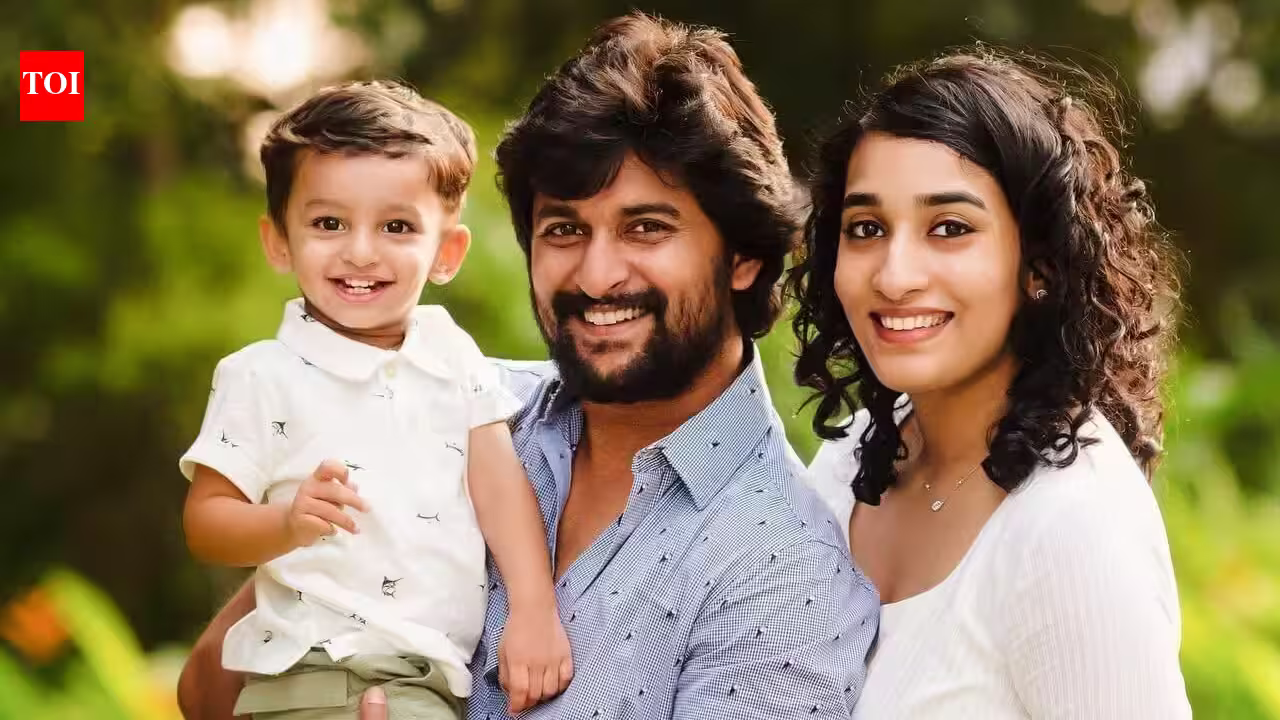
In the high-stakes, cutthroat landscape of Tollywood, where superstardom is often measured by opening-day box office hysteria, it is easy to forget that every icon began as a struggling newcomer. For Nani, currently basking in the massive release of his latest collaboration with director Srikanth Odela, The Paradise, the journey to the top has been anything but an overnight success story. While the trade analysts track the staggering Rs 19.56 crore opening figures, it was a poignant Instagram post by his wife, Anjana Yelavarthy, that truly captured the weight of the moment.
Her tribute wasn’t just a celebration of a new film; it was a candid, vulnerable excavation of sixteen years of hustle, uncertainty, and the quiet resilience required to turn a career into a legacy.
From Empty Theaters to Sold-Out Dreams
The cinematic landscape of 2024 is a far cry from the reality Nani faced when he first stepped into the industry. Anjana’s reflection took us back to 2009, a year that serves as a sobering bookmark for how far the actor has come. She shared a personal anecdote about the early days—a time when she and friends would skip college, eager to catch a Nani film, only to be met with the harsh reality of the industry: the film didn’t even secure a morning show.
That specific memory acts as a sharp contrast to the frenzy surrounding The Paradise. Today, the “Natural Star” label isn’t just a marketing moniker; it’s a shorthand for a promise kept between the actor and his audience. Anjana highlighted that the current turnout for The Paradise isn’t just about the hype or the star power; it is about the “trust” Nani has meticulously built, one film, one performance, and one fan at a time. It’s a rare commodity in an industry that thrives on volatility.
The Anatomy of a Sixteen-Year Climb
“This Rome was definitely not built in a day and I’m witness to it.” With those words, Anjana stripped away the glossy veneer of celebrity to reveal the sheer volume of labor behind Nani’s success. The phrase “Rome wasn’t built in a day” is a cliché, yet when applied to the career trajectory of an actor who navigated his way without the traditional crutches of nepotism or instant blockbusters, it rings with profound accuracy.
Nani’s career has been a marathon, not a sprint. He has moved from charming, smaller-budget rom-coms to the gritty, intense, and visceral world of mass-action dramas like Dasara and now The Paradise. Watching that evolution from the sidelines, Anjana’s testimony offers a rare glimpse into the internal life of an actor who treats every script with the fragility and intensity of a parent.
Films as Children: The Creative Burden
Perhaps the most touching aspect of Anjana’s message was her metaphor for Nani’s body of work. She described his films not as products or capital, but as his children. “I’ve watched every film be your baby,” she wrote. “Some waddled, some ran, some bumped their heads along the way.”
This perspective provides a necessary humanizing layer to the numbers-obsessed world of film criticism. When a film underperforms, the public often labels it a “flop,” but for an actor as deeply involved in the process as Nani, it’s a personal injury. Anjana’s note underscores that, regardless of the box office outcome, each project was treated with the same level of care. It explains the intensity Nani brings to the screen—that palpable sense of commitment that audiences have clearly recognized and rewarded.
The Rebirth of a Partnership
The Paradise marks the second time Nani and director Srikanth Odela have joined forces, following the massive impact of Dasara. Their creative chemistry is clearly a cornerstone of this new chapter. When an actor and director find a common language—a shared vision of the story they want to tell—it often translates into the kind of box office dominance seen this week.
With reports from Sacnilk indicating a robust start of over Rs 19.5 crore on opening day, the numbers suggest that the “baby” is doing more than just walking—it’s hitting the ground running. But for the actor’s family, the revenue is merely a byproduct of the journey. As Anjana noted, “Tonight, Paradise takes its baby steps.” There is a sense of calm in her tone; she isn’t looking at the charts, she’s looking at the man behind them.
The “Anthe” Philosophy: Acceptance and Gratitude
The conclusion of Anjana’s note—“It’s going to be good. Anthe. We’ve got you like no other”—is a masterclass in grounding. “Anthe” (which translates roughly to “That’s it” or “That’s all”) is a word that carries immense weight in Telugu culture, signifying finality and peace. By using it, she brushes aside the external noise of reviews, theater occupancy percentages, and social media discourse.
In a business that is notorious for its short memory, where an actor is only as good as their last Friday, Nani has managed to cultivate a foundation that feels immovable. Anjana’s tribute serves as a reminder that behind the larger-than-life posters and the thunderous background scores, there is a partnership that has weathered the doldrums of 2009 and emerged stronger in 2024.
For the fans, The Paradise is a cinematic event. But for Nani and his family, it’s a victory lap sixteen years in the making—a testament to the fact that when you build your career on the bedrock of genuine effort, the Rome you build is designed to last. As the film continues its theatrical run, the audience’s response is the ultimate validation of that long, difficult climb. The numbers will eventually settle, but the trust? That, as Anjana rightly pointed out, is already etched in stone.
Disclaimer: This content is auto-generated for informational purposes only.
Source: Read Original News