







The Strategic Significance of Accelerated Connectivity in India
The rapid transformation of India’s physical infrastructure is no longer merely a series of individual construction projects; it has evolved into a strategic economic engine. By systematically removing geographic barriers through tunnels, bridges, and expressways, the government is fundamentally altering the logistics landscape of the country. For a developing economy, time is a quantifiable cost. When a journey between two major industrial hubs is reduced from 33 hours to 12, or when a crossing that once took an entire day is bridged to allow for a two-hour transit, the impact cascades through every sector of the supply chain.
This massive investment cycle focuses on “time-cost efficiency,” which is the hallmark of a maturing economy. In the Indian context, historically hampered by fragmented logistics and suboptimal transport corridors, these infrastructure upgrades act as a force multiplier. They facilitate the seamless movement of goods, reduce fuel consumption, lower the overheads for small and medium enterprises, and expand the market radius for manufacturers. The current trajectory suggests a shift toward a high-velocity logistics model, which is essential if India is to transition from a localized consumption market to a global manufacturing hub.
Bridges and Tunnels: Engineering Through Geographical Constraints
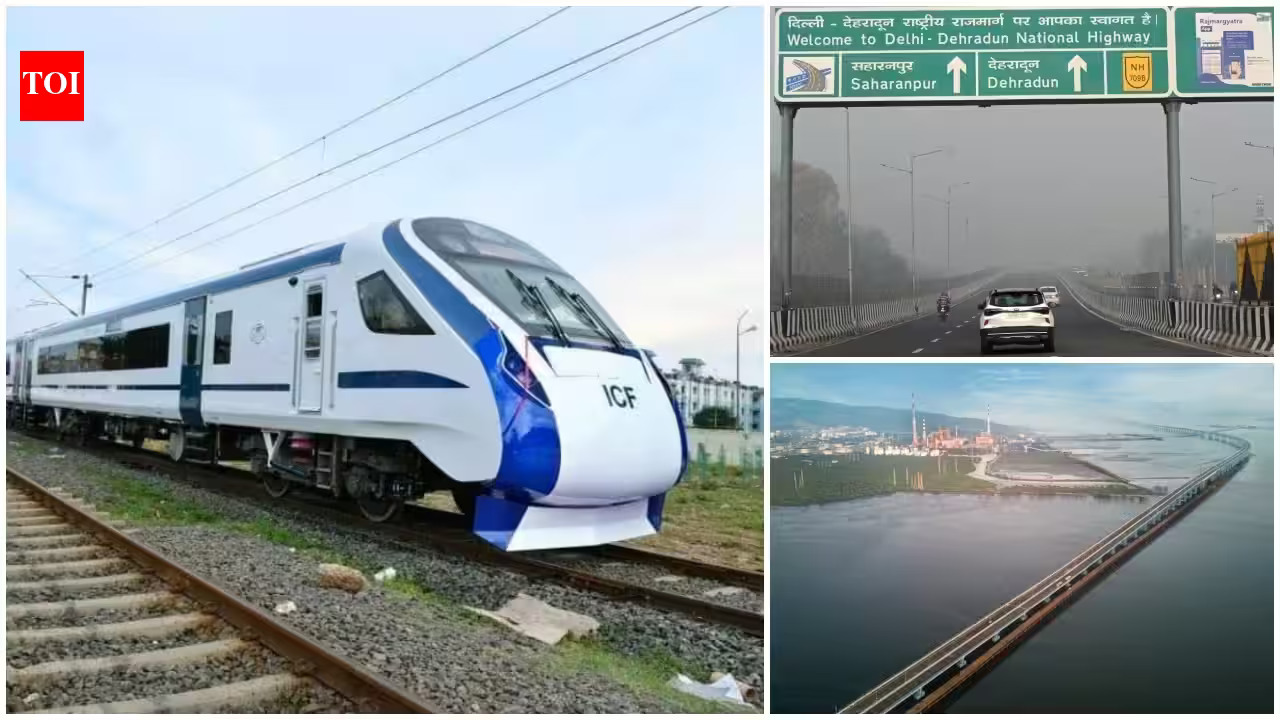
For decades, India’s rugged topography and vast river networks served as natural inhibitors to commercial flow. The construction of landmark structures like the Bhupen Hazarika Setu and the Bogibeel Bridge demonstrates a departure from traditional, slow-paced civil engineering toward high-impact infrastructure delivery. These projects have transformed the economic viability of remote regions, particularly in the Northeast, by integrating them into the national trade network.
The utility of these bridges extends beyond convenience; they are strategic assets that ensure all-weather access. Similarly, the deployment of advanced tunneling technology has revolutionized trans-Himalayan travel. The Atal Tunnel and the Dr. Syama Prasad Mookerjee Tunnel are not just engineering marvels; they are economic pipelines. By bypassing treacherous mountain passes, these tunnels negate the unpredictability of seasonal weather, ensuring that supply lines for food, medicine, and industrial supplies remain uninterrupted. For businesses operating in Jammu and Kashmir or the Northeast, these improvements provide a level of reliability that was previously unattainable, effectively lowering the risk profile of regional investments.
The Expressway Economy and Supply Chain Optimization
The proliferation of access-controlled expressways is perhaps the most visible change in India’s commercial landscape. High-speed corridors such as the Delhi-Mumbai Expressway are designed to function as arteries for a modern economy. By compressing travel time, these routes enable the “Just-in-Time” (JIT) manufacturing model, which is essential for inventory management and cost reduction. When a truck can complete a round trip in less than half the time, the asset utilization rate for logistics firms doubles, leading to lower freight costs and more competitive pricing for end consumers.
Furthermore, the creation of these economic corridors encourages the development of industrial clusters along the highway routes. As travel times between major metros and tier-II or tier-III cities decrease, land value and economic activity shift accordingly. This dispersal of economic activity is critical for sustainable growth, as it prevents the over-concentration of industry in a few saturated hubs. The Delhi-Amritsar-Katra and Bengaluru-Mysuru corridors serve as templates for how controlled road access can stimulate regional growth by connecting local markets to national production centers with unprecedented speed.
Railway Modernization: From Passenger Transit to Logistical Efficiency
While road infrastructure captures significant public attention, the structural overhaul of Indian Railways provides the backbone for long-distance, high-volume logistics. The acceleration of 549 trains in the latest timetable revision is a testament to the ongoing optimization of existing tracks. However, the introduction of the Vande Bharat series signifies a qualitative shift in rail service. By operating at higher average speeds with better acceleration and deceleration profiles, these trains are setting new benchmarks for productivity.
The impact of faster rail connectivity is particularly profound for the service and corporate sectors. Improved connectivity between hubs like New Delhi-Varanasi or the sleeper services connecting the Northeast with the mainland reduces the “distance premium” that businesses have long paid in terms of personnel travel and logistics. Moreover, the focus on modernizing rail corridors complements the efforts in road infrastructure. A synchronized approach where rail carries the bulk of heavy freight and high-speed passenger traffic, while expressways handle high-value, time-sensitive goods, creates a resilient and diversified transport network.
High-Speed Rail and the Future of Integration
The next frontier of Indian infrastructure is the introduction of high-speed rail, marked most notably by the Mumbai-Ahmedabad High-Speed Rail Corridor. This project is not merely an upgrade to passenger comfort; it is a catalyst for urban integration. High-speed rail shrinks the effective distance between cities, allowing for the creation of “mega-regions” where residents can work and live across distances that were previously considered impractical for daily or weekly commutes.
The announcement of seven additional corridors covering 4,000 km represents a long-term capital commitment that signals confidence in India’s economic growth trajectory. These investments, estimated at Rs 16 lakh crore, are designed to link major economic nodes, including the Delhi-Varanasi and Chennai-Bengaluru belts. Such projects are fundamentally different from conventional infrastructure; they require high-tech maintenance, specialized labor, and rigorous safety standards, all of which elevate the industrial capability of the nation.
Economic Implications and Future Outlook
The cumulative effect of these initiatives is a fundamental recalibration of India’s economic geography. By reducing transit times by 40-50% on major routes, the country is effectively increasing its total factor productivity. Businesses can now plan for longer-range logistics without the burden of excessive lead times. Additionally, the government’s focus on intermodal connectivity—ensuring that airports, ports, rail heads, and road networks operate in tandem—is crucial for the final phase of this transformation.
Looking ahead, the sustainability of this growth depends on the maintenance and operational efficiency of these assets. As India moves toward a more interconnected and time-efficient future, the focus must shift from construction to the management of these corridors. The transition toward high-speed, reliable, and all-weather transport infrastructure is a critical prerequisite for India to achieve its goal of becoming a multi-trillion-dollar economy. By removing the frictions of time and distance, the nation is laying the groundwork for a more inclusive and competitive business environment, where geography is no longer a disadvantage for development.
Disclaimer: This content is auto-generated for informational purposes only.
Source: Read Original News