








India and Kazakhstan Pivot Toward Economic Synergy and Strategic Cooperation
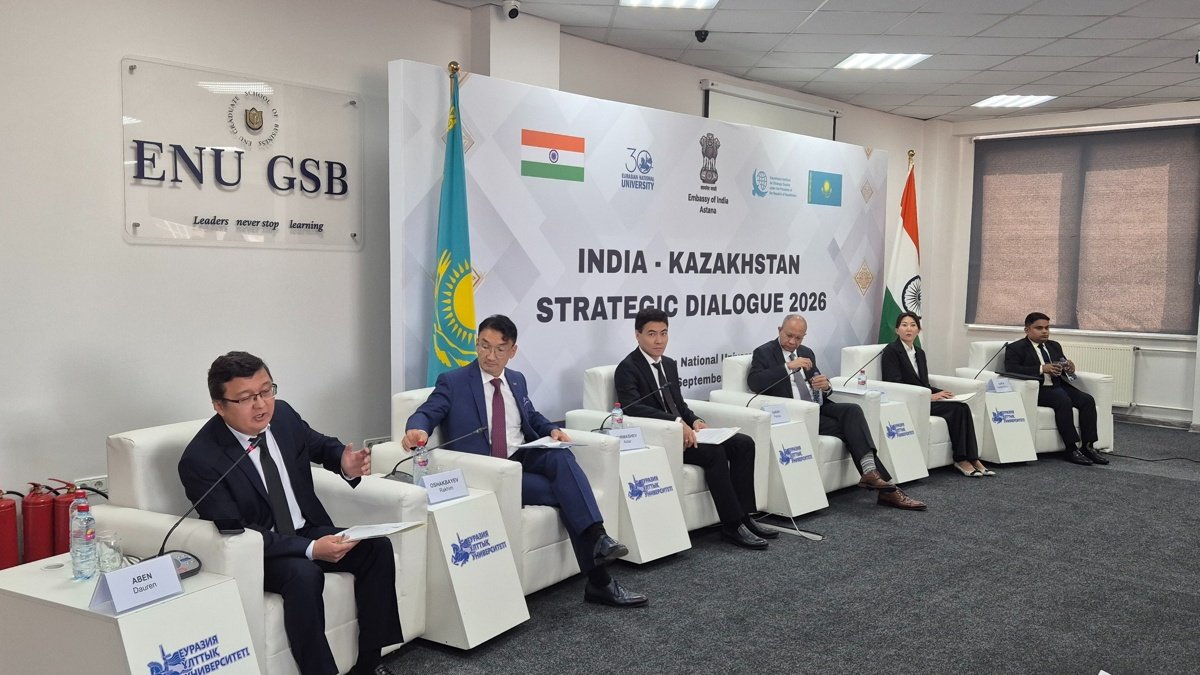
India and Kazakhstan are charting a robust roadmap to elevate their bilateral ties from historic friendship to a pragmatic, outcome-oriented strategic partnership. Recent high-level discussions between diplomats and strategic experts have underscored a growing consensus: the future of India-Kazakhstan relations lies in tangible economic integration, energy security, and regional stability.
Strengthening the Diplomatic Bedrock
The Ambassador of India to Kazakhstan, Y.K. Sailas Thangal, recently articulated the enduring nature of this bond, noting that the two nations are united by a deep commitment to peace and development. Since India became one of the first nations to recognize Kazakhstan’s independence in 1992, the relationship has matured significantly. The elevation of this partnership to a “strategic” level in 2009, followed by Prime Minister Narendra Modi’s pivotal 2015 visit, laid the groundwork for modern cooperation in uranium supplies, defense, and connectivity.
Ambassador Thangal emphasized that current diplomatic efforts are moving beyond mere symbolism. By facilitating multisector business delegations, pharmaceutical summits, and large-scale trade exhibitions—such as the massive business summit held in Chennai in September 2026—the embassy is actively fostering an ecosystem where commercial outcomes take precedence over isolated diplomatic events.
Broadening the Horizon of Cooperation
Dr. Pravesh Kumar Gupta of the Vivekanand International Foundation noted that while the political goodwill is strong, the next decade requires an aggressive pivot toward practical implementation. “A strategic partnership is not sustained only by the agreements between the government. It is sustained by the networks between societies,” Dr. Gupta remarked.
The potential for expansion is vast. Beyond the traditional trade in energy resources and critical minerals, both nations are exploring modern frontiers. Dr. Gupta identified artificial intelligence, drone technology, space-based applications, and cybersecurity as the new pillars of the partnership. Furthermore, he advocated for a deeper grassroots connection, urging for joint university research programs, increased interaction among entrepreneurs, and robust partnerships between think tanks to foster innovation.
The economic synergy is already manifesting in tangible ways; for instance, the recent shipment of Kazakh lentils to India via the Middle Corridor highlights a growing effort to streamline logistics and establish reliable supply chains between the two regions.
Regional Stability and Future Security
Addressing the security dimension, Ambassador Pankaj Saran, Convener of NatStrat and former Deputy National Security Adviser of India, highlighted the need for a collaborative approach to regional stability. In an era marked by shifting global geopolitics and rising international tensions, the ability of India and Kazakhstan to act as pillars of stability in Central Asia is critical.
Ambassador Saran argued that external and internal security are inseparable. By prioritizing diplomatic dialogue and negotiation, both nations can address cross-border challenges more effectively. Their shared commitment to peacekeeping and intelligence sharing serves as a vital safeguard in an increasingly volatile global environment.
As both countries move forward, the focus remains clear: translating historic cultural ties into a future-ready framework of trade, technology, and mutual security. With business leaders and policymakers working in tandem, the India-Kazakhstan corridor is poised to become a significant engine for growth in the evolving landscape of Eurasia.
Disclaimer: This content is auto-generated for informational purposes only.
Source: Read Original News