







Nagaland’s Cinematic Milestone: The Improbable Rise of ‘Angh’
There is a profound, almost surreal quality to the success of Angh. Emerging from the mist-covered, mountainous terrain of Nagaland—a state tucked away on India’s northeastern frontier with a population of under two million—the film represents a milestone for regional Indian cinema. Directed by newcomer Theja Rio, the project is filmed entirely in the Konyak language, a tongue spoken by a tribal community that remains largely unfamiliar even to the vast majority of Indians.
In a staggering feat for a debut feature where most of the cast had never stepped in front of a camera before, Angh recently captured the prestigious Platform Prize at the Toronto International Film Festival (TIFF).
A Voice from the Frontier
The Platform Prize is not merely another accolade; it is a globally recognized barometer for distinctive directorial voices. The TIFF jury lauded Rio for his “refreshing perspective,” noting the film’s ability to transport viewers into a cultural landscape that is effectively invisible on the international stage. For Rio, who reflects on the whirlwind of attention with a sense of genuine surprise, the win validates a gamble on a story that feels intensely personal.
“There were a lot of good films in the competition,” Rio says, candidly admitting that while his producers held onto a sense of certainty about their chances, he remained characteristically grounded and doubtful. His humility masks an eclectic creative spirit; before he ever picked up a camera, Rio harbored dreams of being a rapper. He humorously describes his younger self as “a kid from Compton instead of a kid from Nagaland.” Today, his artistic influences span a wide spectrum, from the rhythmic complexity of Black Thought to the minimalist, humanistic storytelling of legendary Iranian director Abbas Kiarostami.
Opening a Global Conversation
Beyond the critical acclaim, the TIFF victory carries significant strategic weight for the film’s future. Thanks to recent changes in international cinematic regulations, winning top-tier prizes at festivals like Toronto provides a direct pathway for consideration in the International Feature Film category at the 2027 Academy Awards. This bypasses the traditional reliance on a country’s specific national submission, effectively opening the door for stories from the margins to compete on the world’s biggest stage.
While this does not guarantee an Oscar nomination, it serves a more vital purpose: it places the Konyak-language narrative, and by extension the history of Nagaland, into a global conversation from which it has been historically absent.
Echoes of History
Set in the early 1960s, the film acts as a window into a rapidly shifting world. The narrative centers on Anghba, an aging hereditary chief of a Konyak village, and his son. The Konyaks, one of Nagaland’s 17 major tribes primarily located in the Mon district, possess a history as complex as it is storied. In Angh, the viewer is invited to contemplate a time when the traditional authority of the village chief was being tested by the encroaching pressures of a modernizing world.
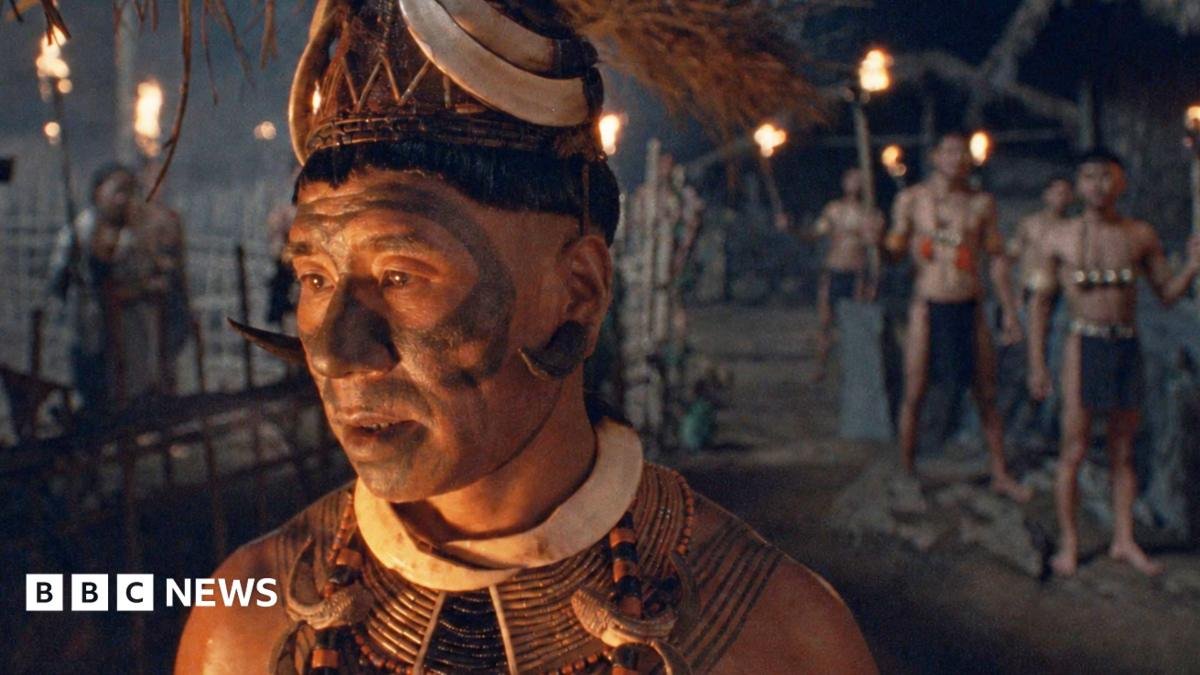
For many viewers, the film’s power lies in its stark, authentic visuals—including the haunting presence of older men adorned with facial tattoos, physical markings that whisper of the Konyaks’ historical practice of headhunting. Through Angh, Theja Rio has not only crafted a masterful debut but has also ensured that the heartbeat of Nagaland’s heritage echoes far beyond its mountainous borders.
Disclaimer: This content is auto-generated for informational purposes only.
Source: Read Original News