







The Evolution of Campus Recruitment Integrity
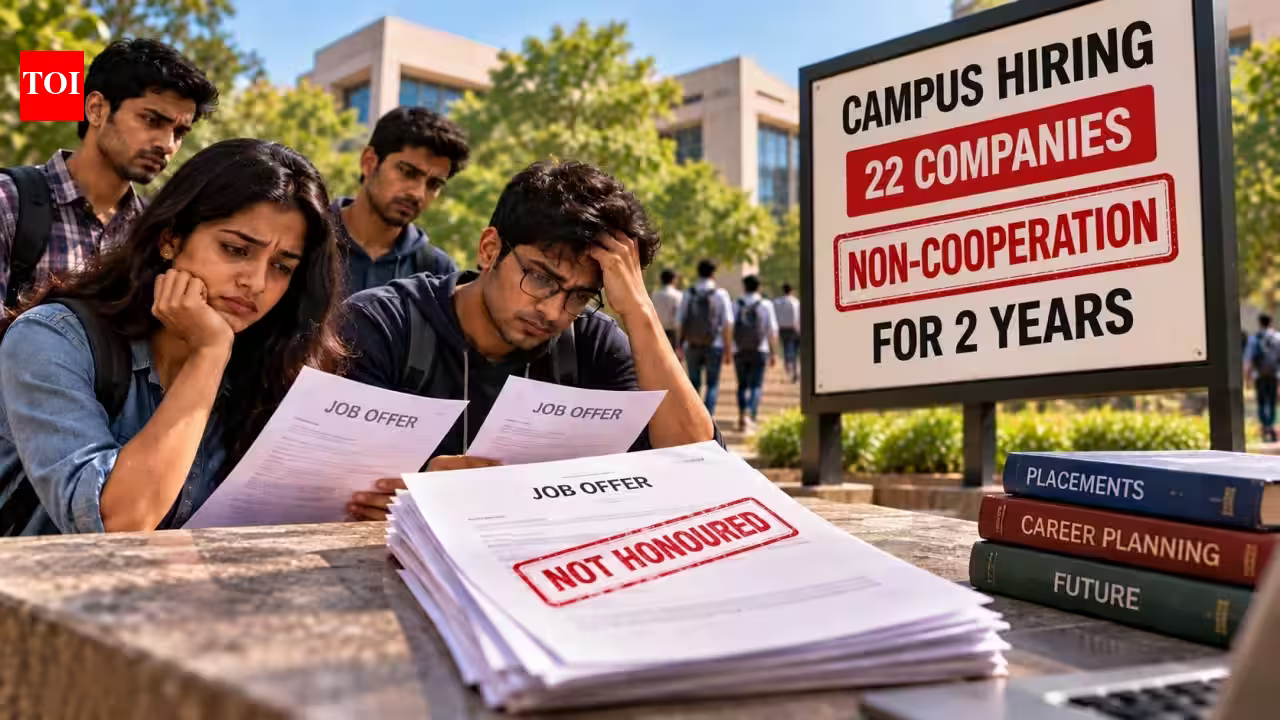
The recent decision by the All IITs Placement Committee (AIPC) to initiate a period of non-cooperation with 22 companies marks a significant shift in how India’s premier technical institutions manage their relationship with the corporate sector. By barring these firms from the campus recruitment process for two years, the IITs are not merely punishing individual entities; they are defending the fundamental social contract that governs the transition from academia to the professional world.
For decades, the campus placement model has functioned as the bedrock of the Indian job market for fresh graduates. It relies on a high degree of mutual trust: students commit to early hiring cycles, often foregoing other opportunities, while companies commit to onboarding these individuals upon graduation. When this cycle is disrupted by the mass withdrawal of job offers, it creates a systemic shock. The current situation, involving over 150 rescinded offers, represents the highest volume of such incidents in recent years, reflecting broader volatility within the global technology sector and its impact on the Indian labor market.
Understanding the Mechanics of Non-Cooperation
The terminology used by the AIPC—preferring “non-cooperation” over “blacklisting”—suggests a tactical attempt to remain professional while asserting institutional power. This distinction is crucial in a business context. Blacklisting implies a permanent or punitive exclusion, whereas non-cooperation signals a suspension of services due to a failure to meet contractual or ethical expectations. By consolidating this action under the AIPC rather than leaving it to individual institutions, the IITs are presenting a unified front. This prevents firms from engaging in “forum shopping,” where they might ignore the standards of one campus while courting students at another.
This centralized authority ensures that recruitment standards are enforced consistently across all 23 IITs. The deadline set by the committee—September 15 for onboarding, followed by the issuance of notices by September 30—provides a clear framework for accountability. By documenting these failures, the AIPC is signaling to the corporate world that the prestige of recruiting from these institutions comes with the responsibility of upholding the offers made during the placement season.
Market Volatility and the IT Sector Crisis
The primary driver behind this wave of rescinded offers is the broader recalibration of the global technology sector. As companies like Oracle and various startups navigate the pressures of AI-driven restructuring and efficiency mandates, human capital is often treated as a variable cost. In the Indian market, this trend has manifested as a cautious hiring environment, where even marquee recruiters are prone to pulling back offers in the face of shifting bottom-line requirements.
The reliance on campus hiring as a “just-in-time” recruitment strategy has backfired for these corporations. When companies treat entry-level hiring as a speculative exercise rather than a long-term talent investment, the resulting instability forces institutions to intervene. The inclusion of startups in the list of non-cooperation targets highlights the fragility of venture-funded hiring models, which often expand aggressively during boom periods only to contract sharply when capital markets tighten. This underscores a critical need for structural changes in how companies manage their pipeline of fresh graduate hires during periods of economic uncertainty.
The Human Cost and Institutional Remediation
Beyond the boardroom statistics lies the reality of the students affected by these sudden changes. A rescinded offer at the start of a professional career is a significant setback, often resulting in a scramble to find alternative employment in a shrinking market. The AIPC’s proactive approach in facilitating cross-referrals—where the CVs of affected students are shared with other prospective recruiters—is a vital mechanism for harm reduction.
While roughly 20-30% of these students have been successfully placed through these institutional interventions, the remainder are forced into the off-campus market, where they lack the structural support of the placement cell. The difficulty in tracking these graduates once they leave the campus environment creates a data void, complicating the AIPC’s efforts to gauge the full extent of the impact. This demonstrates that while academic institutions are willing to act as intermediaries, the ultimate resolution of such crises requires a more stable commitment from the private sector to adhere to their recruitment timelines regardless of internal restructuring.
Institutional Credibility and Future Implications
The move by the IITs to enforce stricter standards has far-reaching implications for the future of the Indian recruitment landscape. By demonstrating a willingness to lose potential recruiters, the institutions are prioritizing the long-term career security of their students over the quantity of job postings. This is a calculated risk; while it may reduce the total number of entry-level positions available in the short term, it enhances the credibility of the recruitment process.
Corporations that prioritize ethical recruitment practices will likely find themselves in a stronger position to compete for top-tier talent in the future. As the AIPC prepares to formally communicate its decision, the message is clear: campus recruitment is a partnership, not a one-sided transaction. Companies that fail to honour their commitments will find themselves isolated from a vital pipeline of engineering talent.
Ultimately, this period of non-cooperation will likely lead to a standardisation of contractual clauses in campus hiring. Universities across India may move toward more legally binding agreements with recruiters, ensuring that offer letters come with stronger protections against sudden withdrawal. As the Indian job market matures, the integration of accountability into the recruitment framework will be essential for maintaining the prestige and utility of the placement process for both the graduates and the corporate entities that seek to employ them.
Disclaimer: This content is auto-generated for informational purposes only.
Source: Read Original News