







A Structural Shift in India’s Energy Landscape
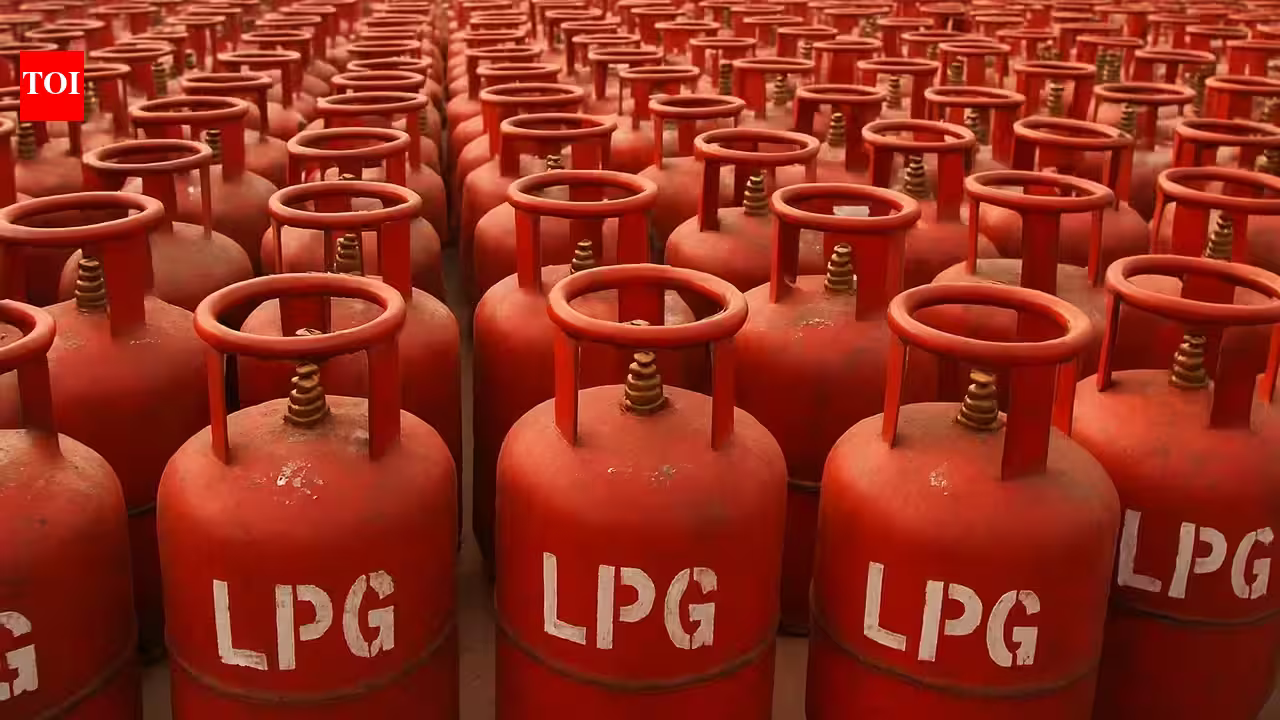
The recent contraction in India’s domestic Liquefied Petroleum Gas (LPG) customer base, which saw a decline of 6.2 million households between April and August, marks a significant inflection point in the nation’s energy trajectory. For over a decade, India had pursued an aggressive policy of expanding LPG access, culminating in a doubling of the consumer base from 148.6 million in 2015-16 to 333.9 million at the start of the current fiscal year. This growth was largely driven by the Pradhan Mantri Ujjwala Yojana, which sought to replace traditional biomass cooking fuels with cleaner alternatives. However, the current reversal—a 1% decline in the active customer base—is not merely a temporary fluctuation; it is a symptom of deep-seated geopolitical vulnerabilities and a strategic pivot in national energy policy.
The primary catalyst for this decline is the volatility in global energy markets, specifically the ongoing conflict in the Middle East. With approximately 90% of India’s LPG imports historically sourced from the Gulf region, the conflict has created a direct supply-side shock. As international logistics and export capacities have tightened, India’s state-run oil marketing companies have been forced to recalibrate their operations. The immediate consequence has been a halt on the issuance of new connections and a rigorous audit of the existing customer database. By leveraging Aadhaar-based biometric verification, companies have been able to prune the list of inactive accounts and eliminate duplicates, effectively streamlining a system that had become bloated during years of rapid, volume-driven expansion.
Geopolitical Vulnerability and Import Dependency
India’s energy security strategy is currently facing a harsh reality: domestic LPG production has failed to keep pace with soaring consumption. While consumption reached 31.3 million tonnes in FY25, domestic output stagnated at approximately 12.8 million tonnes. Initial projections for FY26 suggest a deepening deficit, with consumption expected to reach 28 million tonnes against a projected production of only 10.7 million tonnes. This widening chasm renders India exceptionally vulnerable to external supply shocks.
The reliance on imports is exacerbated by the physical limitations of India’s energy infrastructure, specifically regarding storage. Unlike crude oil, which can be stored in large-scale strategic petroleum reserves, LPG requires specialized, high-pressure infrastructure, including spherical tanks and underground caverns. With current storage capacity estimated at only 1.9 million tonnes—covering roughly 22 days of supply—India lacks a sufficient buffer to absorb prolonged disruptions in global trade routes. The high capital expenditure required for such facilities, combined with complex geological requirements, has slowed the development of a robust national storage grid. Consequently, when international supply chains falter, the domestic market feels the impact almost instantaneously.
The Pivot Toward Piped Natural Gas
Amidst these supply constraints, the government is accelerating the transition toward Piped Natural Gas (PNG). This move serves two strategic purposes: it reduces the logistical burden of transporting and managing millions of physical LPG cylinders, and it utilizes a more efficient distribution network. City gas distribution companies have responded by adding nearly 0.6 million new PNG customers in just four months, bringing the national total to 17.5 million.
The shift toward PNG is not uniform, but it is clear that urban and semi-urban centers are being prioritized as the primary beneficiaries of this transition. Approximately one-sixth of the decline in LPG customers can be attributed directly to this migration to natural gas. From a commercial perspective, PNG offers a more stable, metered supply, which mitigates the unpredictability of physical cylinder deliveries. However, this transition is also an admission that the previous model of universal LPG coverage, while successful in increasing numbers, is reaching a plateau. The cost-effectiveness and scalability of PNG make it the logical successor to LPG in densely populated regions, although the reach of this infrastructure remains limited compared to the ubiquitous reach of the existing LPG distribution network.
Regional Disparities in the Consumer Contraction
The reduction in the LPG customer base has not been evenly distributed across India. The data reveals distinct regional trends, with Southern India leading the decline by shedding 2.63 million customers, followed by Western India with a reduction of 1.62 million, and Northern India with 1.5 million. These regional variations likely reflect differences in the density of PNG infrastructure availability, the saturation levels of previous LPG drives, and local economic factors.
Northern India, despite witnessing a significant decline, maintains the largest share of the customer base with 99.3 million users. This region’s dominance is reflective of historical policy focus and density. The sharper decline in the south and west suggests that these regions may be transitioning more rapidly to alternative energy sources or that the administrative audits were more effective in these areas in identifying non-performing or duplicate connections. These regional disparities indicate that future energy policy cannot be monolithic. Government efforts will likely need to be tailored to specific regional challenges, balancing the immediate need for fuel availability in rural, harder-to-reach areas with the move toward infrastructure-heavy piped gas in urban hubs.
Long-term Implications for Energy Policy
The recent contraction serves as a necessary, if painful, correction for a system that had prioritized quantity over efficiency. The tightening of criteria—such as identifying households that already possess multiple connections or those that have gained access to PNG—will likely lead to a more sustainable and economically viable distribution network. By weeding out the “dead” or redundant segments of the market, the government can better manage its subsidy burden and improve the logistics of supply chain management.
However, the core issue remains the country’s structural dependence on imports. To move toward true energy autonomy, India must not only diversify its sources of LPG supply but also invest heavily in the infrastructure that allows for long-term storage and efficient distribution. The conflict in the Middle East has served as a stress test for the Indian energy sector, revealing that while the decade-long growth in LPG adoption was a monumental achievement in social welfare, it left the nation exposed to global volatility. Going forward, the integration of digital verification, the expansion of the PNG grid, and a more pragmatic approach to fuel mix will be the cornerstones of India’s attempt to stabilize its energy requirements. The contraction of the LPG market is not a sign of failure, but rather a pivot point toward a more digitized, infrastructure-driven, and resilient energy economy.
Disclaimer: This content is auto-generated for informational purposes only.
Source: Read Original News