







Navigating Global Uncertainties: The Indian Economic Outlook
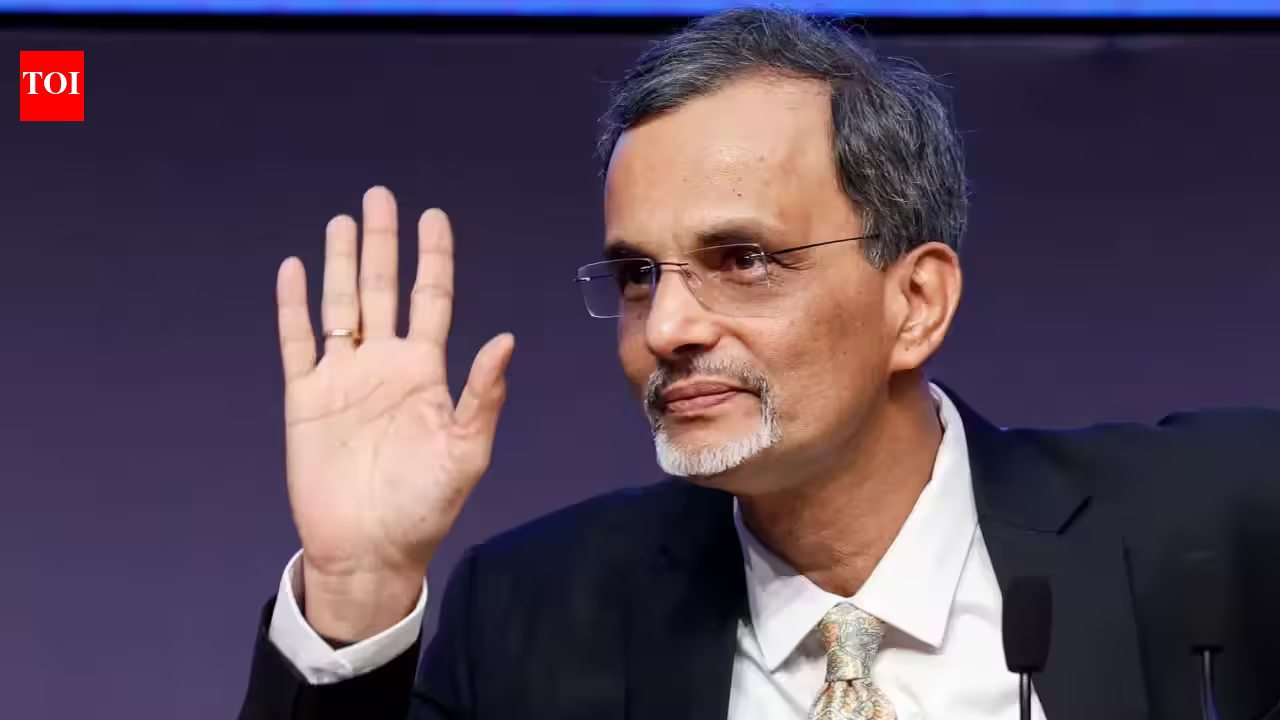
The trajectory of the Indian economy, often characterized by its robust seven percent growth rate, currently faces a series of complex, multifaceted challenges. While the nation has demonstrated resilience through significant digital public infrastructure reforms and consistent capital expenditure, Chief Economic Adviser V Anantha Nageswaran has underscored three primary headwinds that demand strategic foresight. As India pursues the ambitious goal of becoming a developed nation by 2047, the intersection of geopolitical shifts, energy price volatility, and the technological disruption posed by artificial intelligence requires a comprehensive reassessment of both public policy and private sector strategy.
The current economic landscape is defined by what the Chief Economic Adviser terms an “uneasy equilibrium” in trade relations with the United States. In a global environment where supply chains are increasingly weaponized and geopolitical alliances are shifting, India finds itself balancing the need for global integration with the necessity of protecting domestic industrial interests. The persistence of trade-related frictions serves as a reminder that the path toward global economic leadership is rarely linear. Addressing these frictions requires more than just diplomatic engagement; it demands a clear, long-term trade strategy that fosters deep-rooted partnerships while ensuring that the Indian domestic market remains competitive and secure.
The Imperative of Strategic Manufacturing and Trade Competitiveness
For decades, the global economic narrative often pitted the services sector against the manufacturing sector. In the Indian context, this debate is increasingly obsolete. Nageswaran emphasizes that the manufacturing sector serves a dual purpose: it acts as a engine for economic diversification and a critical pillar of national security. The persistent trade deficit, which hovers between 3.5 and 4 percent of GDP even when excluding volatile imports like oil and gold, highlights the limitations of an economy that relies heavily on external supply chains for essential finished goods.
However, the solution lies not merely in import substitution. True economic resilience is built on export competitiveness. Indigenization policies must be designed to facilitate the integration of Indian manufacturers into the global value chain. By focusing on smaller, strategically significant components—those that often become bottlenecks during global crises—India can carve out a specialized niche. This requires a transition from volume-based production to high-value, high-complexity manufacturing. The current focus on capital expenditure, while necessary, must be complemented by policies that reward innovation, process efficiency, and the development of domestic intellectual property to ensure that Indian firms are not just assemblers, but creators.
Attracting Foreign Investment in a Competitive Global Landscape
As developed economies aggressively compete for global capital to fuel their own re-industrialization efforts, India’s approach to attracting Foreign Direct Investment (FDI) must evolve. The window for attracting global manufacturing units looking to relocate or diversify away from China is finite. To capitalize on this, India must move beyond broad-based incentives and address the structural barriers that still impede the ease of doing business.
Nageswaran identifies three foundational pillars for long-term investment success: tax certainty, simplicity, and workforce development. Investors often prioritize predictability over temporary fiscal subsidies. A stable tax regime, coupled with robust investor protection mechanisms, provides the confidence necessary for large-scale, long-term capital commitment. Furthermore, as the nature of manufacturing shifts toward automation and precision, the availability of a highly skilled workforce becomes the primary determinant of investment destination. Aligning educational outcomes with industrial requirements is no longer an optional educational goal; it is an economic necessity that requires proactive collaboration between state governments, central agencies, and the private sector.
The Artificial Intelligence Challenge: Redefining the Labor Market
Perhaps the most disruptive headwind identified is the current absence of a cohesive artificial intelligence (AI) strategy. Unlike previous industrial revolutions that prioritized the migration of labor from agriculture to manufacturing, the AI era presents a unique tension between automation and employment. The Chief Economic Adviser warns that India must look beyond the glamour of frontier AI research and focus on the practical, ground-level implications for the workforce.
The strategy for India, given its demographic profile, must be dual-pronged. First, it requires the creation of AI-enabled roles, where the technology acts as a force multiplier for productivity. Second, it necessitates the preservation of “AI-insulated” jobs. Sectors that rely on human-centric interaction, such as hospitality, tourism, and elderly care, offer vast potential for labor absorption that machines cannot easily replicate. By directing human capital toward these services, India can leverage its domestic demand to provide sustainable employment. The focus should be on integrating AI into traditional industries—such as retail or local manufacturing—to enhance efficiency without necessarily displacing the human element that remains the bedrock of India’s growth story.
Strengthening Economic Security through Supply Chain Resilience
The global environment is currently characterized by high levels of variability. Climate factors, geopolitical tensions, and the sudden volatility of global energy prices act as consistent shocks to the Indian economy. Building economic security, therefore, requires the development of deliberate buffers. This is not a call for isolationism, but rather a call for calculated risk management.
India must invest in strategic stockpiles of critical commodities and foster an industrial ecosystem that is not overly dependent on any single source of supply for essential inputs. By developing domestic capabilities in the small, intermediate components that are currently susceptible to supply chain “choke points,” India can protect its larger production cycles from global instability. This approach necessitates a high level of coordination between the public and private sectors, where the state provides the infrastructure and policy framework for risk mitigation, and the private sector executes the operational requirements of market adaptation.
Conclusion: A Call for Proactive Reinvention
The economic resilience demonstrated by India in the face of recent global upheavals is a testament to the effectiveness of recent reforms. However, the future trajectory of the nation depends on its ability to reimagine its role in the global order. Transitioning from a developing economy to a developed one by 2047 requires a pivot from reactive growth to strategic, anticipatory economic management.
Whether it is in streamlining the tax environment for foreign investors, building a manufacturing base that competes on quality and complexity, or navigating the employment impact of the AI revolution, the common thread is the need for speed and adaptability. As Nageswaran has signaled, the private and public sectors must move in unison to reinvent their traditional operational models. By addressing these identified headwinds with a structured, long-term strategy, India can continue its growth trajectory, ensuring that the next phase of its development is not only inclusive but also resilient against the inevitable fluctuations of the global economy. The ability to anticipate these challenges and act decisively will distinguish the winners in the next era of global commerce.
Disclaimer: This content is auto-generated for informational purposes only.
Source: Read Original News