








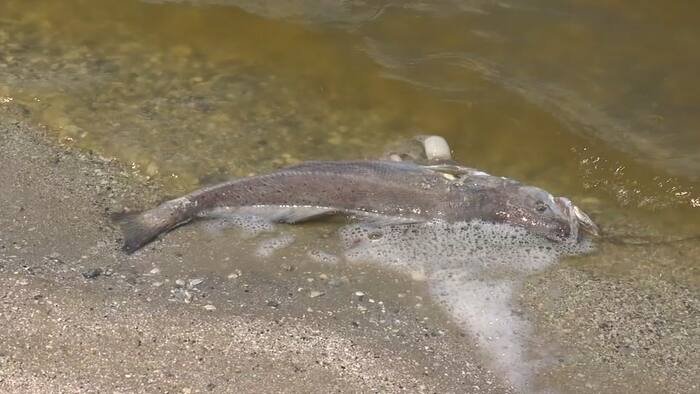
PONTE VEDRA BEACH, Fla. – An investigation is underway at the Guana Preserve following a devastating fish kill that has left local anglers and environmentalists reeling. Hundreds of trophy-sized redfish, trout, and other native species have been found dead in the preserve’s waters, prompting an urgent response from local government and environmental regulators.
St. Johns County Commissioner Clay Murphy visited the site on Thursday to assess the damage, marking the beginning of a multi-agency inquiry involving the Florida Department of Environmental Protection (DEP) and Guana Preserve officials. While heavy weather hampered initial efforts to collect water samples, Commissioner Murphy confirmed that a more comprehensive operation is scheduled for next week.
“Our top priority is identifying the source of this pollution,” Murphy said. “We are looking at everything from lawn fertilizers and potential illegal dumping to the possibility of this being a natural event. We need to find a smoking gun—whether it’s a specific point source of pollution or an accumulation of nutrients coming from various areas.”
The incident has intensified a long-standing debate over the impact of rapid development near the preserve. Local fishing guide and environmental advocate Captain Matt Chipperfield believes the culprit is systemic stormwater runoff. According to Chipperfield, runoff from the nearby Sawgrass community—carrying fertilizers and other pollutants from golf courses and residential lawns—flows through a network of canals and storm drains into the preserve’s non-tidal lagoon. Once there, these nutrients can trigger massive algae blooms, which deplete oxygen levels and create a toxic environment for marine life.
“The primary source of the effluent is coming in through the form of stormwater runoff,” Chipperfield said, noting that a recent DEP study revealed a significant increase in pollution levels in the estuary over the past six years.
Commissioner Murphy acknowledged the gravity of the situation, confirming that authorities are not ruling out any possibilities. The county plans to map every waterway feeding into the Guana River system to track the origin of the contaminants. The investigation will also include a collaboration with the St. Johns County Sheriff’s Office to inspect nearby canals for signs of illicit discharge.
For many in the community, the fish kill serves as a wake-up call. Environmental groups are currently working alongside the DEP to draft a comprehensive water restoration proposal, which is expected to be presented to the St. Johns County Commission as early as October or November.
As investigators prepare to take water samples from the heart of the estuary, residents and conservationists are waiting for answers. With the health of one of the region’s most important ecosystems hanging in the balance, the pressure on county officials to pinpoint the cause—and implement lasting solutions—continues to mount.
Disclaimer: This content is auto-generated for informational purposes only.
Source: Read Original News