



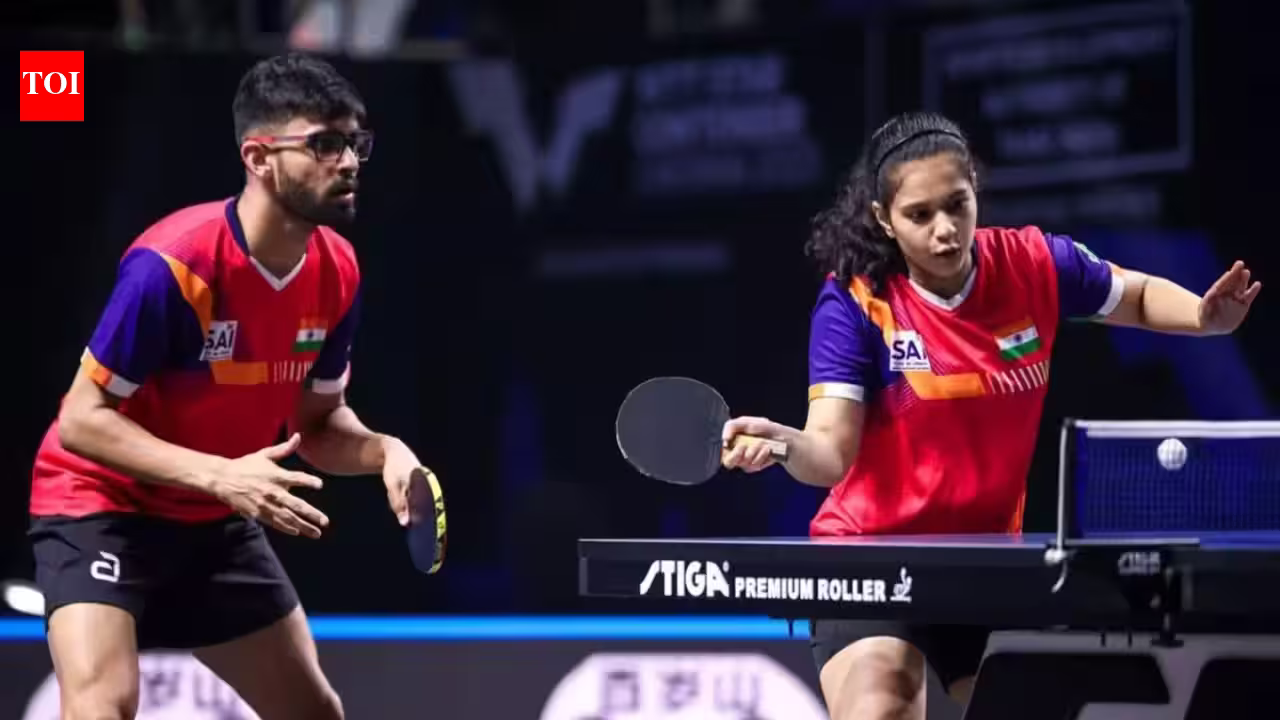




NAGOYA — In the high-stakes arena of elite table tennis, where split-second reflexes and nerves of steel define the line between victory and defeat, Diya Chitale delivered a performance of profound resilience. Standing on the podium at the Sky Hall Toyota in Nagoya, Chitale clutched a bronze medal that served as both a testament to her technical evolution and a poignant tribute to a life lost.
Just one week removed from the devastating passing of Peter Engel, her mentor, coach, and guiding light since 2015, Chitale found the strength to anchor India’s table tennis campaign. Partnering with Manush Shah, the duo secured India’s first table tennis medal of these Asian Games, etching their names into the nation’s sporting history with a display of tactical brilliance and unwavering focus.
A Poignant Tribute Amidst the Storm
For Chitale, the journey to the medal podium has been nothing short of an emotional odyssey. The loss of Peter Engel on September 18 at the age of 72 left a void that few could fully comprehend. Engel, a towering figure in the table tennis world, was more than just a strategist to Chitale; he was the architect of her professional identity.
“I had been working with Engel sir since 2015, and he is the person who completely developed my game,” Chitale shared in an interview from Nagoya. “He was my go-to person for everything in TT.”
The raw emotion of the week was palpable, yet it transformed into a focused intensity on the court. Speaking on the significance of the achievement, Chitale was clear about where her heart lay. “It would have been wonderful for him to see me achieve this today,” she said, her voice steady despite the weight of the moment. “This medal is for him.”
Overcoming the Odds in Nagoya
The road to the semifinals was paved with adversity. While Chitale and Shah had enjoyed a sparkling start to their 2026 campaign—capturing two titles and a runner-up finish—the duo had endured a challenging dip in form since June. Doubts from outside critics began to mount, but internally, the pair never wavered in their conviction.
“I always believed that we are among the top few pairs and we can beat any pair on our day,” Chitale noted.
That belief was put to the ultimate test in the quarterfinals when they faced Hong Kong’s formidable world No. 4 pair, Doo Hoi Kem and Wong Chun Ting. Having suffered three consecutive defeats to the Hong Kong duo in previous encounters, the Indians were entering the match as underdogs. However, the narrative shifted as Chitale and Shah executed a masterclass in tactical discipline.
Winning 3-1 (11-6, 13-15, 11-9, 11-5), the Indian pair systematically dismantled their opponents’ rhythm. “We had played against them thrice and lost all our matches, but the last two matches were pretty close,” Chitale explained. “Hence, we knew that if we had a clear strategy and if we could execute that well, we had a good chance. And we were able to do that today.”
Stepping Up Against the Titans
The semifinal showdown pitted the Indian pair against the undisputed titans of the sport: China’s Wang Chuqin and Sun Yingsha. Against a Chinese pairing that represents the gold standard of international table tennis, Chitale and Shah showcased their grit. While they ultimately fell 0-4 (8-11, 5-11, 8-11, 2-11), the scoreline failed to reflect the competitiveness of the exchanges. The Indians pushed the world-class pair, testing their defensive resolve and forcing them into high-stakes rallies.
Though they walked away with bronze, the gravity of the achievement remains immense. In the realm of table tennis, where the Asian continent is the undisputed epicenter of the sport—boasting powerhouses like China, Japan, and South Korea—a medal on this stage is a hallmark of global elite status.
A Milestone for Indian Table Tennis
This bronze medal marks only the second time an Indian pair has stood on the Asian Games podium in mixed doubles, following in the footsteps of legends Sharath Kamal and Manika Batra, who secured bronze in Jakarta in 2018.
By mirroring that historic feat, Chitale and Shah have signaled a changing of the guard, proving that India’s depth in table tennis is not a flash in the pan but a sustained evolution. For Chitale, the medal is not merely a piece of hardware; it is a symbol of her resilience and a final, heartfelt salute to the man who laid the foundation for her success.
As the dust settles in Nagoya, the Indian contingent leaves with their heads held high. They have navigated the weight of grief and the pressure of global competition, emerging on the other side with a historic victory that resonates far beyond the confines of the Sky Hall Toyota. For Diya Chitale, the journey continues, but the memory of Nagoya—and the silent encouragement of her late coach—will undoubtedly fuel her next chapter.
Disclaimer: This content is auto-generated for informational purposes only.
Source: Read Original News