








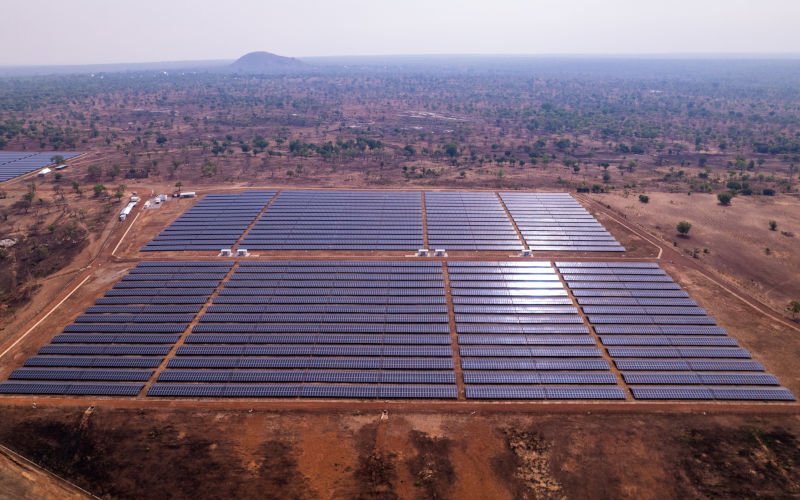
A surge in solar panel imports across Africa signals a shifting energy landscape, though the transition away from fossil fuels remains alarmingly sluggish on a global scale. According to recent data, imports of solar panels from China—the world’s leading manufacturer—into Africa rose by 60 percent in the 12 months leading to June 2025. This uptick represents a significant development for the continent, with 27 countries setting new import records.
While the majority of these imports are intended for decentralized use on residential and commercial rooftops rather than utility-scale projects, the impact is measurable. Twenty-five nations imported capacity exceeding 100 megawatts, which, for several countries, represents a boost of more than 10 percent to their current electricity generation. Despite this progress, solar currently accounts for only 3 percent of Africa’s electricity mix. Observers note that while the shift is promising, it also highlights the historical underdevelopment of African energy infrastructure and the continued reliance on fossil fuels, which remain deeply embedded in global energy systems.
Globally, the push for renewables is intensifying, driven by the increasing affordability and efficiency of solar, wind, and battery technologies. A handful of countries are leading this evolution with impressive speed, integrating renewables into their grids at rates far above the current global penetration of 17.4 percent. However, the combined population of these “fast-movers” accounts for roughly only 1 percent of the global total, limiting their collective influence on the global emission trajectory. As electricity constitutes only 22 percent of final energy consumption worldwide, the scale of the required transition—covering heating, transport, and industrial processes—remains immense.
While energy debates persist, environmental advocacy in Australia has taken a unified step toward conservation. Over 60 climate and environmental groups have coalesced around ten “Forest Protection Principles.” These principles advocate for an immediate cessation of native forest logging on public lands, the upholding of First Nations land rights, and a shift away from using native forest biomass for energy. The coalition emphasizes the need for robust environmental laws, the expansion of World Heritage listings for eucalypt forests, and the restoration of ecosystems to bolster biodiversity and carbon sequestration. By banning the use of public forest offsets and prioritizing agro-ecological farm forestry, the group seeks to transform how Australia values its remaining wilderness.
Amidst these structural challenges, a rare glimpse of hope for biodiversity has emerged. Researchers have confirmed a sighting of the Narbalek, Australia’s second-smallest wallaby, on the mainland. Standing just 25 centimeters tall and weighing roughly 1.2 kilograms, the wallaby has been largely absent from its former range due to habitat loss, fire, and the predations of invasive species like feral cats. Once widespread across northern Australia, the Narbalek is now restricted to a few isolated pockets in the Kimberley, the Northern Territory, and select offshore islands. The sighting serves as a stark reminder of the fragile state of Australia’s native wildlife and the critical importance of the habitat protection efforts advocated by conservationists.
Ultimately, whether looking at the decentralized solar growth in Africa or the grassroots protection of Australian forests, the common theme is a struggle between rapid technological change and the slow, systemic shift required to achieve meaningful environmental stability. While renewables continue to prove their economic viability, they are currently functioning as a supplement to, rather than a replacement for, global fossil fuel consumption—a reality that keeps the goal of limiting warming to 1.5°C increasingly out of reach.
Disclaimer: This content is auto-generated for informational purposes only.
Source: Read Original News