


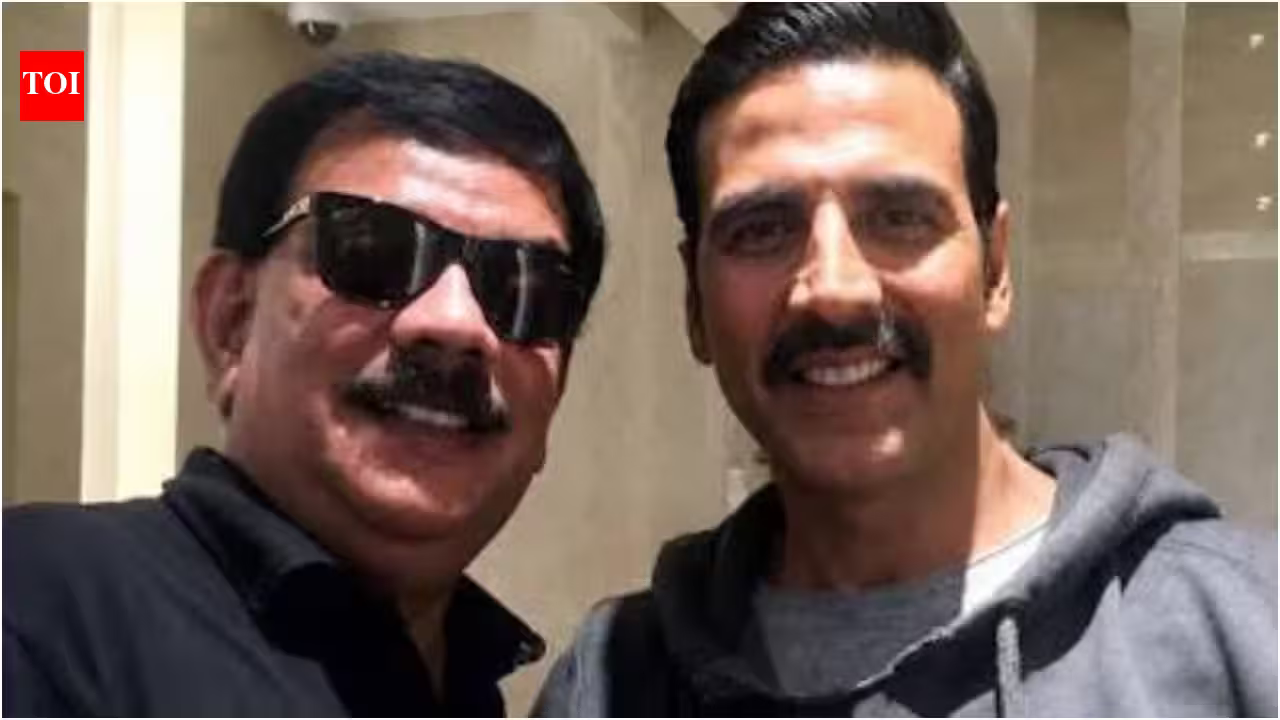





There is a peculiar, almost gravitational pull that defines the partnership between director Priyadarshan and Akshay Kumar. For two decades, they have operated as the architects of modern Bollywood comedy, crafting a specific brand of chaotic, slapstick, and ensemble-driven humor that has etched itself into the cultural consciousness. Yet, every time they attempt to pivot toward the gravity of drama or the grit of a thriller, the audience—and the box office—seems to politely decline the invitation.
The recent, resounding thud of their latest collaboration, Haiwaan, serves as a stark punctuation mark on this phenomenon. With a domestic haul of just under Rs 10 crore against a reported Rs 130 crore budget, the film isn’t just a misfire; it’s a case study in audience expectations. Following the film’s quiet departure from theaters, Priyadarshan has opted for radical transparency, admitting that when it comes to his partnership with the Khiladi of Bollywood, the message from the viewers is loud, clear, and unyielding: stick to the laughs.
The Brutal Math Behind the ‘Haiwaan’ Failure
In the cutthroat world of the box office, numbers rarely lie. Haiwaan, an official adaptation of the acclaimed Malayalam thriller Oppam, was positioned as a dark, intense shift for both Priyadarshan and his leading man. Instead, it became a cautionary tale. Opening at a meager Rs 3 crore, the film struggled to find any momentum, with occupancy rates hovering in the low double digits before fading into obscurity in just over a week.
To put the scale of this disappointment into perspective, one has to look back nearly two decades. You have to travel as far back as 2006—to the box-office void that was Family: Ties of Blood—to find an Akshay Kumar project that cratered this hard. For Saif Ali Khan, appearing here in an antagonist role, the results were equally sobering, marking one of the lowest professional valleys in a career that has seen plenty of peaks and plateaus. When a film fails to recover even 12 percent of its production budget, it’s not just a flop; it’s a total repudiation of the creative direction.
Decoding the Audience’s ‘Comedy Only’ Mandate
Priyadarshan, a director whose career is defined by his ability to pivot between regional intensity and pan-Indian humor, isn’t shying away from the autopsy. He admits that the failure of Haiwaan was a hard lesson, but one he is willing to accept gracefully. He points to history as his witness, noting that Khatta Meetha, which paired Akshay with Trisha Krishnan, was an early warning sign that the audience simply wasn’t interested in seeing the duo in a serious, non-comedic space.
There is a psychological component here that is difficult for filmmakers to fight. Fans of the Priyadarshan-Akshay brand have been conditioned for years to expect a specific dopamine hit: the confusion-filled corridors, the frantic subplots, and the razor-sharp comedic timing. When that expectation is replaced by grit, tension, or dark narrative beats, the audience doesn’t just feel disappointed—they feel betrayed. It suggests that, in the eyes of the Indian moviegoer, this particular creative duo is a “genre” in and of themselves. You don’t go to see a Priyadarshan-Akshay film for a psychological study; you go to see a masterclass in controlled chaos.
The Golden Era: A Legacy Built on Laughter
To understand why Haiwaan felt so jarring to the average viewer, one only needs to look at the towering legacy of the duo’s comedic filmography. Their collaborative portfolio reads like a “Best Of” list for the 2000s. Who can forget the masterclass in timing that was Hera Pheri? Or the relentless, breezy energy of Garam Masala and Bhagam Bhag?
Even Bhool Bhulaiyaa, while technically a horror-comedy, relied so heavily on the comedic chemistry between the leads that it became a cult classic, transcending the horror genre to become a staple of comfort viewing. These films weren’t just box-office hits; they defined an era of Hindi cinema where the “laugh-out-loud” quotient was the primary metric of success. Because they hit that high note so consistently, the audience has effectively “pigeonholed” them. They are the doctors of comedy, and any attempt to perform “surgery” in the thriller ward is met with an immediate walkout.
Looking Ahead: Returning to the Comfort Zone
The good news for fans of the duo is that Priyadarshan seems to have heard the market loud and clear. This year’s Bhooth Bangla has already served as a return to form, proving that when the pair reunites under the banner of comedy, the chemistry is not just intact—it’s profitable. By leaning back into their strengths, they are reclaiming the rapport they’ve spent twenty years perfecting.
Ultimately, the failure of Haiwaan is a sobering moment for creative ambition, but it’s also a powerful affirmation of the audience’s role in the filmmaking process. We often talk about directors “evolving” or actors “breaking the mold,” but there is a rare, symbiotic relationship between this specific director and his star that cannot be forced into a different shape. Priyadarshan has effectively closed the door on serious dramas with Akshay Kumar, and perhaps that is for the best. After all, in a cinema landscape that is increasingly polarized and often bleak, there is immense value in the art of making people laugh. If the duo chooses to spend the rest of their partnership chasing guffaws rather than grit, the box office—and the fans—will likely be waiting with open arms.
Disclaimer: This content is auto-generated for informational purposes only.
Source: Read Original News