






The landscape of Telugu cinema is often defined by the “star vehicle”—the singular orbit of a leading man around whom all creative decisions revolve. Yet, with the release of The Paradise, Nani is actively dismantling that long-standing convention. In a season defined by blockbusters and high-stakes box office battles, the film has emerged as a chaotic, polarizing, and undeniably loud force. If you’ve spent any time on social media or in the corridors of Tollywood this week, you’ve heard the roar surrounding director Srikanth Odela’s latest magnum opus.
For Nani, who has spent the last decade carefully curating a career of calculated risks, The Paradise represents something entirely different. It isn’t just another credit on his resume; it’s a cultural conversation starter that has left the audience divided, obsessed, and—most importantly—talking.
The Storm Over ‘The Paradise’
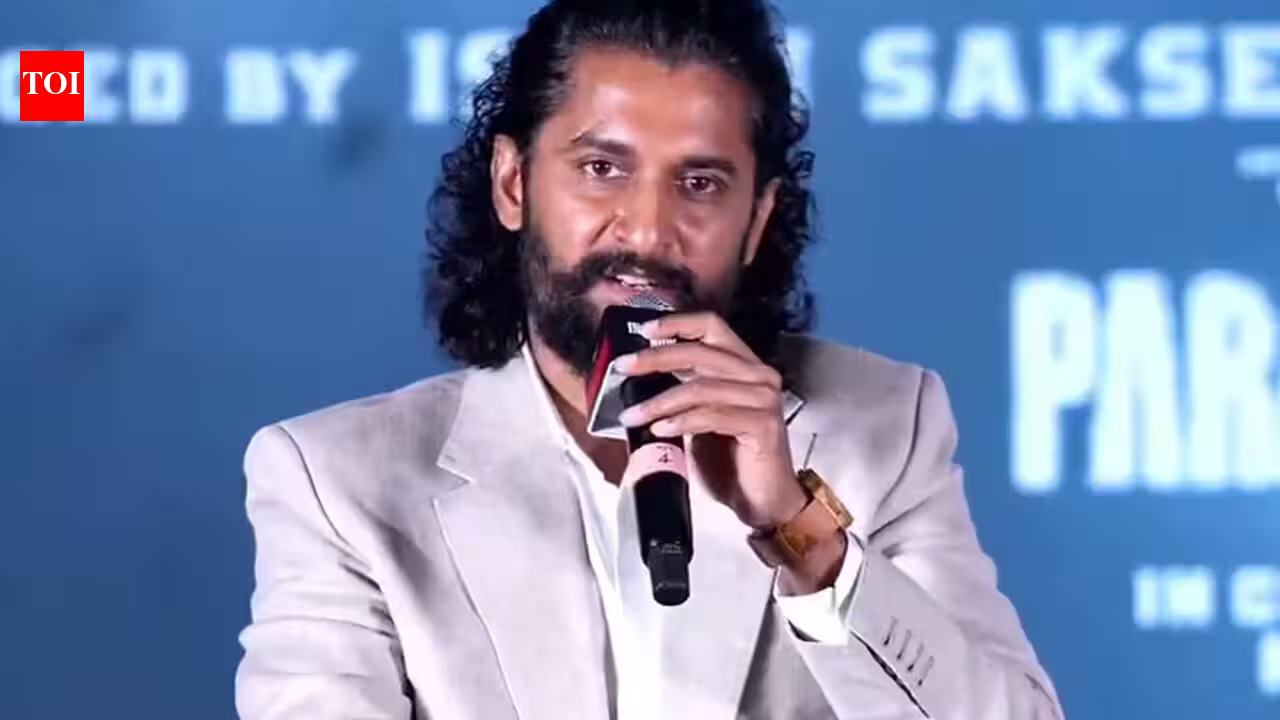
When Nani stood before the press this week, he didn’t lean into the typical tropes of “humbled success” or “gratitude for the numbers.” Instead, he acknowledged the sheer intensity of the reception. “Today, it was like a storm,” Nani remarked, reflecting on a theatrical run that has been anything but quiet.
In an era where digital feedback loops can make or break a film within the first three hours of its Friday morning premiere, The Paradise has invited every possible kind of reaction. There is a palpable friction in the way audiences are engaging with the film’s narrative choices, and Nani seems to thrive on that intensity. He noted that regardless of whether the feedback leans toward adulation or critique, the consistency of the discourse is what sets this project apart. “There is no good noise today, there is only noise,” he said, before delivering his definitive verdict: “And the most noise a film has made in 2026 is The Paradise.”
Beyond the Cult of Personality
Perhaps the most significant takeaway from Nani’s recent public appearances is his adamant rejection of the “hero-centric” narrative. In a market where posters are often dominated by a single face, Nani is pushing back, arguing that The Paradise is fundamentally an ensemble achievement.
“Paradise is not a hero’s film. No one can say that the hero struggled more,” he insisted during his address. It is a bold statement from an actor of his stature, acknowledging that the grueling production—marred by unpredictable weather, arduous location shoots, and the sheer logistical nightmare of Odela’s vision—was a shared burden. By centering the technical team—composer Anirudh Ravichander, cinematographer Sai, and production designer Avinash—Nani is signaling a maturation in his approach to stardom. He recognizes that the “noise” he speaks of is the result of a thousand moving parts, not just the guy on the poster.
The Director-Actor Synergy: The Odela Factor
The collaboration between Nani and Srikanth Odela is quickly becoming one of the most vital partnerships in modern Telugu cinema. Following the visceral, raw success of Dasara, the duo reunited for The Paradise with an even more ambitious, perhaps more abrasive, mandate.
Odela’s directorial voice is distinct; he doesn’t seek to comfort the audience. He challenges them. By pushing Nani into unfamiliar, sometimes uncomfortable territory, the director has managed to strip away the “Natural Star” persona that audiences have grown accustomed to, replacing it with something more frayed and urgent. The “noise” Nani references is a byproduct of this discomfort. When a film forces an audience to lean in—to argue, to analyze, and to return to the theaters just to settle a debate—the director has achieved exactly what he set out to do.
A Love Letter to the Audience’s Passion
Nani’s speech was not merely a defense of his work; it was a tribute to the unique temperament of the Telugu cinema-going public. He holds a deep, almost intellectual respect for the way audiences in this region interact with films. He doesn’t view their tendency to argue or pick sides as a nuisance; he views it as the fuel that keeps the industry evolving.
“I have always been grateful to our Telugu audience. They fight to establish their opinion, whether it is good or bad,” Nani said. “Till we have such an audience, Telugu cinema will keep shining.” It is a refreshing perspective. Many stars treat audience pushback as a PR crisis to be managed; Nani treats it as a sign of life. He understands that a film that evokes a passionate argument is infinitely more valuable than one that is met with polite, forgettable applause.
Looking Toward the Future of the Narrative
As the dust begins to settle on the opening week of The Paradise, the film’s legacy is already being written. It stands as a testament to the fact that audiences are hungry for high-concept, high-effort cinema that doesn’t hold their hand.
By grounding the success of the film in its collective labor—from the assistant directors managing the sets to the editors stitching the chaotic footage into a coherent, albeit intense, whole—Nani is attempting to shift the focus of industry reporting. He wants us to look at the craft, the grit, and the risks.
Ultimately, The Paradise has achieved that rare, elusive status in the entertainment world: it has become impossible to ignore. Whether you are championing its artistic choices or debating its narrative density, Nani has won the game. He has created the “most noise” of the year, and if his recent comments are anything to go by, he isn’t planning on turning the volume down anytime soon. In a crowded marketplace, being heard is the first step toward becoming iconic, and on that front, The Paradise has clearly arrived.
Disclaimer: This content is auto-generated for informational purposes only.
Source: Read Original News