


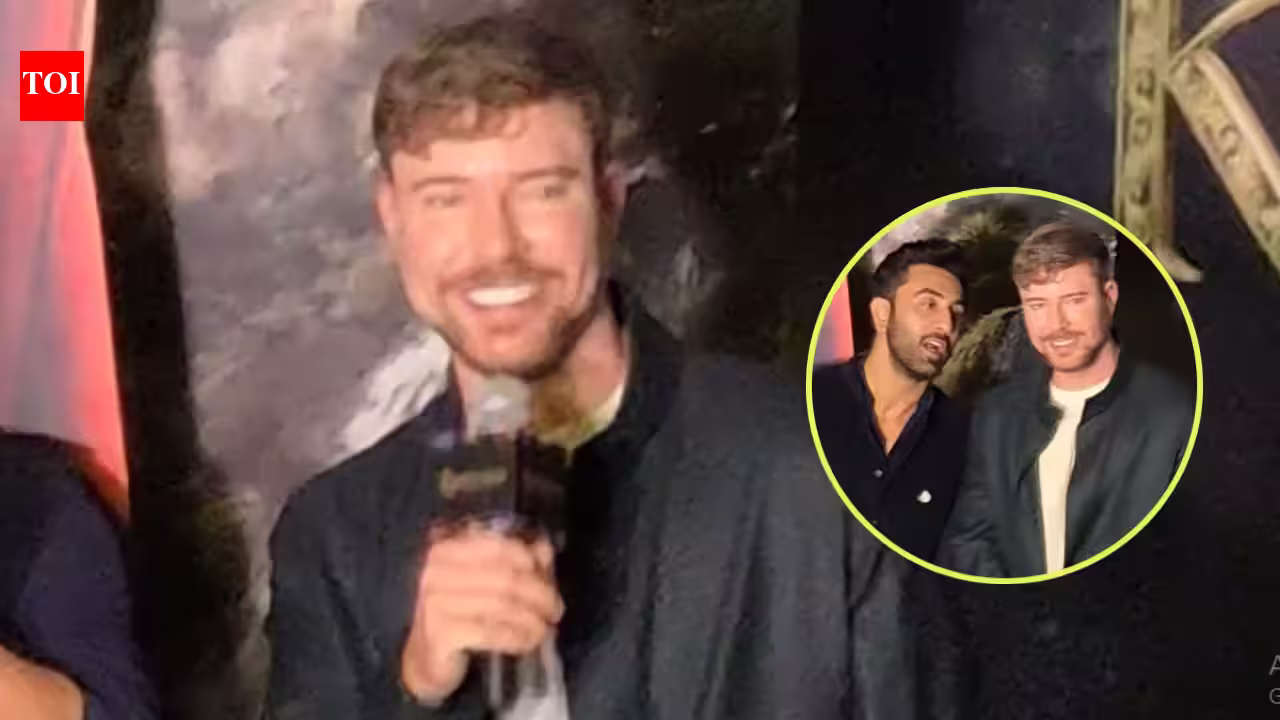





The lines between digital-first fame and traditional cinematic spectacle have never felt more blurred. In a move that left even the most seasoned trade analysts scratching their heads, the Mumbai film industry witnessed a cross-cultural collision this week that bridged the gap between a YouTube giant and an ancient epic. When Jimmy Donaldson—the global phenomenon known to billions as MrBeast—stepped onto a stage in Mumbai to promote Nitesh Tiwari’s upcoming Ramayana, it signaled a bold, new era for Indian cinema: the globalization of our myths.
The Viral Moment: When Digital Giants Meet Indian Icons
The atmosphere at the promotional event was already charged, but the energy shifted palpably the moment MrBeast was introduced. With his trademark unassuming demeanor, the YouTuber took to the microphone to address the crowd. Yet, it was a subtle, orchestrated interaction with Ranbir Kapoor that truly lit up the internet.
When Donaldson’s initial attempt to hype up the crowd fell slightly short of the electric, high-octane response common at Indian movie launches, Ranbir Kapoor stepped in. In a brief, behind-the-scenes-style nudge, Kapoor prompted the creator to lean into the cultural heartbeat of the event. On cue, MrBeast uttered, “Jai Shree Ram,” and the venue erupted. The clip of the moment has since traveled across every major social media platform, transcending geography and language barriers. It was a masterclass in modern promotional strategy: take the world’s most recognized digital face, place him in the heart of a devotional cultural moment, and watch the algorithms take care of the rest.
A Global Stage for an Ancient Epic
Producer Namit Malhotra has been vocal about his vision for Ramayana, framing it not just as a Bollywood project, but as an Indian contribution to the global cinematic lexicon. The involvement of someone of MrBeast’s stature—whose channel boasts hundreds of millions of subscribers—is a calculated piece of the puzzle. Malhotra’s ambition is clear: he wants the Indian epic to reach the same global consciousness that Western franchises like Lord of the Rings or Harry Potter enjoy.
By bringing MrBeast into the fold, the Ramayana team is effectively hacking the traditional distribution model. They aren’t just relying on trailers and posters to capture the attention of a younger, digital-native demographic; they are embedding themselves into the creator economy. For an international audience that might be unfamiliar with the intricate nuances of the Ramayana, having a familiar, friendly face like Jimmy Donaldson associated with the film acts as a “seal of approval” that creates immediate intrigue.
The Star-Studded Cast of Nitesh Tiwari’s Vision
Beyond the marketing gymnastics, the production itself remains a massive undertaking. Director Nitesh Tiwari, known for his ability to handle complex emotional narratives, has assembled an ensemble that reads like a who’s who of Indian cinema. With Ranbir Kapoor inhabiting the role of Lord Ram and Sai Pallavi as Sita, the film rests on the shoulders of two of the most acclaimed actors in the industry.
However, the sheer scale of the project is what truly distinguishes it. The casting of Yash as Ravan adds a layer of star power that ensures massive traction in the southern markets, while the inclusion of heavyweights like Sunny Deol as Hanuman and a supporting cast that features the likes of Lara Dutta, Rakul Preet Singh, and the iconic Arun Govil suggests a production that respects the legacy of the epic while aiming for a contemporary, world-class aesthetic.
Musical Titans and High-Stakes Scheduling
Perhaps the most ambitious aspect of the film’s technical profile is the music. By bringing together the genius of A.R. Rahman and the legendary Hans Zimmer—a composer responsible for the soundscapes of The Lion King, Inception, and Dune—the makers are signaling that they intend to spare no expense in the auditory department. A score that marries the rhythmic soul of India with the epic, orchestral scale of Hollywood is clearly intended to define the Ramayana experience.
The release strategy is equally ambitious. With Ramayana: Part 1 set for a global release on November 6, followed by a domestic launch on November 8, the production team is clearly aiming to capture the international diaspora and global audiences before the main Indian release. Following this with a second installment slated for next year’s Diwali ensures that the project remains at the center of the cultural conversation for months to come.
The New Paradigm of Film Promotion
What does the MrBeast crossover tell us about the future of film marketing? We are witnessing the death of the “local-only” promotional tour. As Indian cinema sets its sights on global domination, the standard press junket is being replaced by high-visibility content partnerships.
The strategy is simple but effective: traditional marketing informs the audience that a film exists; digital influencers like MrBeast ensure that the world cares. Whether this specific collaboration translates to box office records in territories beyond the Indian subcontinent remains to be seen. However, one thing is certain: by folding one of the internet’s biggest stars into the promotional fabric of the Ramayana, the makers have guaranteed that the world is, at the very least, paying attention.
As we look toward the November release, the success of the film will ultimately depend on whether the substance of the storytelling can live up to the spectacular marketing that has surrounded its lead-up. But for now, the Ramayana team has successfully achieved the impossible: making an ancient, sacred epic the hottest trending topic on a platform built by modern digital giants.
Disclaimer: This content is auto-generated for informational purposes only.
Source: Read Original News