







Stargazing vs. Sprawl: Hanle’s Struggle to Preserve its Celestial Treasure
Perched at a staggering altitude in the cold desert of Ladakh, the village of Hanle has long been a sanctuary for astronomers. Home to the Indian Astronomical Observatory (IAO), the region boasts one of the clearest, darkest skies on the planet. However, as the village gains fame on social media as a premier destination, this pristine dark-sky haven faces an existential crossroads: how to balance economic prosperity with the preservation of the cosmos.
The Double-Edged Sword of Tourism
In recent years, Hanle has seen a dramatic influx of visitors. Much of this interest is driven by its proximity to Umling La—among the highest motorable passes in the world—and viral images of the Milky Way stretching across the village’s horizon. While the tourism boom has injected much-needed capital into the local economy, it has brought with it the hallmarks of rapid development: increased vehicular traffic, new construction, and the insidious creep of artificial light pollution.
Sonam Jorphail, a senior engineer and the head of outreach at the IAO, acknowledges the economic benefits that tourism brings to the local community. However, he warns that unchecked expansion threatens the very quality that makes Hanle a global scientific gem. “Tourism is creating jobs and driving development, but this growth must be managed to protect our dark skies,” Jorphail explains. He views the integration of locals into the astronomical community as a vital bridge, turning the village not just into a tourist transit point, but into a hub of scientific appreciation.
Connecting Community to the Cosmos
For many residents, the change in the sky is tangible. Dhuntup Chamchot, a 70-year-old resident, recalls a time when the darkness was absolute. “Back then, when the weather was good, people would often sleep outdoors under the open sky,” he reminisces, noting that the ambient glow of the modern village is a far cry from the pristine obsidian nights of his youth.
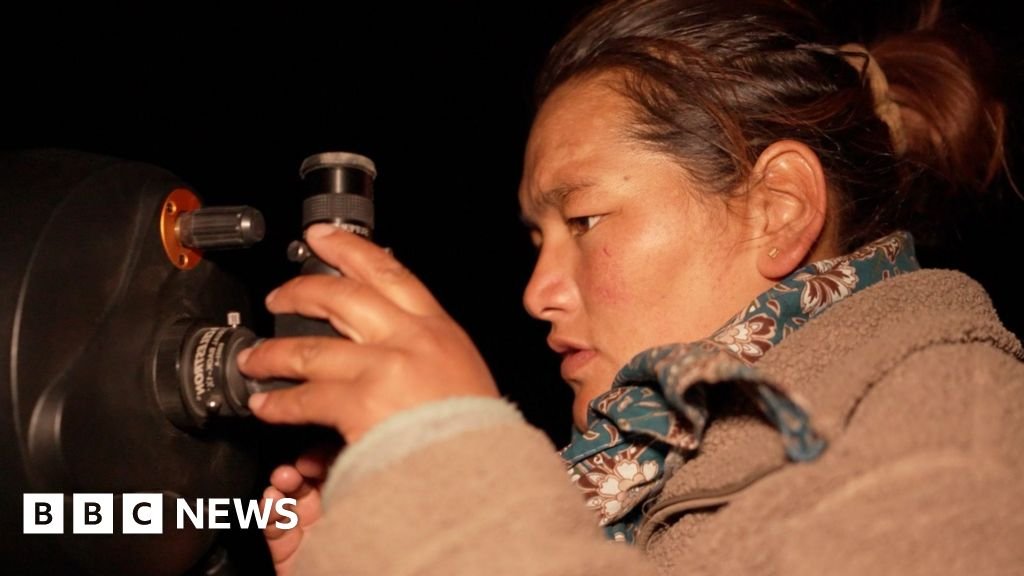
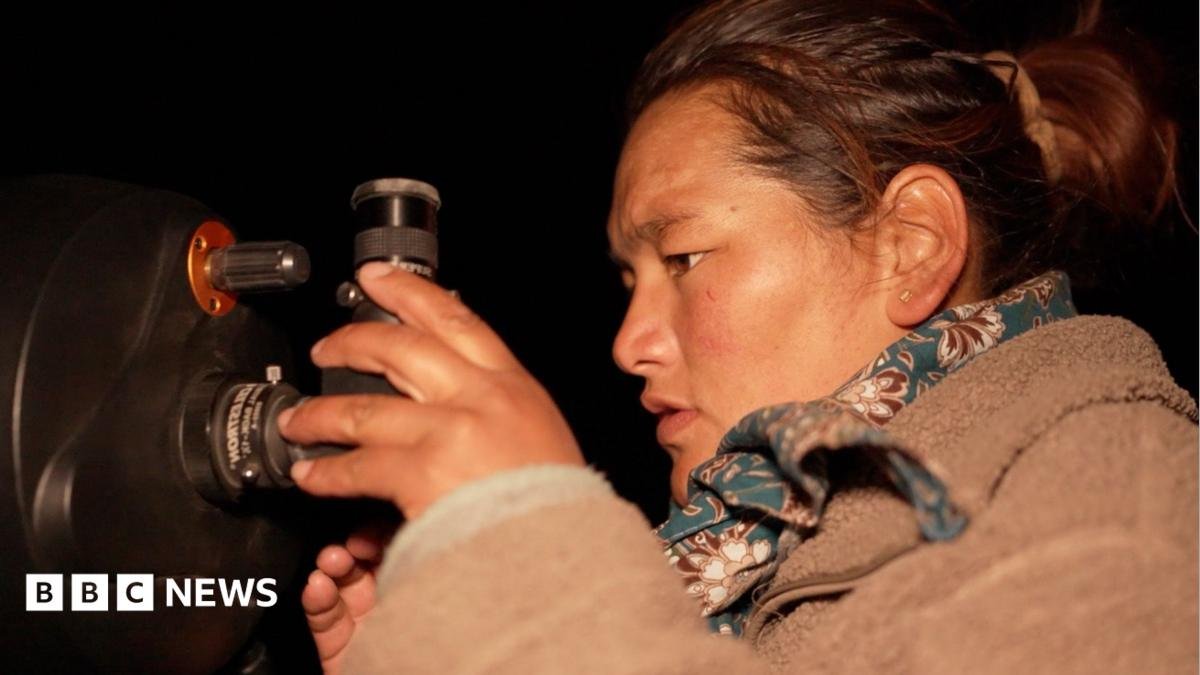
Yet, a new generation is finding ways to reclaim that connection. A group of local women, serving as astro-ambassadors, has become the face of Hanle’s stargazing culture. What began as unfamiliarity with sophisticated equipment four years ago has blossomed into a professional passion. Today, these ambassadors are integral to the village’s identity, guiding visitors and even fostering a new scientific curiosity among their own families.
“We frequently show the night sky to our families through the telescope,” says Yangdol, one of the ambassadors. “They enjoy looking at it now. If one of us takes even a single day off, the families ask why the telescope was not set up.”
A Future Written in the Stars
The astro-ambassadors represent a hopeful model for Hanle’s future. They have no desire to leave their high-altitude home; instead, they are looking toward further professional development. By seeking advanced training and higher-grade equipment, they aim to turn Hanle into a premier center for astro-tourism that prioritizes education and conservation over mass-market commercialization.
As Hanle navigates its role as both a frontier for scientific research and a tourist hotspot, the challenge lies in policy and local stewardship. Protecting the dark sky requires strict lighting regulations and sustainable infrastructure that respects the fragile environment. For the people of Hanle, the stars are more than just a tourist attraction—they are a cultural heritage and a pathway to a future where science and tradition can coexist in the shadow of the Himalayas.
Disclaimer: This content is auto-generated for informational purposes only.
Source: Read Original News