






Into the ‘Mad’ Mind of Srikanth Odela: Kayadu Lohar Breaks Silence on The Paradise
In the volatile ecosystem of the Telugu film industry, a collaboration between a bankable star like Nani and a visionary director like Srikanth Odela is almost always guaranteed to ignite a firestorm of anticipation. Their latest venture, The Paradise, has been no exception. Since its high-octane release on September 24, the film has occupied the center of the cultural zeitgeist, drawing in massive crowds at the box office while simultaneously sparking intense, often polarized, debates across social media platforms.
At the heart of this storm stands actress Kayadu Lohar. Having carved out a niche for herself with the Tamil hit Dragon, Lohar took on a role in The Paradise that she knew would test the limits of her craft. As the dust begins to settle on the initial theatrical run, the actress is finally pulling back the curtain on the unconventional, high-stakes environment created by her director, revealing that the “madness” seen on screen wasn’t just a stylistic choice—it was the very foundation of the production.
The ‘Little Mad’ Director: A Pre-emptive Warning
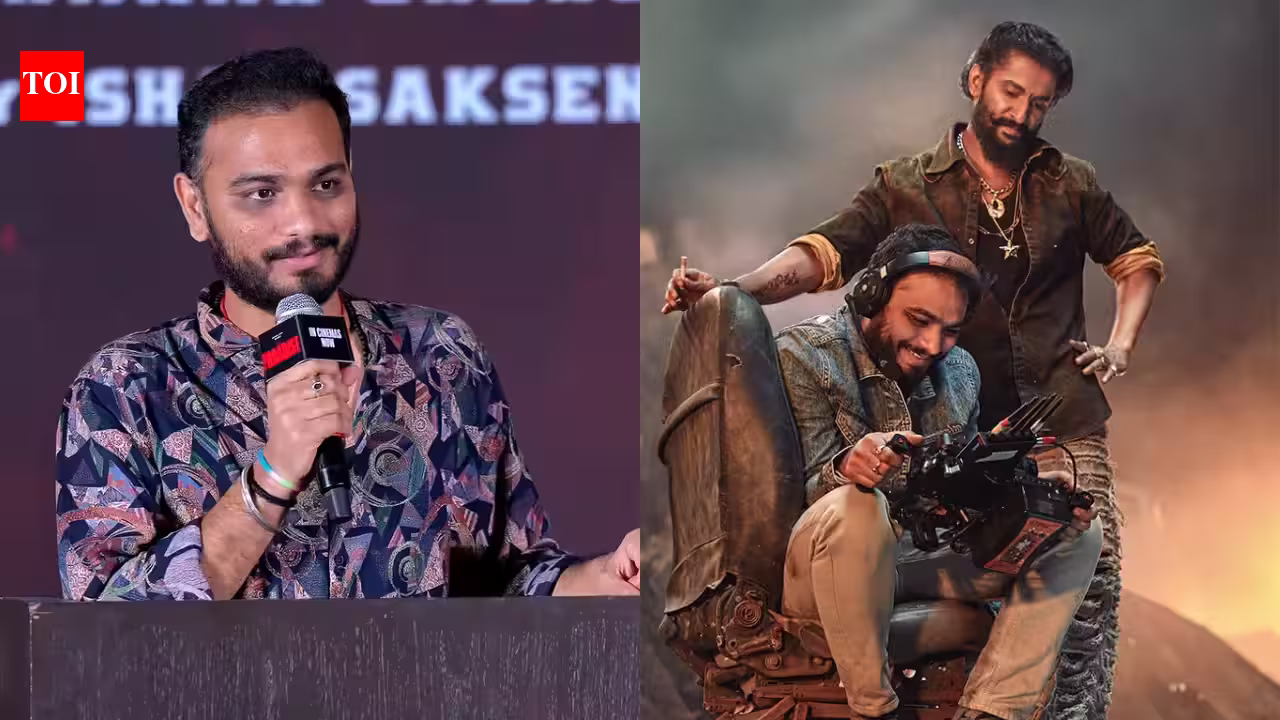
In a recent, candid interview with Permit Room, Lohar shared the story of her first meeting with Srikanth Odela, a filmmaker whose previous work, Dasara, set a brutal and authentic benchmark for rural dramas. According to Lohar, there was no sugarcoating involved during their first script narration. Odela, known for his uncompromising vision, essentially laid his cards on the table before the cameras even started rolling.
“He gave me a brief about himself,” Lohar recalled. “He said, ‘I’m a very different director, a little mad; I don’t have plans and all. So only if you are up for that game, let me know.'”
For an actress in the early stages of her career, this kind of warning could be interpreted as a red flag, but for Lohar, it was an invitation. She admitted that while she didn’t fully grasp the magnitude of the statement at the time, her confidence in the project—bolstered by the presence of Nani and the auditory genius of composer Anirudh Ravichander—drove her to sign on. She was ready to play the game, even if she didn’t fully know the rules.
The Reality of the ‘Paradise’ Experience
The “madness” of Srikanth Odela’s creative process proved to be more than just a colorful descriptor. As the shooting progressed, Lohar realized that his unconventional methods translated into a uniquely demanding performance style. She admits that the character he offered her was fundamentally different from the roles she had inhabited in the past.
“I thought to myself, yeah fine, how mad could ‘mad’ mean? It can’t be that much,” she reflected. “But now I’ve realized just how much it is!”
This departure from the norm is precisely why the film has received such a polarizing response. While some viewers have praised the film’s raw energy and technical audacity, others have expressed confusion or disappointment regarding character arcs—Lohar’s included. It’s the classic tug-of-war between an auteur’s vision and the audience’s expectations. By pushing his actors out of their comfort zones, Odela invited a level of scrutiny that usually accompanies high-risk, high-reward filmmaking.
Navigating the Box Office Rollercoaster
The numbers surrounding The Paradise are, in a word, astronomical. With an India net collection hovering around the Rs 80 crore mark by its fourth day, the film is a commercial powerhouse. However, the trajectory of the collection—dipping from its opening day high—reflects the mixed word-of-mouth that the film has generated.
In an industry where a film’s “success” is often measured by its opening weekend, The Paradise stands as a reminder that commerce and critical reception rarely operate in harmony. The film’s opening day haul of Rs 46.25 crore proved that the audience’s appetite for Nani and Odela’s reunion was insatiable. Yet, the subsequent stabilization in numbers shows that the audience is divided on whether the “madness” of the narrative actually landed.
Nani’s Grace Under Pressure
Amidst the swirling opinions from critics and the inevitable trolling that follows any major release, lead star Nani has chosen a path of radical transparency. Rather than retreating or dismissing the criticism, the actor took to his social media to acknowledge the feedback, showing a level of maturity that is increasingly rare in mainstream cinema.
“I’ve received all your love and equally enjoyed your hilarious trolls,” Nani wrote in a heartfelt statement. “I’m heartwarmed by the way the audience has owned the film, and also learnt from the flaws that critics and reviewers have pointed out.”
Nani’s acknowledgement—that the film was made with “blood and sweat”—highlights the vulnerability inherent in creative endeavors. By choosing to own the flaws pointed out by the audience, Nani has managed to convert potential backlash into a conversation about the film’s artistic merits. It is a rare moment of humility in an industry often defined by ego, solidifying the idea that The Paradise isn’t just a product, but a dialogue between the creators and the spectators.
Final Verdict: Art or Excess?
Whether The Paradise will be remembered as a misunderstood masterpiece or a cautionary tale of creative overreach remains to be seen. What is certain, however, is that both Kayadu Lohar and Nani are standing firmly behind the chaotic, unconventional vision of Srikanth Odela.
In a cinematic landscape often criticized for being overly formulaic, the “madness” that defined this production—and the subsequent willingness of its cast to address the audience’s mixed reaction head-on—feels like a breath of fresh air. As the film continues its run, it remains a testament to the fact that when you shoot for the stars, you might just land somewhere unexpected. And for audiences, that journey—regardless of the final destination—is exactly why we keep heading to the theater.
Disclaimer: This content is auto-generated for informational purposes only.
Source: Read Original News