








The Engineering Legacy of the Porsche 996 GT2 Clubsport
The Porsche 996-generation 911 GT2 Clubsport stands as a monumental achievement in automotive engineering, representing a period where mechanical purity met turbocharged power. With only seventy units produced, this vehicle is widely considered the apex of the 996 era. Unlike contemporary supercars that rely heavily on sophisticated torque-vectoring and predictive stability control, the GT2 Clubsport demands a precise hand and a high level of skill from its driver.
At its core, the vehicle was designed for the individual who seeks total mastery over the machine. By removing the all-wheel-drive system found in the standard 911 Turbo and discarding electronic stability management, Porsche created a vehicle that is intentionally raw. This reduction in weight, paired with an increase in horsepower—delivering 456 horsepower compared to the 414 found in its siblings—forced a paradigm shift in how drivers approached cornering and acceleration. It is a machine that does not mask driver error but rather amplifies it, making it one of the most demanding and rewarding vehicles ever to leave the Stuttgart factory.
The Clubsport Package: Functional Minimalism
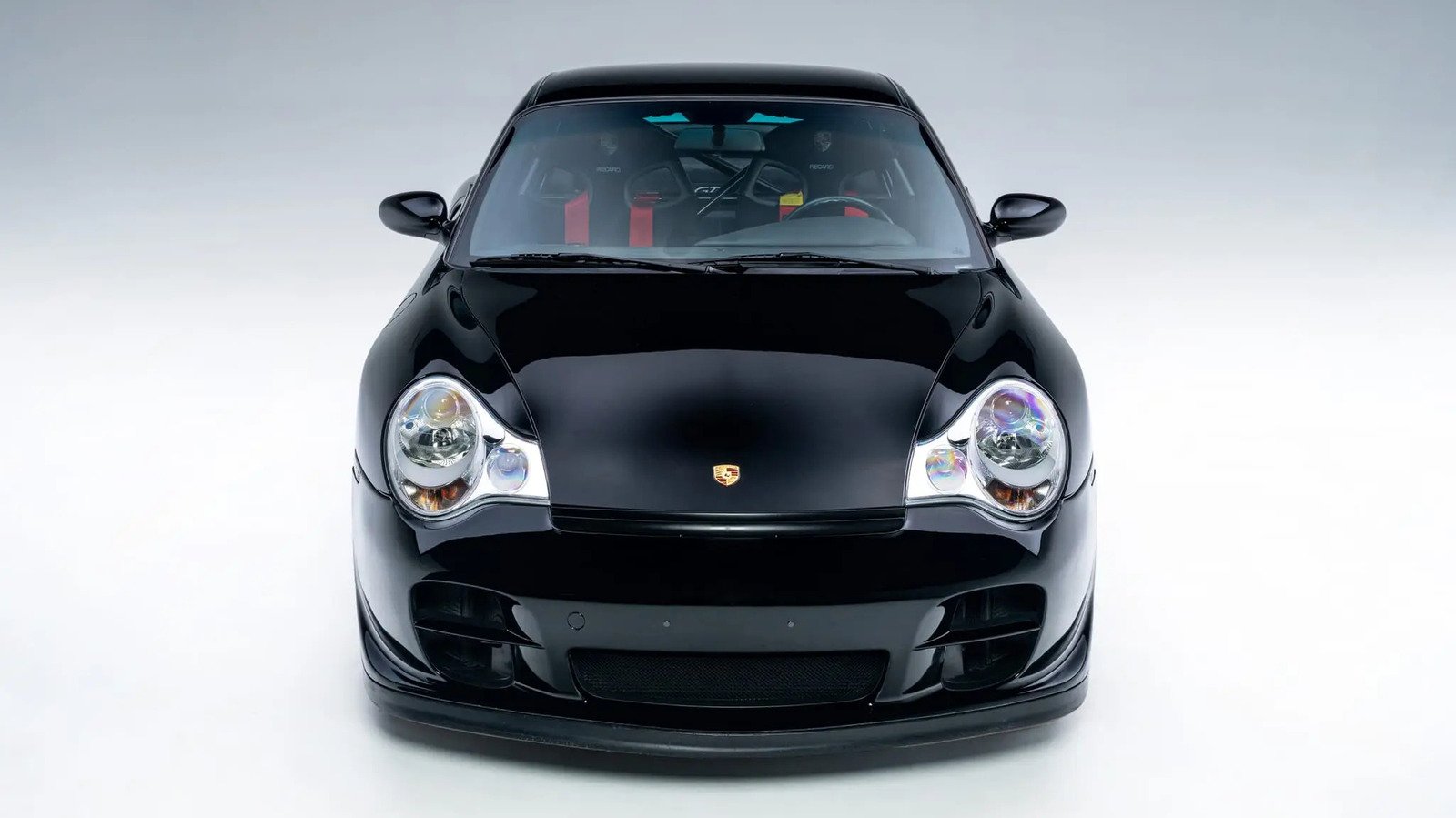
The Clubsport package was a no-cost option exclusively available to European buyers during the production run of the GT2. While it did not introduce mechanical changes or power increases to the twin-turbocharged flat-six engine, it redefined the interior environment to mirror that of a dedicated track car. The transformation included the installation of a bolt-in roll bar, fire-resistant cloth-covered fixed-back seats, and a distinct red six-point racing harness for the driver.
Beyond these structural upgrades, the package featured a fire extinguisher and a battery master switch, elements that underscore the car’s orientation toward closed-circuit performance. In current market terminology, this setup serves as a precursor to modern performance tiers like the Weissach package. By prioritizing driver safety and chassis rigidity through structural additions rather than electronic aids, the Clubsport package remains a testament to Porsche’s focus on the symbiotic relationship between pilot and machine. It allows the driver to explore the limits of adhesion with a higher degree of confidence, provided they have the technical ability to manage the rear-wheel-drive platform.
Market Dynamics and Investment Valuation
The secondary market for the 996 GT2 Clubsport has experienced a significant valuation shift in recent years. This appreciation is evidenced by the performance of a single specific chassis, which has appeared on auction platforms multiple times since 2021. In 2021, the vehicle commanded a price of $160,000. By 2023, even after failing to meet reserve at a high bid of $200,000, the market trajectory suggested a sharp upward trend.
Recent bidding activity has pushed valuations past the $400,000 mark, reflecting the rarity and historical significance of the limited seventy-unit run. Collectors now view these cars not merely as vehicles, but as critical historical artifacts of the internal combustion era. As the automotive industry shifts toward electrification and highly automated driving, the analog nature of the 996 GT2 has solidified its status as a cornerstone of any high-tier collection. The aggressive price growth reflects a scarcity premium that is unlikely to diminish, as these machines represent the final iteration of Porsche’s unrestricted, rear-wheel-drive turbo philosophy.
Mechanical Purity in a Digital Age
The technical appeal of the 996 GT2 Clubsport lies in its mechanical simplicity, which stands in stark contrast to the software-heavy architectures of today’s sports cars. Featuring carbon-ceramic brakes and a highly communicative, precise steering rack, the car offers a tactile connection to the road surface that is difficult to replicate with modern electric steering systems. This vehicle provides a direct bridge between the driver’s inputs and the engine’s output, devoid of the filters that define contemporary grand touring vehicles.
The philosophy behind the car, as articulated by the original project management, was to provide a platform that enables the driver to reach their absolute limit. Because the car lacks the “safety net” of all-wheel drive, the driver must be proficient in managing weight transfer and throttle modulation through mid-corner transitions. This high-stakes environment ensures that the car remains one of the few platforms capable of providing a true “hands-on” driving experience. It is a machine designed to be operated with mechanical empathy and technical precision.
The Imperative for Active Use
A recurring challenge for rare vehicles like the 996 GT2 Clubsport is the temptation to preserve them in static collections. With some examples showing fewer than 8,000 miles over a twenty-five-year lifespan, there is a legitimate concern regarding the dereliction of ownership duties. These cars were engineered for the track and the open road, and allowing them to remain stagnant minimizes the very purpose of their design.
For the prospective buyer, the value of the 996 GT2 Clubsport is realized not through its status as a static asset, but through the extraction of its performance envelope. The transition of this specific vehicle from Sweden to the United States, followed by its federalization, ensures it is ready for the rigorous demands of North American road and track environments. Whether through technical driving schools or extended tours, the car demands to be utilized. To own a machine of this caliber is to accept a responsibility to preserve its mechanical health while honoring its intended purpose: to be pushed, with care and skill, to its ultimate capability.
Disclaimer: This content is auto-generated for informational purposes only.
Source: Read Original News