







The Inverse Relationship Between Energy Costs and Precious Metals
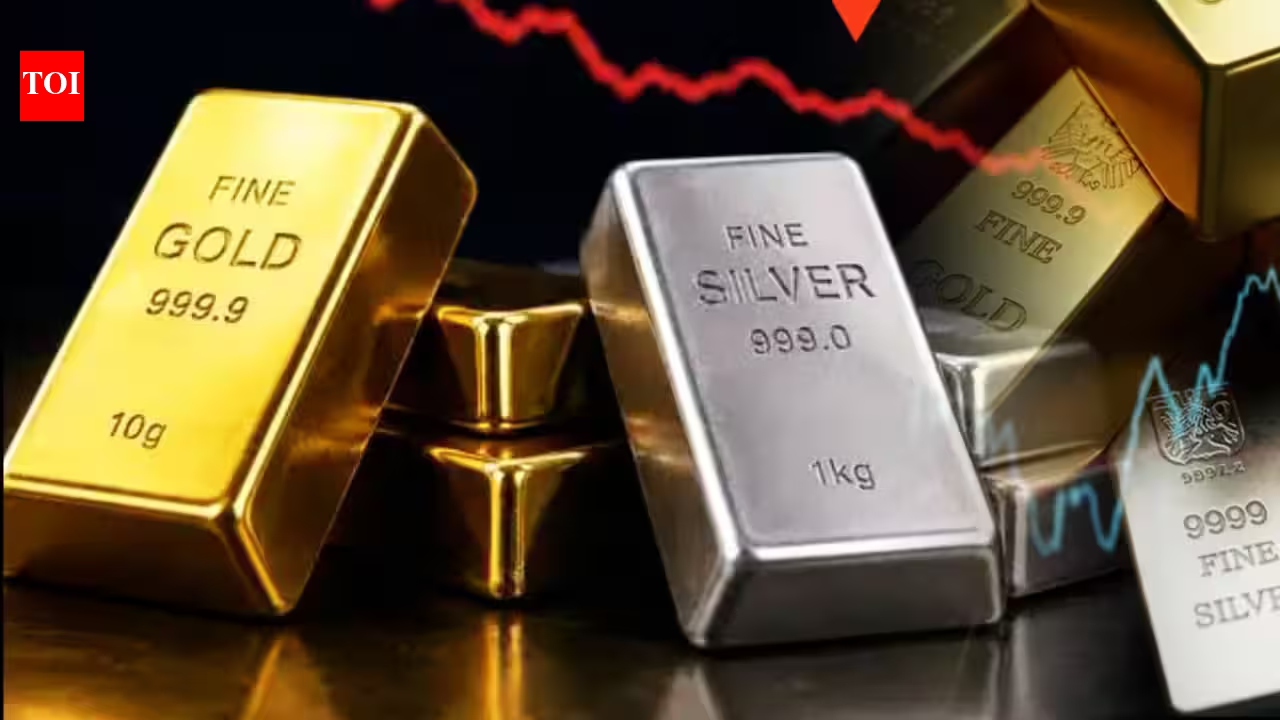
The recent sharp decline in gold prices, which saw a single-day drop exceeding 2 percent, serves as a textbook example of the complex interdependencies within global financial markets. When energy prices, particularly crude oil, climb significantly, the broader economic outlook shifts toward heightened inflationary pressures. For gold—a non-yielding asset—this environment is inherently disadvantageous. As oil prices surge due to geopolitical tensions, such as the current stalemate between the United States and Iran, the market begins to price in a more aggressive stance from the United States Federal Reserve.
The economic logic is straightforward: when inflation risks rise due to higher energy costs, central banks are compelled to maintain elevated interest rates to cool the economy. Gold does not provide a dividend or interest income; therefore, its appeal diminishes when investors can secure high yields from fixed-income instruments like US Treasury bonds. In the current market, the strengthening of the dollar and the uptick in bond yields create a “double-jeopardy” scenario for gold holders. As investors pivot toward interest-bearing assets, the capital outflow from gold markets accelerates, pushing spot prices lower. This correction is not merely a localized event but a systemic response to the tightening of global monetary policy in the face of supply-side energy shocks.
Impact on the Indian Macroeconomic Landscape
In the Indian context, the ripple effects of international gold price volatility are profound, given the nation’s status as one of the world’s largest consumers of the yellow metal. Indian households and investors have traditionally viewed gold as a primary hedge against inflation and currency depreciation. However, when global prices fluctuate this aggressively, the domestic market undergoes a painful adjustment. The Indian rupee’s performance is intrinsically linked to oil imports; as oil prices rise, the rupee typically weakens, which acts as a partial buffer for domestic gold prices. Yet, when the international price drop is as severe as the recent 2 percent decline, even the rupee’s weakness cannot prevent a significant correction in the Indian domestic bullion market.
The Indian stock market indices, such as the Sensex and Nifty 50, often mirror this bearish sentiment. Since India imports a vast majority of its oil requirements, elevated crude prices threaten the current account deficit and inflate the cost of logistics and manufacturing. Consequently, investors in the Indian equity markets become cautious, withdrawing capital from sectors vulnerable to energy costs. The recent decline in Indian indices, marking a sustained losing streak, reflects this broader anxiety. Investors are currently weighing the impact of imported inflation on corporate earnings against the backdrop of a global environment where the cost of borrowing remains stubbornly high.
Interest Rate Dynamics and the Federal Reserve’s Mandate
The Federal Reserve’s monetary policy remains the most critical variable in the current commodity valuation puzzle. With policy rates currently positioned in a higher range, the central bank’s primary objective is to bring inflation down to its target levels. The recent surge in oil prices complicates this trajectory significantly. Persistent energy-driven inflation forces the Fed to reconsider any potential timeline for interest rate cuts. When the market perceives that rates will remain “higher for longer,” the opportunity cost of holding gold rises.
For gold to sustain its valuation, there must be a cooling of the labor market or evidence that inflation is retreating toward the target. Market participants are now intensely focused on incoming US economic data, including nonfarm payroll figures, job openings, and the Personal Consumption Expenditures (PCE) inflation index. These datasets act as the barometer for the Federal Reserve’s next policy steps. If the data suggests a robust economy despite high interest rates, the Fed will have the mandate to maintain its restrictive policy, further suppressing the price of precious metals. Conversely, any sign of economic stagnation would force a pivot, likely providing a floor for gold prices to recover.
Sectoral Vulnerability in Indian Markets
The decline in indices across fourteen out of sixteen major sectors in India highlights the depth of market caution. When macro-indicators turn negative, the selling pressure is rarely confined to a single asset class. Small-cap and mid-cap segments, which had previously seen significant retail participation, are now witnessing volatility as investors re-evaluate their risk appetite. The correlation between the decline in global gold prices and the broader market downturn underscores the reality that gold is often the first to be liquidated when investors face margin calls or need to shore up liquidity.
Furthermore, the banking and manufacturing sectors in India are particularly sensitive to these shifts. Higher input costs resulting from oil volatility compress margins, while elevated interest rates increase the debt-servicing burden for companies. For a growth-oriented economy like India, a sustained period of high energy prices and high interest rates creates a dual headwind. This forces institutional investors to move toward more defensive portfolios, often shifting away from cyclical stocks and commodities toward safer, cash-rich entities, or even cash equivalents. The current market behavior is a clear indication that the investment community is prioritizing capital preservation over aggressive growth in the short term.
Strategic Outlook for Investors and Commodities
Looking ahead, the outlook for precious metals remains tethered to the geopolitical developments in the Middle East and the ensuing impact on global supply chains. As long as the Strait of Hormuz remains a point of contention, the risk premium on oil will persist. For traders and retail investors, this signifies a period of extended volatility. Those holding gold should recognize that the asset’s function as a “safe haven” is currently being tested by the gravitational pull of higher bond yields. While gold is an effective long-term inflation hedge, its short-term price action is governed almost entirely by the yield curve and currency strength.
Investors in the Indian market should exercise prudence by diversifying their exposures. Relying solely on gold as a hedge during periods of high interest rates may not provide the intended protection if the primary driver of market distress is inflationary pressure. Instead, keeping a close watch on the ADP employment data and the Fed’s communication will be essential for gauging the duration of this current price correction. The interplay between energy-driven inflation and the central bank’s reaction function will continue to define the market trajectory for the coming fiscal quarters. Stability is unlikely to return until there is clarity on both the geopolitical energy front and the direction of the global interest rate cycle.
Disclaimer: This content is auto-generated for informational purposes only.
Source: Read Original News