






Strategic Recalibration in US-China Agricultural Trade
The recent decision by Beijing to selectively reduce tariffs on a range of United States agricultural products signals a nuanced shift in the complex trade relationship between the world’s two largest economies. By easing fiscal barriers on commodities such as corn, wheat, sorghum, and various meat and dairy products, China is demonstrating a willingness to facilitate trade. However, the conspicuous exclusion of whole soybeans from these tariff cuts serves as a deliberate policy instrument. This strategic carve-out underscores that, in the context of US-China trade, economic decisions are inextricably linked to political maneuvering and long-term geopolitical leverage.
For global market observers, this development represents a partial fulfillment of commitments made during high-level diplomatic summits. While the reduction of tariffs on secondary agricultural products is a pragmatic step toward meeting the $17 billion annual purchase target, the continued imposition of a 10% tariff on soybeans reveals the limits of this current reconciliation. The soybean trade is not merely a matter of supply and demand; it is a high-stakes lever of influence that Beijing is not prepared to relinquish in the near term.
The Political Economy of Soybean Exceptionalism
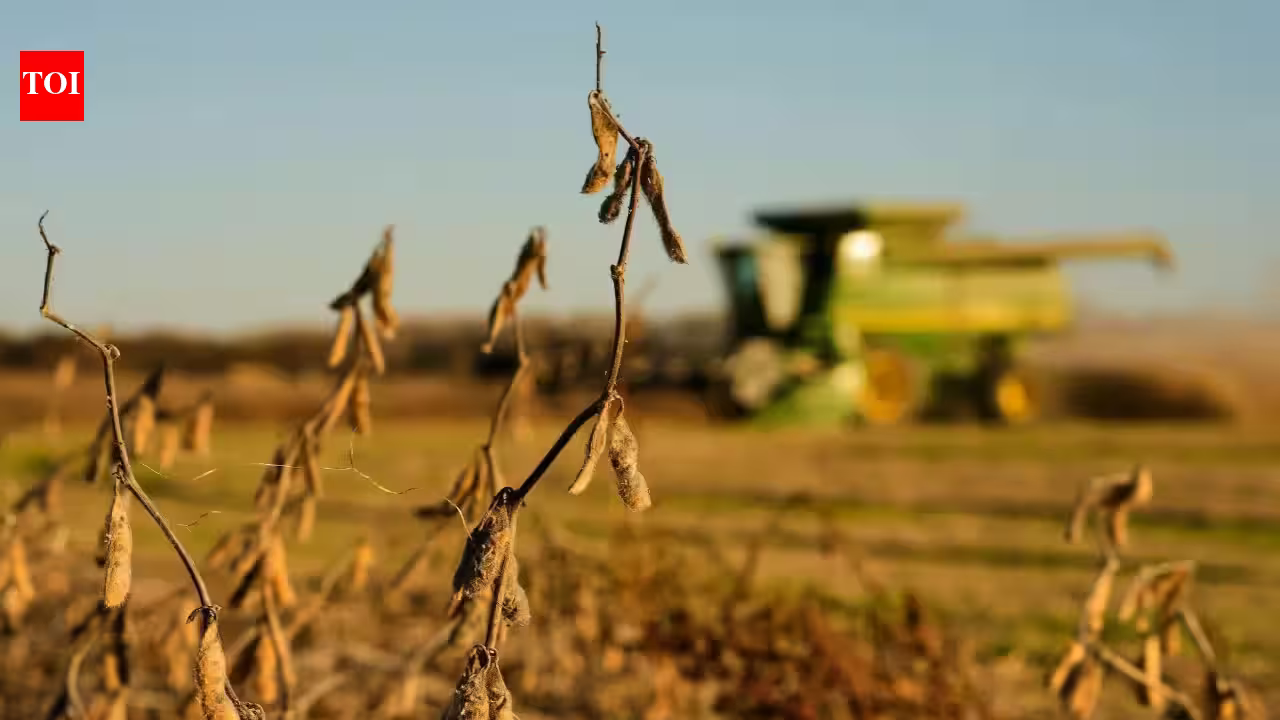
The decision to keep soybeans subject to additional tariffs—even while state-run entities like Sinograin and COFCO actively increase procurement—highlights the commodity’s unique status. In the landscape of international trade, soybeans represent more than a bulk agricultural product; they act as a bellwether for the health of US-China economic relations. By maintaining the tariff while simultaneously directing state-owned enterprises to fulfill volume targets, China achieves two distinct objectives.
First, it creates a mechanism that bypasses market forces. Private Chinese crushers, who are generally more sensitive to price fluctuations and profit margins, are effectively discouraged from importing US soybeans due to the 10% tariff. This ensures that the bulk of the trade is funneled through state-controlled firms, which can be commanded to make purchases for political expediency rather than commercial profitability. Second, this arrangement provides Beijing with substantial diplomatic leverage. By keeping the tariffs in place, China retains the ability to adjust the trade flow at a moment’s notice, providing a buffer against future US policy shifts or electoral cycles. This decoupling of the soybean trade from the broader agricultural tariff-reduction framework is a sophisticated approach to managing external economic pressure.
Market Implications and the $17 Billion Benchmark
The scope of the recent tariff reductions covers a diverse array of products, from vegetable oils to animal proteins, with a total trade value estimated at approximately $17 billion. This alignment with reported purchase commitments suggests that Beijing is attempting to normalize trade patterns in less sensitive sectors while keeping the most critical, high-volume commodity under administrative control.
For international traders and agricultural exporters, the environment remains volatile. While the tariff cuts on secondary goods provide a clearer pathway for US producers to enter the Chinese market, the competitive landscape is significantly altered by the lingering soybean levies. If private crushers remain sidelined, the US export infrastructure must rely heavily on the mandates of Chinese state-run corporations. This reliance introduces an element of institutional risk: if political relations deteriorate, the commitment to purchase volumes can be adjusted with little warning. Furthermore, the persistent price disadvantage faced by US soybeans against competitors in Brazil or Argentina suggests that even with state-led buying, the US share of the Chinese market may face long-term structural challenges.
Contextualizing the Shift for the Indian Agricultural Landscape
The fluctuations in US-China agricultural trade hold significant implications for India, a major player in the global food supply chain. As China maneuvers to source its required calories and proteins, global commodity prices inevitably adjust. India, which operates as both a consumer and a competitor in the agricultural space, must navigate these shifts carefully.
In the oilseeds sector, for example, Indian exports of soymeal often compete with other nations during periods of restricted US-China trade. If China continues to favor state-led US purchases, the resulting disruption in global supply chains often creates temporary windows of opportunity for Indian exporters to fill the gap. However, the uncertainty surrounding China’s procurement policies also drives price volatility in the domestic Indian market. Indian business leaders and policymakers must monitor these developments to anticipate changes in global logistics costs and the availability of essential feedstocks for the domestic poultry and livestock industries.
Moreover, the US-China trade council’s goal of reciprocal tariff reductions on a larger $30 billion basket of products represents a potential shift toward a more formalized trade architecture. For India, this underscores the importance of strengthening its own bilateral trade agreements. As the two largest global economies move toward a system of managed trade and state-directed procurement, India’s focus on diversifying its export markets and enhancing its domestic agricultural value chain becomes a matter of national economic security.
Future Outlook: Managed Trade vs. Market Liberalization
Looking ahead, the trajectory of this trade dispute suggests that we are entering an era of “managed competition.” The expectation that free-market forces alone will dictate trade volume is fading, replaced by negotiated targets and state-driven agreements. For businesses operating in this space, the primary challenge is no longer just predicting market prices, but predicting political mandates.
The upcoming discussions regarding a reciprocal $30 billion tariff reduction will be the next critical indicator of whether these nations are moving toward genuine liberalization or simply deepening their reliance on managed trade structures. If the reciprocal reductions are realized, it may signal a period of relative stability for US farmers. Conversely, if the exclusion of key commodities like soybeans becomes the standard, the agricultural sector should prepare for a long-term environment where diplomatic status determines commercial success.
For the broader international business community, this episode serves as a reminder of the volatility inherent in trade relations dominated by geopolitical interests. Companies that rely on cross-border agricultural logistics must build operational resilience, diversifying their sourcing and mitigating their exposure to state-dictated procurement strategies. As China and the US continue to calibrate their reciprocal measures, the agricultural sector remains on the front line of an evolving global economic order, where the distinction between economic policy and political strategy continues to blur.
Disclaimer: This content is auto-generated for informational purposes only.
Source: Read Original News