







GULVEER SINGH etched his name deeper into the annals of Indian athletics this week, delivering a masterful tactical performance to secure his second silver medal of the 2026 Asian Games. Competing on Japanese soil, the distance runner clocked a new personal best of 3:36.72 in the men’s 1500m final, proving that his endurance capabilities extend far beyond the long-distance track.
The race, a high-stakes showdown that electrified the stadium, saw Gulveer hold his ground against a fierce home contingent. While Japan’s Kazuto Iizawa ultimately surged to gold, Gulveer’s disciplined pacing ensured he remained well ahead of the chasing pack, narrowly fending off Nagiya Mori, who claimed bronze with a time of 3:37.92. For Gulveer, who had already tasted success with a silver in the 10,000m, this latest podium finish cements his status as one of India’s most versatile and reliable athletes on the international circuit. Fellow Indian runner Yoonus Shah, also appearing in the final, put forth a spirited effort but concluded the race in ninth position with a time of 3:43.88.
Vithya Ramraj Shatters the “Golden Girl’s” Legacy
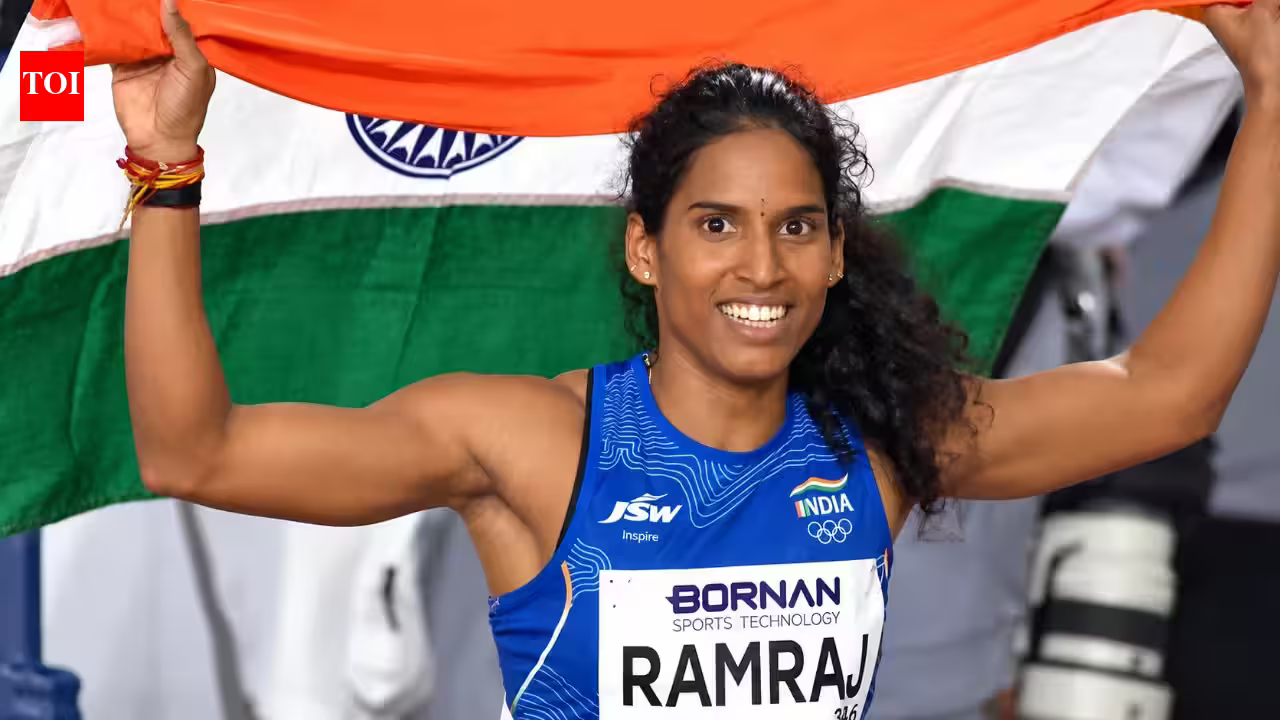
While Gulveer’s double-medal haul grabbed headlines, the day was arguably defined by a monumental shift in Indian track history. Vithya Ramraj, the 28-year-old sprinter from Coimbatore, achieved what many thought might be untouchable for years to come: she broke the legendary PT Usha’s 400m hurdles national record, a mark that had stood firm since the 1984 Los Angeles Olympics.
Vithya surged across the finish line in a blistering 54.75 seconds to capture the bronze medal. By shaving significant time off the 55.42-second barrier that defined PT Usha’s career for over four decades, Vithya has effectively ushered in a new era for Indian hurdling. The race itself was a showcase of elite-level competition, with UAE’s Mariam Kareem clinching the gold in a Games-record time of 54.31 seconds, while Kazakhstan’s Adelina Zems secured the silver in 54.58.
This performance marks Vithya’s second medal of the 2026 Games, adding to the silver she earned in the 4x400m mixed relay. Her teammate, Anu Raghavan, also performed admirably, clocking a personal best of 55.88 seconds to finish fifth, highlighting the growing depth of talent in the Indian women’s hurdles camp.
Sable’s Title Defense Ends in Heartbreak
However, the day was not without its shadows. The Indian contingent faced a jarring setback in the men’s 3000m steeplechase, an event where defending champion Avinash Sable was heavily favored to retain his crown. Despite putting in a valiant effort and recording a season-best time of 8:21.67, the two-time Olympian from Maharashtra fell just short of the podium, finishing in fourth place.
The competition proved exceptionally fast, with Japan’s Ryuji Miura setting a new Games record of 8:17.36 to claim gold. His compatriot, Ryoma Aoki, snatched the silver with a personal best of 8:17.60, while Qatar’s Zakaria Elahlaami rounded out the top three in 8:18.13. For Sable, whose preparation has been plagued by a series of niggling injuries, the result was a bitter pill to swallow. As a Games record holder, the weight of expectation was immense, and while his season-best performance proves his class remains intact, the narrow 4.31-second gap to the top spot served as a sobering reminder of the thinning margins at the continental level.
Mixed Results Across the Field
The track and field events saw a roller-coaster of emotions for the Indian delegation. In the women’s discus throw, the heartbreak continued as veteran Commonwealth Games bronze medallist Seema Kaliramna narrowly missed a medal. Despite delivering an impressive personal best of 59.88m on her fifth attempt, Kaliramna finished fourth. The intensity of the final was undeniable, as all three medalists were forced to clear the 60-meter mark to secure their spots on the podium.
Meanwhile, in the men’s 400m hurdles, Santosh Kumar Tamilarasan faced a difficult challenge in a stacked final. Despite a determined sprint, he crossed the finish line in 49.95 seconds to place seventh in an eight-man field.
As the Asian Games continue, the focus will undoubtedly shift to how India manages the fatigue of its top athletes and whether emerging stars like Gulveer and Vithya can sustain their current momentum. With record-breaking performances serving as the highlight of the week, the Indian athletics squad continues to prove that they are no longer just participating on the continental stage—they are dictating the pace.
Disclaimer: This content is auto-generated for informational purposes only.
Source: Read Original News