








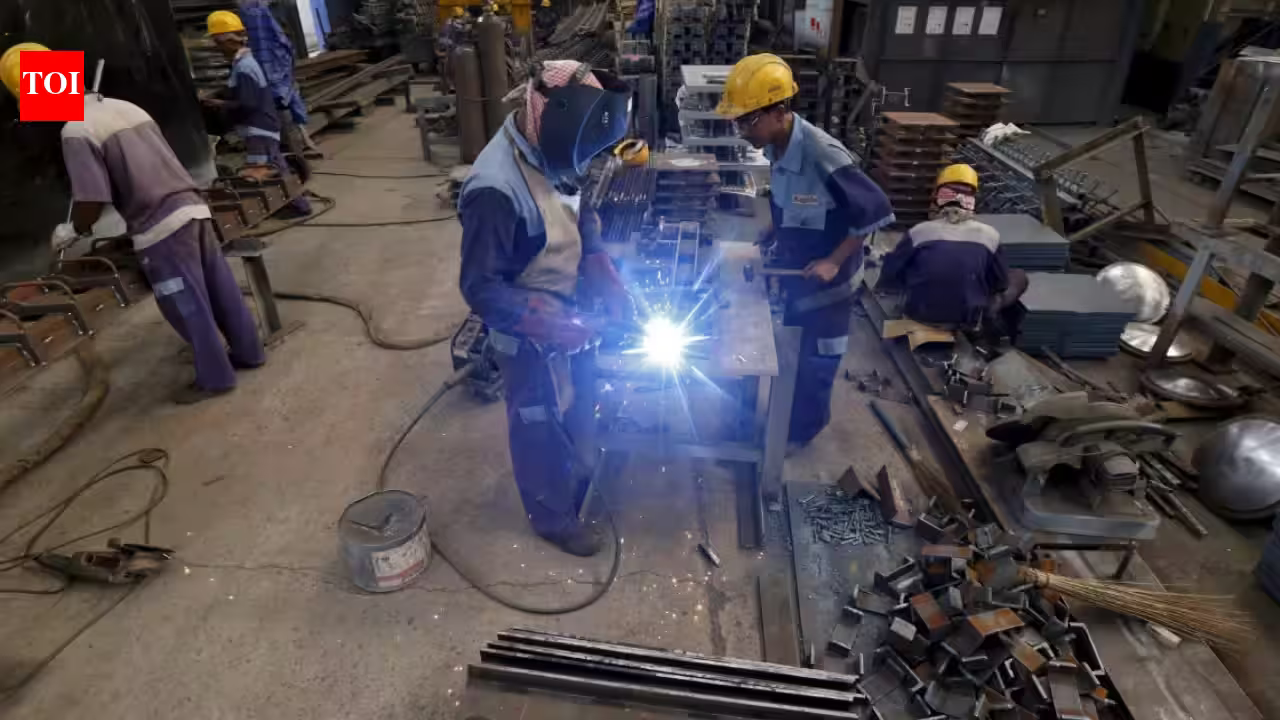
Analyzing the Surge in India’s Industrial Production
The latest data from the Ministry of Statistics and Programme Implementation (MoSPI) confirms that India’s industrial sector is currently in a phase of robust expansion. The Index of Industrial Production (IIP) for August 2026 recorded a year-on-year growth rate of 8 per cent. This performance marks a significant acceleration from the revised 7.4 per cent growth observed in July, signaling that industrial momentum is not only persistent but also gathering strength.
The index level reached 123.3 in August, a marked improvement over the 114.2 recorded during the same period in the previous year. This consistent upward trajectory is critical for the Indian economy, as it suggests that the underlying fundamentals—demand for capital goods, manufacturing output, and infrastructure development—are working in tandem. When analyzing these figures, one must look beyond the headline growth rate to understand which sectors are driving this expansion and what these trends imply for India’s broader economic trajectory.
The Dominance of Manufacturing and Key Growth Drivers
At the heart of this industrial growth is the manufacturing sector, which accounts for the largest weight in the IIP. With a 9 per cent growth rate in August, the sector has maintained a steady pace of 8 per cent or higher for three consecutive months. This sustained performance indicates that manufacturing is shifting from a volatile recovery phase to a more stable growth cycle.
The data reveals a broad-based recovery, with 18 out of 23 industry groups reporting positive growth. The electrical equipment segment leads the pack with a remarkable 30.9 per cent growth. This surge is likely driven by the ongoing digitization of the Indian economy and the rapid expansion of power infrastructure. The inclusion of optical fiber, cable connectors, and uninterruptible power supply (UPS) systems in this growth bracket highlights a transition toward a more technologically integrated industrial base.
Similarly, the automotive sector remains a pillar of industrial activity. With motor vehicles, trailers, and semi-trailers growing by 25.2 per cent, it is evident that both consumer demand and fleet expansion for logistics are influencing production schedules. The government’s emphasis on localized manufacturing and the promotion of the automotive supply chain appear to be yielding tangible results.
Structural Shifts and Use-Based Classification
The use-based classification of the IIP data provides deeper insights into the nature of current industrial demand. Capital goods, which grew by 16.9 per cent, serve as a primary indicator of private investment appetite. When companies invest heavily in machinery and equipment, it suggests they are optimistic about long-term capacity requirements.
Intermediate goods also showed strong performance with 13.7 per cent growth, which acts as a leading indicator for future manufacturing activity. Because intermediate goods are used as inputs for further production, their rise suggests that downstream industries expect higher volumes of output in the coming quarters.
Furthermore, the 11.1 per cent rise in consumer durables indicates a resurgence in middle-class purchasing power. This is a positive sign for the economy, as it demonstrates that consumption is keeping pace with production. While consumer non-durables saw more modest growth at 2.1 per cent, the overall health of the goods market—combined with a 6.4 per cent growth in infrastructure and construction goods—paints a picture of an economy that is prioritizing both capacity expansion and finished goods demand.
Addressing the Mining Contraction
While the manufacturing and electricity sectors have provided strong tailwinds, the data does show some areas of concern. The mining and quarrying sector contracted by 5.6 per cent in August. This decline highlights a persistent vulnerability within the primary production segment. Mining is highly sensitive to regulatory changes, environmental clearances, and global commodity price fluctuations.
A contraction in this sector, even while other parts of the industrial engine are accelerating, suggests that there are bottlenecks in raw material extraction. For India to sustain an 8 per cent industrial growth rate in the long run, the mining and energy extraction sectors must be aligned with the output requirements of the manufacturing sector. If the cost or availability of raw materials remains a challenge, it could eventually act as a drag on the downstream manufacturing success currently being witnessed.
Implications for the Indian Economy
The cumulative industrial production growth of 6.7 per cent for the April-August 2026 period, up from 4.2 per cent in the previous year, confirms that the current fiscal year is tracking significantly better than its predecessor. For policymakers, these figures reinforce the validity of existing production-linked incentive schemes and infrastructure investment projects.
The growth in electricity and gas supply, at 12.3 per cent, is particularly noteworthy. Industrial growth is inherently energy-intensive. A double-digit expansion in the energy sector suggests that utilities are successfully meeting the increased power demand of factories and industrial clusters. This reliability of power is a fundamental requirement for maintaining the competitive edge of Indian manufacturing in the global market.
Looking ahead, the focus must remain on ensuring that the momentum in the capital goods and manufacturing sectors is not dampened by external headwinds or supply chain disruptions. The high weighted response rate of 88 per cent for the quick estimates suggests that the data is robust and accurately reflects the reality on the ground. As the Indian government continues to push for “Make in India” initiatives, these IIP numbers offer a quantitative validation of the strategies employed to foster industrial growth.
Conclusion and Outlook
India’s industrial performance in August 2026 serves as a compelling case for the country’s manufacturing potential. By focusing on high-growth segments such as electrical equipment and transportation, and supported by a strong capital goods sector, the economy is demonstrating resilience and depth. While the contraction in mining acts as a reminder of the complexities involved in industrial policy, the overall upward trend is unmistakable.
The sustained growth in manufacturing over multiple months suggests that the current expansion is not a statistical anomaly but a structural shift. As long as internal consumption remains stable and private investment in capital goods continues, the industrial sector is well-positioned to remain the primary driver of India’s economic growth for the remainder of the fiscal year. The task for stakeholders will be to maintain this pace while addressing the specific deficiencies in the primary extraction sector to ensure a balanced industrial ecosystem.
Disclaimer: This content is auto-generated for informational purposes only.
Source: Read Original News