







Maine state biologists have reached a significant milestone in conservation efforts, confirming that an endangered Blanding’s turtle has successfully navigated a newly installed wildlife crossing in southwestern Maine. The successful transit through the underground passage marks a promising victory in the ongoing struggle to protect a species increasingly threatened by the state’s expanding road network.
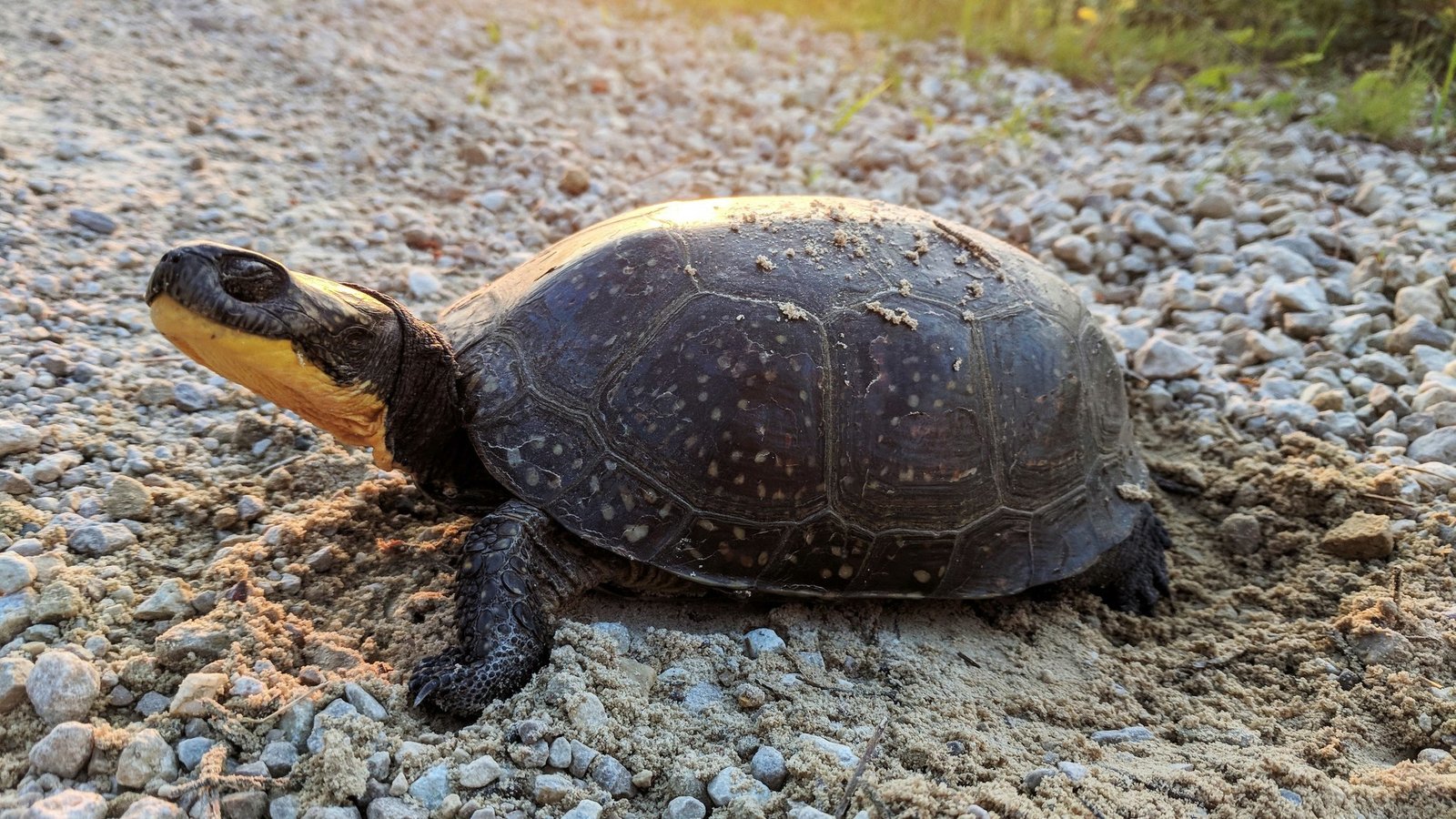
Blanding’s turtles, recognized by their signature bright yellow chins and high-domed, flecked shells, are listed as endangered in Maine. Their survival is intrinsically linked to the wetlands of Cumberland and York counties, the state’s two most populous regions. As suburban development intensifies and traffic density rises, these slow-moving reptiles face an uphill battle. Unlike some species, Blanding’s turtles are highly mobile, frequently traveling long distances between nesting sites, foraging areas, and seasonal wetlands. This behavior brings them into direct conflict with high-speed vehicles.
The biological stakes are exceptionally high. Blanding’s turtles are slow to reach reproductive maturity, and the survival rate of hatchlings is naturally low. Consequently, the population cannot absorb the loss of breeding adults. According to research from the Maine Department of Inland Fisheries and Wildlife (DIFW), an additive annual mortality rate of just 2% to 3% can lead to the total collapse of a local population. As DIFW biologist Derek Yorks noted, while the turtle’s shell has evolved to withstand natural predators over millions of years, it is no match for a motor vehicle. For these turtles, road mortality represents the single greatest threat to their continued existence in Maine.
In response to this crisis, a collaborative effort between the DIFW and the Maine Department of Transportation (DOT) has focused on identifying and mitigating “hotspots”—stretches of road where frequent turtle crossings intersect with heavy traffic. The strategy involves mapping these danger zones and installing specialized wildlife tunnels designed to allow reptiles to pass safely beneath the asphalt.
This approach has already proven effective. In 2021, the installation of a flat-bottomed, slotted-top tunnel at a site previously dubbed a “highway of death” effectively eliminated Blanding’s turtle fatalities. Building on that success, the two departments completed an additional tunnel this summer at a newly identified, high-mortality location in southwestern Maine. Documentation released by the DIFW and DOT via social media confirmed that the endangered turtles are already utilizing the new passage, successfully reaching the other side of the road without risking their lives in traffic.
While this development is a clear win for biodiversity, conservationists emphasize that much work remains. There are numerous other crossing hotspots across Maine that continue to pose risks to the Blanding’s turtle and other wildlife species. Advocates, including organizations
Disclaimer: This content is auto-generated for informational purposes only.
Source: Read Original News