







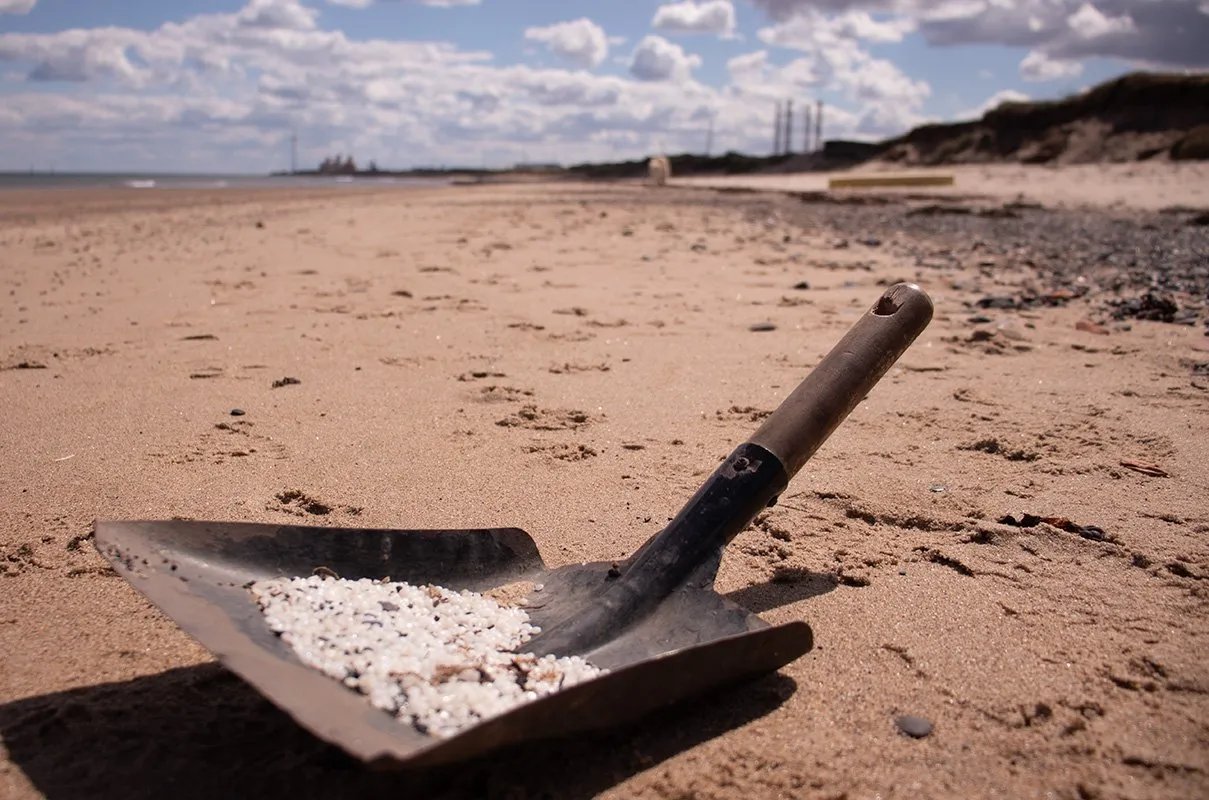
The North-East coastline has become the unlikely site of a significant environmental crisis following a maritime collision in the Port of Tyne on 19 July 2026. The incident, which involved two vessels, resulted in the release of approximately 17 tonnes of plastic pellets—commonly known as “nurdles”—into the river.
Since the spill, an estimated one billion of these lentil-sized pellets have migrated along a 60-mile stretch of shoreline, contaminating beaches across the North East and Yorkshire. The presence of such a vast quantity of plastic poses a severe threat to the region’s marine and avian wildlife, which risk ingesting the non-biodegradable material.
In response, a surge of community-led environmental activism has emerged. Among those answering the call to protect the coastline are members of “Action Asylum,” a project that facilitates environmental volunteering for people seeking asylum. Since its launch in Newcastle in July 2026 by the local charity Action Foundation, the group has engaged in various conservation efforts, including habitat maintenance and tree planting.
In August, an eight-strong team of asylum seekers joined local residents and the North Tyneside Council at the Fish Quay in North Shields. Equipped with dustpans, brushes, and kitchen sieves, the volunteers spent the day meticulously filtering the pellets from the sand and depositing them into dedicated collection bins.
The effort provided a poignant display of community cohesion. For many of the participants, the volunteering was an opportunity to integrate and contribute directly to their new environment. Jonathan, a volunteer and asylum seeker, emphasized the significance of the act: “I felt like giving back to the community by volunteering at the nurdle cleaning at the beach. My participation in the effort symbolises me as a Newcastle resident, not necessarily an asylum seeker.”
The exercise also highlighted the global nature of environmental challenges. Zia, another volunteer, brought a unique perspective to the cleanup, noting his professional familiarity with the material. “I worked with nurdles in a factory making plastic pipes in my home country,” he explained. “These are toxic to animals and it’s not good for them to be in the sea.”
The involvement of the Action Asylum group underscores the philosophy of the InterAction program, which seeks to connect people seeking refuge with their local communities through shared stewardship of the land. Rob, the InterAction Manager at Action Foundation, praised the dedication of the volunteers during the crisis.
“A disaster of this scale needs everyone to pull together to limit the awful consequences for our local wildlife,” Rob stated. “Our volunteers love their new home, and today they showed that respect and care alongside their neighbours.”
As the cleanup effort continues, the collaboration at the Fish Quay serves as a reminder of the capacity for collective action when communities face environmental threats. By working side-by-side with local residents, the volunteers have not only mitigated some of the damage caused by the spill but have also strengthened the social fabric of the North-East, demonstrating that the protection of the natural world is a responsibility shared by all, regardless of background.
Disclaimer: This content is auto-generated for informational purposes only.
Source: Read Original News