





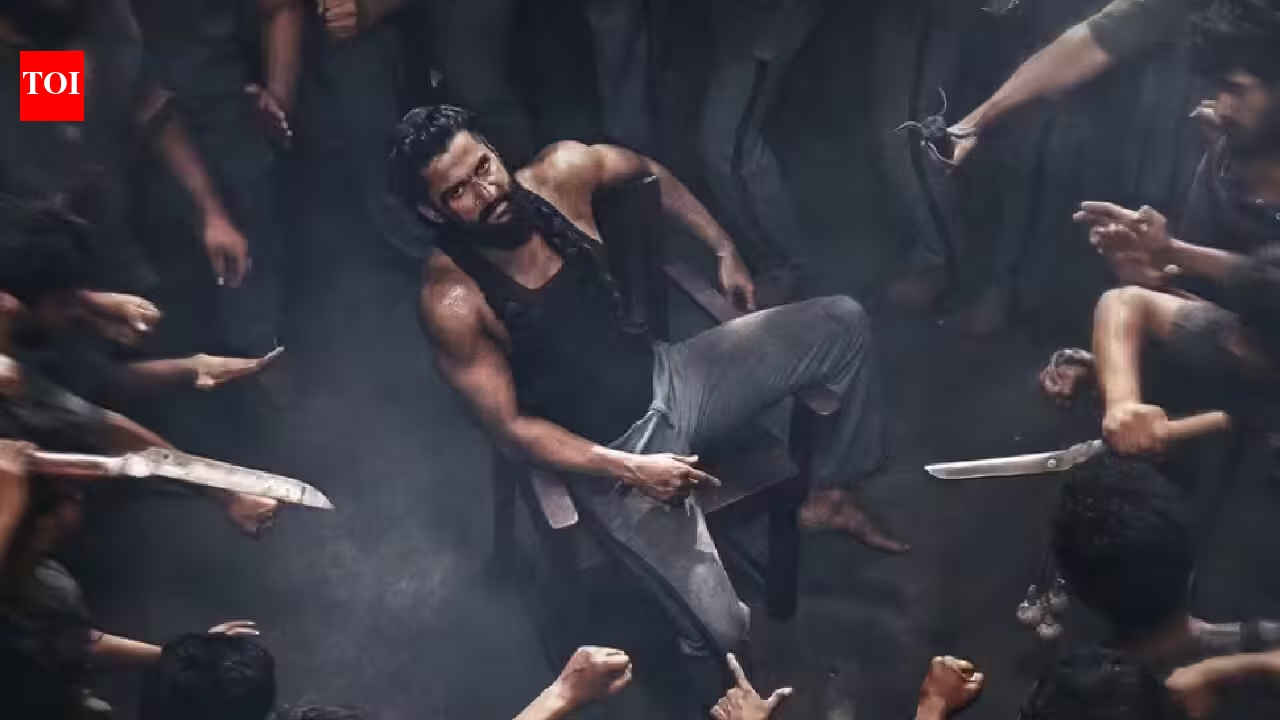
The South Indian film industry is currently witnessing a volatile intersection of fan fervor, critical scrutiny, and the growing influence of digital platforms. At the center of this storm is Nani, one of Telugu cinema’s most reliable stars, whose latest outing, The Paradise, has become a litmus test for how modern audiences—and the platforms that host them—engage with big-ticket cinema. Released on September 24 under the direction of Srikanth Odela, the film arrived with the kind of cinematic hype usually reserved for pan-Indian tentpoles. However, the days following its release have proven that high expectations are often a double-edged sword.
As the dust begins to settle on the film’s opening weekend, the conversation has shifted away from its narrative merits toward the peculiar behavior of digital booking platforms and the actor’s own candid acknowledgment of the film’s reception.
The Disappearing Review: A Growing Trend of Censorship?
One of the most curious developments surrounding The Paradise is the decision by a major ticket booking platform to disable its user rating and review section entirely. Visitors checking the film’s page are currently met with a sterile, non-negotiable message: “Rating & Review Disabled.” There has been no official explanation from the platform regarding the move, leaving industry analysts and fans to speculate about the reasoning behind the blackout.
This is not a standalone incident. The pattern suggests a proactive, albeit controversial, strategy to manage the “online discourse” surrounding high-profile releases. A similar fate befell the much-anticipated Toxic: A Fairy Tale for Grown-Ups, which saw its interactive features silenced shortly after its release. Other titles like Ustaad Bhagat Singh and O’Romeo have also undergone the same digital scrubbing.
While platforms often claim that such measures are designed to curb coordinated review-bombing or malicious trolling, the optics of disabling public discourse are undeniably fraught. In an era where a film’s “audience score” is a vital metric for casual moviegoers, removing the ability for fans to leave their mark creates a vacuum—one that is quickly filled by social media echo chambers, often leading to even more intense, and sometimes toxic, debates.
Nani Steps into the Fray
In a landscape where stars often remain tight-lipped or lean on PR-crafted statements, Nani’s response to the criticism has been notably grounded. Rather than retreating or dismissing the negative feedback, the actor took to social media platform X to address the audience directly. His willingness to acknowledge the “hilarious trolls” alongside the genuine praise highlights a level of maturity that is increasingly rare in an industry defined by ego.
“I’ve received all your love and equally enjoyed your hilarious trolls,” Nani wrote. “I’m heartwarmed by the way audiences have owned the film, and also learnt from the flaws that critics and reviewers have pointed out.”
This acknowledgment is more than just a polite PR gesture; it is a strategic repositioning. By validating the critiques—even those that were sharp—Nani is signaling that he isn’t insulated from the viewer’s experience. For a star who has spent years building a brand based on relatability and grounded storytelling, this approach preserves his connection with the audience. He isn’t claiming the film is beyond reproach; he is accepting that the collaboration between filmmaker and audience is a two-way street.
The Weight of Expectation and Artistic Sweat
Behind the box office numbers and the viral discussions lies the grueling reality of filmmaking. The Paradise, which marks another collaboration between Nani and director Srikanth Odela, was billed as a unique, high-octane experience. With a score composed by the prolific Anirudh Ravichander and a cast that includes Thomas Mathew, the film was clearly intended to be a visual and auditory spectacle.
Addressing the effort behind the curtain, Nani reminded his followers that the film was crafted with “blood and sweat.” This sentiment serves as a gentle reminder to the keyboard warriors: behind every “flaw” that viewers gleefully dissect on X, there are months, if not years, of labor by hundreds of technicians.
“We have made #TheParadise with a lot of blood and sweat to give you a unique experience, and it’s all yours to celebrate or judge,” he added. This statement underscores the vulnerability of the creative process. When a star expresses such raw gratitude in the face of mixed reviews, it challenges the audience to consider the human cost of the content they consume so rapidly.
The Box Office Reality Check
While the cultural conversation is messy, the numbers tell a story of their own. The Paradise opened with a strong domestic collection of approximately Rs 34 crore, signaling massive pre-release interest. However, the subsequent drop to Rs 17 crore on its second day paints a more sobering picture. Such a decline is not uncommon for films that fail to sustain the initial momentum of the opening day, especially when word-of-mouth becomes a deciding factor in the age of rapid-fire social media consumption.
The volatility of these figures, when paired with the disabled reviews on booking apps, paints a picture of a polarized theatrical run. Are the numbers dropping because the film didn’t resonate, or is the audience being steered away by the inability to engage with the film through traditional review channels? It’s a question that studios and platforms will need to grapple with as the industry continues to digitize the movie-going experience.
Looking Ahead: The Future of Film Discourse
The case of The Paradise serves as a mirror for the current state of Indian cinema. We are in a transitional phase where the old model of “critics vs. fans” is being replaced by an unregulated, chaotic digital marketplace. When platforms restrict feedback, they don’t solve the problem of negativity—they simply force it to spill over into more aggressive arenas.
Nani, through his measured response, has provided a roadmap for how actors can navigate this landscape. By accepting the “flaws” and maintaining a sense of humility, he has kept the door open for his next project. Ultimately, the film’s legacy will not be defined by whether or not its review section was enabled or disabled, but by how it holds up in the collective memory of the audience. For now, The Paradise stands as a reminder that even for the most seasoned stars, every release is a gamble—and the audience, as Nani puts it, is the final judge.
Disclaimer: This content is auto-generated for informational purposes only.
Source: Read Original News