








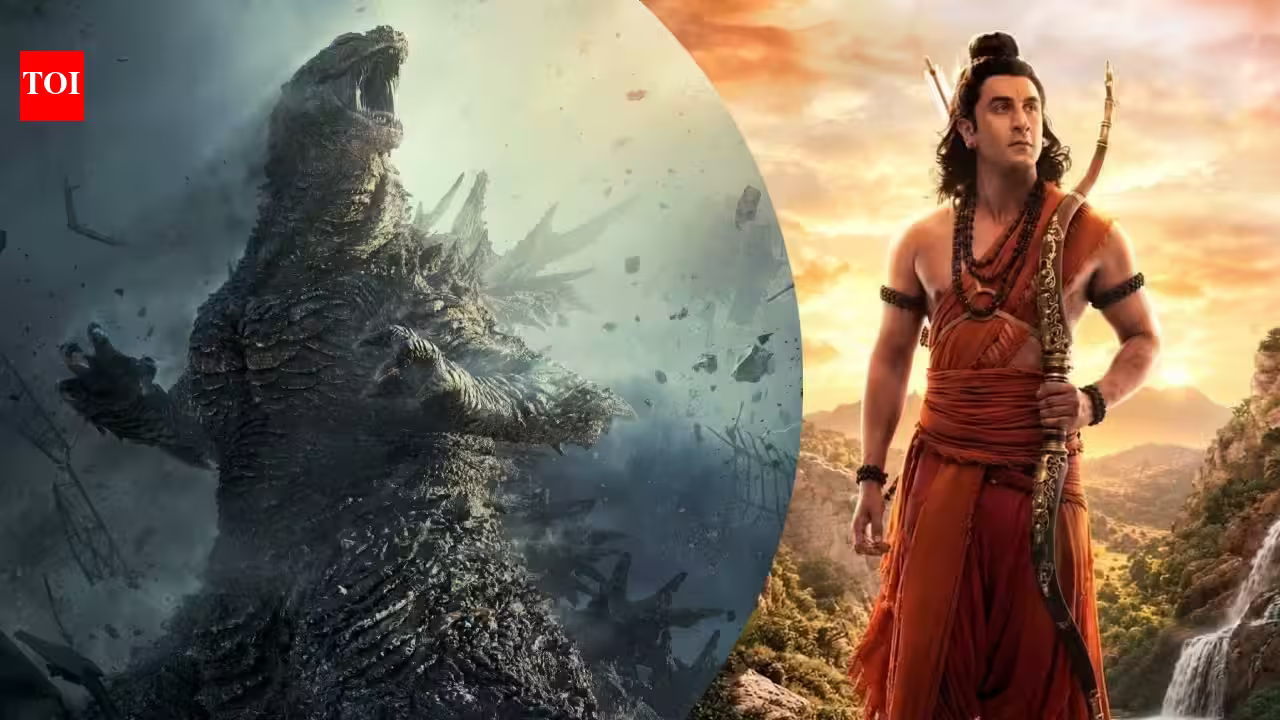
The King of the Monsters has returned to reclaim his throne, and if the early roar from the New York Film Festival is any indication, he’s doing so with more ferocity than ever before. Godzilla Minus Zero, the direct sequel to the Academy Award-winning sensation Godzilla Minus One, held its world premiere at Alice Tully Hall this week, and the result was nothing short of seismic. As the house lights rose, the cast and crew were greeted by an extended standing ovation—a testament to the fact that director Takashi Yamazaki hasn’t just hit a home run; he’s essentially leveled the stadium.
While last year’s Minus One captured the world’s imagination by stripping the franchise back to its post-war emotional core, Minus Zero appears to be leaning into both the existential dread and the sheer, unbridled destruction that fans have been clamoring for. Early reviews are already circulating, painting the film as a “jaw-dropping spectacle” that somehow manages to balance intimate human drama with a scale that makes previous entries look like mere warm-ups.
A Masterclass in Kaiju Filmmaking
Critics who caught the early screenings have been quick to praise the film’s technical wizardry. One review hit the nail on the head, noting that while the film scales up its VFX and action sequences, it remains firmly grounded in the “human, emotional stakes” that made its predecessor a critical darling. It is a rare feat in the blockbuster landscape to offer a film that feels both like a summer tentpole and an auteur-driven character study.
Takashi Yamazaki’s direction has been highlighted as the linchpin of this success. By refusing to abandon the somber, character-first approach that earned Minus One its Oscar, he has ensured that Minus Zero doesn’t feel like a hollow cash-grab. Instead, it feels like a necessary, grand-scale evolution. The consensus is clear: the King of the Monsters has never looked, or sounded, quite this grand.
The Historic Pivot to an R-Rating
Perhaps the most significant conversation piece surrounding the film is its official classification by the Motion Picture Association. For the first time in the 72-year history of the Godzilla franchise, we have an R-rated installment. The MPA cited “violent content and bloody images” as the reason for the rating—a move that marks a tectonic shift in how this legendary property is being handled.
For many, the “R” stamp might seem like a barrier, but in the current cinematic climate, it has become a badge of honor. Speaking with Variety at the premiere, Yamazaki was candid about the creative necessity of the rating. He noted that certain sequences were simply non-negotiable from a storytelling standpoint. “Censoring it or cutting it was just not an option for me,” he explained.
The filmmaker’s perspective is refreshing: he believes the stigma once associated with an R-rating has largely evaporated. Modern audiences, he suggests, actually view the classification as a promise of uncompromising vision. When viewers see that “R,” they know the director wasn’t forced to shave off the jagged edges for the sake of a four-quadrant mandate. If Deadpool and Joker have taught us anything, it’s that audiences don’t shy away from maturity—they hunger for it.
The 95% Benchmark and Oscar Buzz
While it is still early days, the critical reception has been nothing short of rapturous. Holding a 95% approval rating on Rotten Tomatoes, Godzilla Minus Zero is already sparking whispers of a repeat performance at the Academy Awards. If the film can maintain this momentum, it will be a fascinating case study in how a foreign-language kaiju film can effectively rewrite the rules of global franchise blockbusters.
The Rotten Tomatoes score serves as more than just a number; it confirms that the “Godzilla magic” wasn’t a fluke. It is a sustained artistic triumph. Whether or not the Academy will look kindly upon a creature feature two years in a row remains to be seen, but the sheer ambition on display makes a compelling argument for serious consideration in the technical categories.
The Diwali Box Office Showdown: A Clash of Titans
As the hype machine ramps up, all eyes are turning toward the impending holiday release window. Godzilla Minus Zero is set to hit theaters on November 6, but it is stepping into a gauntlet. It faces a direct head-to-head collision with the Indian epic Ramayana, directed by Nitesh Tiwari and starring the heavyweight trio of Ranbir Kapoor, Sai Pallavi, and Yash.
Ramayana has planted its flag for an international release on November 5, setting the stage for what is shaping up to be one of the most interesting box office battles in recent memory. You have the towering, gritty spectacle of the King of the Monsters, and on the other side, a massive, culturally resonant Indian epic. It’s a classic “East meets East” showdown, with both films vying for the attention of the massive Diwali festive audience.
For industry analysts, this clash is fascinating because of the diverse demographics involved. Godzilla brings a dedicated, global, tech-savvy fanbase that values visual innovation, while Ramayana carries the weight of a massive, star-driven cultural event. The question isn’t necessarily which film will “win,” but rather how the global market will absorb two such gargantuan, high-stakes releases in the same 48-hour window.
Whatever the financial outcome, one thing is certain: the bar for blockbuster filmmaking has been officially raised. Godzilla Minus Zero is not just asking to be seen; it is demanding to be experienced. And for those waiting to see if the monster could truly return to his former glory, the answer is a resounding, earth-shaking yes.
Disclaimer: This content is auto-generated for informational purposes only.
Source: Read Original News