









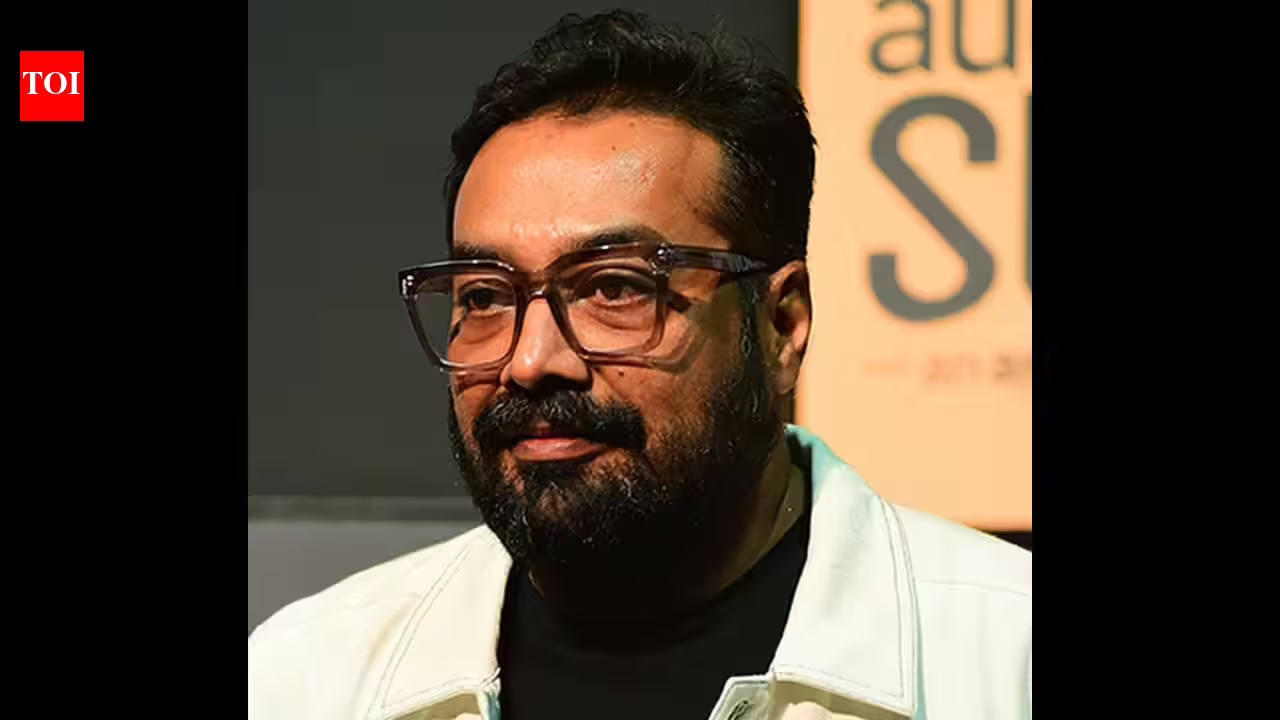
The hallowed grounds of Kolkata’s Satyajit Ray Film and Television Institute (SRFTI), a prestigious cradle for India’s future cinematic visionaries, turned into a chaotic battleground this past Sunday. What was intended to be a routine administrative booking for an external organization spiraled into a violent confrontation, leaving the academic community reeling and drawing sharp, politically charged ire from one of Bollywood’s most outspoken auteurs, Anurag Kashyap.
The incident has ignited a firestorm of debate, pitting student autonomy against institutional governance and highlighting the deepening polarization that has become increasingly pervasive in India’s educational spaces. As reports of injuries and police intervention dominate headlines, the focus has shifted from the classroom to the visceral reality of campus politics.
Anurag Kashyap reacts to SRFTI clash
Known for his uncompromising political stance and his habit of turning the lens on uncomfortable social realities, Anurag Kashyap did not mince words when addressing the unrest. Sharing the official statement issued by the SRFTI Students’ Union on his Instagram, Kashyap bypassed standard commentary in favor of a searing indictment of the current political climate in West Bengal.
“This is what they stole the votes for in Bengal. This and so much more,” Kashyap wrote, effectively framing the skirmish not as an isolated administrative oversight, but as part of a larger, systemic erosion of institutional integrity. By linking the campus violence to the inflammatory rhetoric surrounding election irregularities—popularly referred to as “vote chori” in local discourse—Kashyap has elevated a localized dispute into a national conversation about the state of democracy and public discourse in India. His intervention serves as a reminder that for filmmakers like Kashyap, the boundaries between artistic creation and political advocacy are porous, if not non-existent.
The spark: A booking gone wrong
At the heart of the controversy lies the booking of the SRFTI main auditorium by the Akhil Bharatiya Grahak Panchayat (ABGP). According to official reports, the organization had secured the venue for a sum of Rs 15,000, having obtained the necessary administrative permissions for what they described as a consumer awareness and organizational program.
However, the student body contends that this administrative approval was granted in a vacuum, with no prior consultation or notification provided to the very people who occupy the campus. When students realized that an external organization—viewed by many as ideologically misaligned with the creative, progressive ethos of a film school—was hosting an event, the atmosphere turned electric. What began as a peaceful protest, characterized by the placing of posters questioning the management’s decision, quickly dissolved into a volatile standoff. By the time the dust settled, the auditorium was no longer a site of consumer awareness, but a scene of alleged physical aggression and mutual recrimination.
Students allege attacks on campus
The narrative provided by the SRFTI Students’ Union is nothing short of harrowing. In accounts shared widely across social media, students claim they were subjected to a targeted assault that went far beyond a simple political disagreement. The Union’s statement paints a grim picture of a mob utilizing everything from sticks and stones to bricks, leaving several students injured in the process.
The violence, the students allege, was indiscriminate. Many reported fleeing the auditorium only to be pursued into the library, a sanctuary of academic work. There, they claim the violence intensified, with the librarian purportedly assaulted in the chaos. Perhaps most disturbing are the allegations of gender-based harassment, with female students claiming to have been manhandled. Beyond the physical trauma, the students spoke of psychological intimidation, alleging that they were branded with inflammatory labels such as “urban Naxals” and “terrorists.” While these accounts remain subject to formal investigation, they reflect the profound sense of vulnerability currently felt by the student body.
ABGP gives a different account
Countering the students’ narrative, representatives from the ABGP have vehemently denied the claims of unprovoked aggression. According to their version of events, the organization was exercising its right to use a venue that had been properly leased. They maintain that the students were the aggressors, allegedly disrupting a legitimate event, tearing down banners, and creating a hostile environment that necessitated a defensive response.
The ABGP has reported that four of its own members were hospitalized following the clash, painting themselves as victims of “campus intolerance.” This polarized version of events, where both sides claim to be the aggrieved party, has left authorities in a difficult position. Police presence has since been increased around the perimeter of the institute, and while SRFTI officials have labeled the situation as “under control,” the underlying fissures remain stark. The incident has left the institute in a state of suspended animation, with both sides waiting to see if institutional inquiries will hold anyone accountable for the breach of campus safety.
Anurag Kashyap’s recent work
While the incident at SRFTI captures the headlines, it is worth noting the current trajectory of Kashyap’s own career, which has recently seen a shift toward exploring diverse storytelling formats. His recent directorial projects, including Nishaanchi—which served as the launchpad for Aishwarya Thackeray—and the feature Bandar, demonstrate his continued commitment to the craft.
Kashyap remains a filmmaker who thrives in the friction between high-concept cinema and gritty, earth-bound realism. It is this same sensitivity to the “real” that draws him to controversies like the SRFTI clash. Whether or not his public condemnation will lead to any tangible change in how film schools manage external bookings remains to be seen. However, one thing is clear: when the gates of a prestigious institution are breached by the violence of the outside world, artists like Kashyap will be the first to demand an explanation, ensuring that the silence of the corridors is replaced by the noise of accountability. As the investigation continues, the film community waits with bated breath, hoping that the sanctity of SRFTI as a place of learning is restored sooner rather than later.
Disclaimer: This content is auto-generated for informational purposes only.
Source: Read Original News