







The Regulatory Impasse: Understanding the RBI Mandate
The relationship between Tata Sons and the Reserve Bank of India (RBI) has reached a critical juncture. In 2022, the central bank classified Tata Sons as an “upper-layer” non-banking financial company (NBFC). This regulatory designation carries significant implications, most notably the mandatory requirement for the company to list its shares on the public stock exchanges. For a conglomerate that has historically functioned as the private bedrock of the Tata Group, this directive represents a fundamental challenge to its governance structure and operational philosophy.
The core of the issue lies in the definition of a Core Investment Company (CIC). As a holding company primarily invested in its group subsidiaries, Tata Sons historically fit the profile of a CIC. However, the RBI’s tightening of norms for upper-layer NBFCs was designed to bring large, systemically important financial entities under stricter oversight, ensuring transparency and market discipline. Tata Sons, holding a massive portfolio of group assets, falls squarely into this category. The company’s subsequent attempt to secure an exemption from this listing mandate was rejected by the regulator in September, leaving the board and its shareholders with a binary choice: either initiate the process of an initial public offering (IPO) or fundamentally alter the company’s business and asset composition to exit the NBFC/CIC regulatory framework entirely.
Strategic Reorganization: The Merger Proposal
To navigate this regulatory pressure without resorting to a public listing, Tata Trusts—the majority shareholder holding 66 percent of Tata Sons—has proposed a significant structural pivot. The plan involves merging two entities, Tata Electronics Systems Solutions (TESS) and Tata Consulting Engineers (TCE), into the parent holding company, Tata Sons. This is not merely a corporate housekeeping exercise; it is a calculated effort to shift the financial profile of the holding company.
By integrating operating businesses with substantial revenue streams directly into Tata Sons, the composition of its balance sheet changes. Under the RBI framework, a CIC is defined largely by its asset profile, specifically the concentration of its assets in group investments. By diluting the share of financial/investment assets with a larger influx of operating revenue and non-financial assets, Tata Trusts aims to reclassify the entity. According to data provided by the Trusts, this move would result in operating revenue accounting for over 64 percent of the company’s total income. Simultaneously, the investment in group companies would drop below the 90 percent threshold of net assets that typically triggers the CIC tag. If successful, this transformation would allow Tata Sons to surrender its NBFC certificate of registration and cease to be an entity governed by the current mandate, thereby bypassing the requirement to list.
Historical Precedent and Philosophical Alignment
The rationale offered by Tata Trusts for this restructuring extends beyond mere regulatory avoidance. They argue that this model—housing operating businesses directly within the holding company—is a return to a proven organizational structure that defined the Tata Group for over a century. Before the formal demerger of Tata Consultancy Services (TCS) in 2004, the group operated several divisions as integral parts of the parent firm.
The proponents of this move emphasize that retaining private ownership is essential for the Tata Group’s long-term vision. The argument is that the group’s focus on “nation-building” and long-term strategic initiatives is better served when the parent company is shielded from the quarterly pressures of public market scrutiny. By maintaining private status, the leadership can prioritize sustainable growth and legacy-driven goals over the volatile short-term demands often associated with publicly traded corporations. This philosophy aligns with the unanimous resolutions passed by the boards of the Sir Dorabji Tata Trust and Sir Ratan Tata Trust in July 2025, signaling a firm institutional commitment to the group’s traditional ownership architecture.
The Leadership Standoff and Boardroom Friction
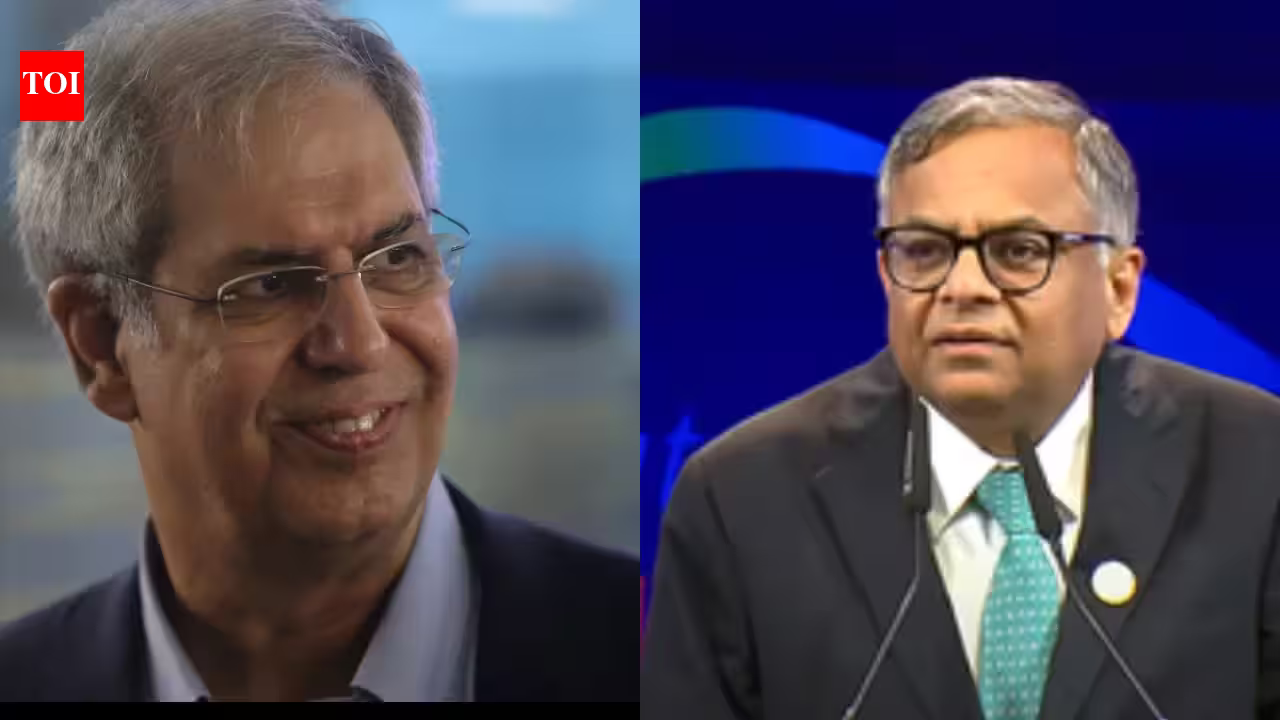
The restructuring proposal is inextricably linked to an unfolding leadership dispute at the highest levels of the Tata Group. The tension between the Tata Trusts and the Tata Sons board of directors has become public, touching on issues of governance, succession, and the strategic direction of the conglomerate. The appointment of N Chandrasekaran, whose leadership has overseen a period of significant growth and market value appreciation for the group, has become a flashpoint.
While the Tata Trusts initially supported Chandrasekaran’s tenure, the later decision by the Tata Sons board to extend his term for another five years met with resistance from Noel Tata, who voted against the proposal. This discord reflects deeper differences in how the board and the Trusts view the company’s future. The board’s inclination toward compliance with the RBI framework and its apparent readiness to move toward a public listing stands in direct opposition to the Trusts’ directive to keep the company unlisted. The legitimacy of the board’s resolution has been challenged by the Trusts, citing a lack of support from their nominee directors. This internal friction complicates the path forward for the proposed merger, as the implementation requires a harmonious alignment between the holding company’s board and its majority stakeholder.
The Road Ahead: Regulatory and Operational Hurdles
Even with a clear strategy, the transition is fraught with legal and regulatory challenges. The Trusts acknowledged that the proposed amalgamation must comply with the RBI’s Non-Banking Financial Companies – Voluntary Amalgamation Directions of 2025. This process is not a formality; it requires a formal no-objection certificate from the central bank. The RBI, known for its rigorous oversight of financial institutions, will undoubtedly scrutinize whether the restructuring is a genuine shift in the business model or an attempt to circumvent regulations designed to protect systemic stability.
Furthermore, the restructuring will require significant internal due diligence and integration efforts to merge entities like TESS and TCE into the structure of Tata Sons. This involves complex legal maneuvering, tax implications, and the consolidation of operational workflows. Success depends on the ability of the management to convince regulators that the new structure serves the interest of stakeholders while adhering to the spirit of the law.
Conclusion: An Uncertain Future for Tata Sons
The battle over the structure of Tata Sons is a landmark moment in Indian corporate history. At its heart, it is a question of whether one of the nation’s most iconic institutions can balance its century-old private structure with the modern, stringent requirements of a changing financial landscape. If the restructuring succeeds, it would mark a rare instance of a major entity successfully navigating out of a restrictive regulatory classification through strategic reorganization. If it fails, the group may be forced to accept a public listing, fundamentally changing the ownership character of the Tata Group. As the board of Tata Sons prepares to deliberate on the Trusts’ proposal, the outcome will define not only the future of the Tata legacy but also the broader relationship between major private holding companies and the regulatory authorities in India.
Disclaimer: This content is auto-generated for informational purposes only.
Source: Read Original News