







Canadian PM Mark Carney Stops Short of Guaranteeing Protection Against Foreign Interference
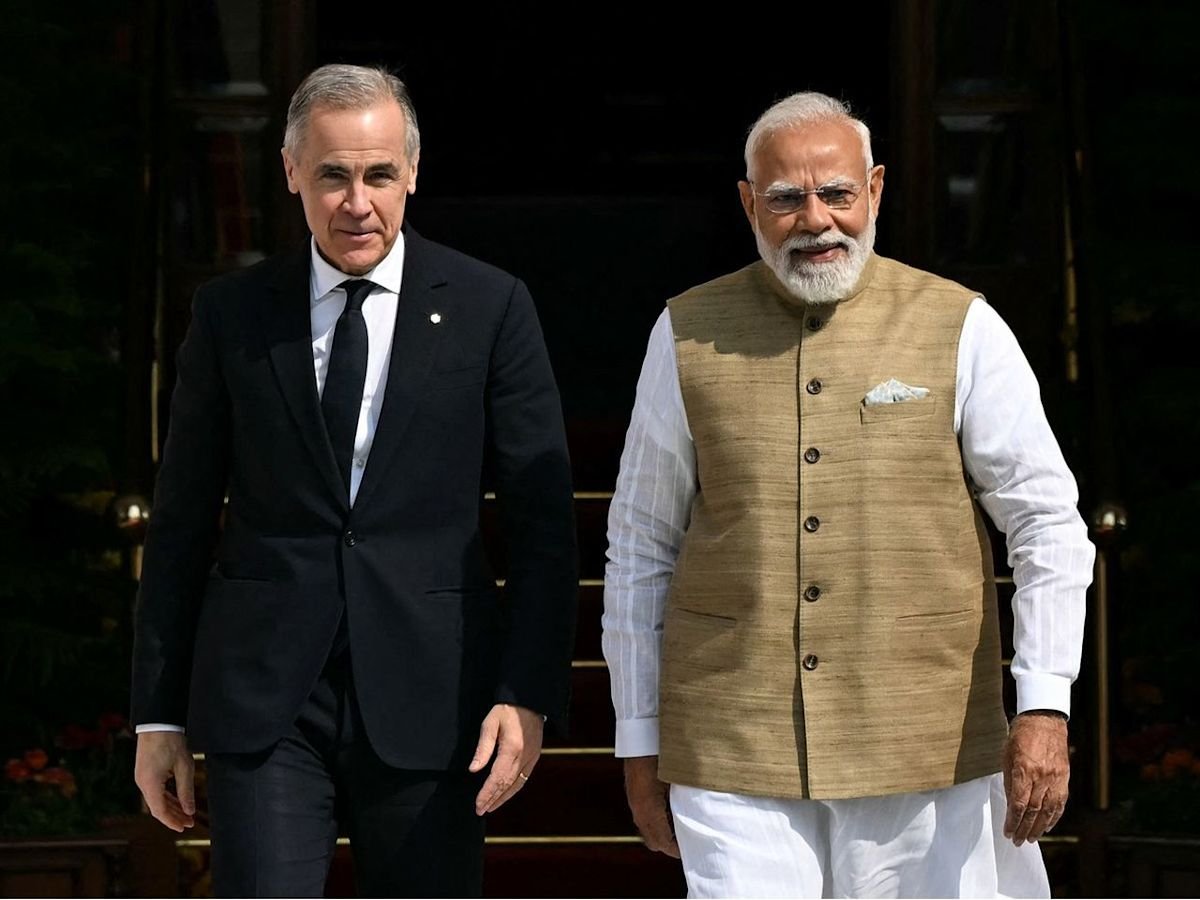
OTTAWA — Canadian Prime Minister Mark Carney has declined to provide assurances that the Indian government will remain uninvolved in criminal activities on Canadian soil, even as he moves to strengthen diplomatic, economic, and security ties with New Delhi.
In a recent interview with the New York Times, the Prime Minister acknowledged that his efforts to mend the bilateral relationship with Indian Prime Minister Narendra Modi have yielded some progress regarding security cooperation. However, when pressed on whether he could definitively rule out future Indian-linked involvement in acts like arson, extortion, or homicide in Canada, Carney was pragmatic, noting that he cannot guarantee the prevention of any crime within the country’s borders.
The delicate state of Canada-India relations remains defined by years of significant tension. Historically, Canadian security agencies have identified India as a primary actor in foreign espionage and interference. Relations reached a nadir under the previous administration when then-prime minister Justin Trudeau publicly accused Indian government agents of complicity in the 2023 murder of Sikh-Canadian activist Hardeep Singh Nijjar. Further strain followed in late 2024, when the RCMP held a rare public briefing to formally link New Delhi to a wave of violent crime, including murder and extortion, targeting individuals across Canada.
Diaspora Concerns and the Limits of Rapprochement
As the Carney administration works to reset the relationship, concerns persist among Canada’s diverse ethnic communities. Critics, including academics who specialize in transnational repression, argue that the government’s shift toward a “business-as-usual” approach risks marginalizing the very people most at risk.
Amarnath Amarasingam, an assistant professor at Queen’s University, suggested that the Prime Minister’s recent remarks could be perceived as dismissive of domestic security concerns. “One of the take-home messages is that Canada isn’t treating this as a Canadian problem,” Amarasingam said. “It is often framed as a diaspora issue or an ‘imported conflict,’ rather than being treated with the urgency and seriousness it deserves.”
This sentiment is shared by various groups—including Tibetans, Uyghurs, and Iranian dissidents—who have long advocated for more robust protections against foreign harassment. For these communities, the government’s pivot toward closer trade ties with India feels like an abandonment of their safety.
A Diplomatic Balancing Act
Despite the controversy, the path toward a new bilateral trade agreement appears to be moving forward. Prime Minister Modi is expected to visit Canada before the end of the year to finalize the deal, a move that forms the centerpiece of Carney’s strategy to revitalize relations after the prolonged diplomatic freeze.
Carney maintains that an open channel of communication is the most effective tool for change. “I’m a believer that, regardless of the relationship, it’s important to have a relationship so you can deliver messages directly, as opposed to preaching from afar,” he told the Times.
While senior officials within the government have previously signaled confidence that, in their view, illegal interference by the Indian state has ceased, the reality on the ground remains complex. With the FBI recently placing a million-dollar bounty on Goldy Brar—a key figure in the Lawrence Bishnoi criminal network linked to significant violence in North America—the shadow of international criminal syndicates continues to loom large over Canada’s domestic security landscape. For now, the administration continues to bet that diplomatic engagement, rather than isolation, is the most viable path to safeguarding Canadian sovereignty.
Disclaimer: This content is auto-generated for informational purposes only.
Source: Read Original News