








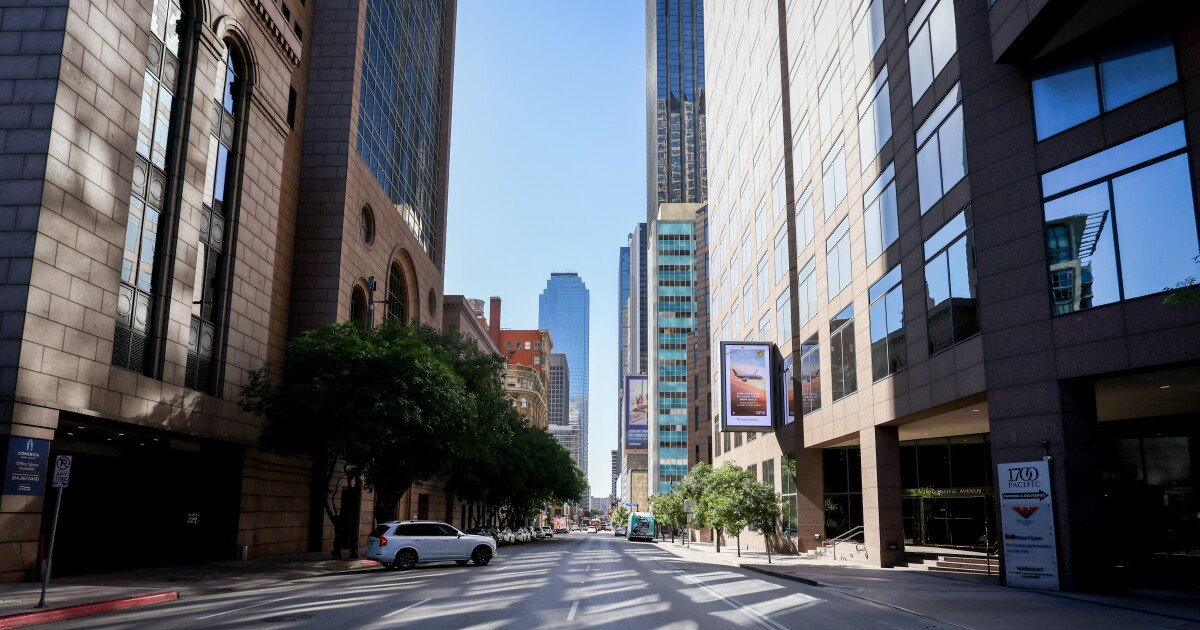
Morgan Stanley has officially pulled the trigger on a massive expansion into North Texas, committing to a $684 million capital investment to establish a major new regional hub in Dallas. The move is expected to serve as a significant catalyst for the city’s downtown economy, which has struggled with post-pandemic office vacancies, while further solidifying the region’s growing reputation as a burgeoning financial powerhouse often referred to by local leaders as “Y’all Street.”
### A Massive Boost for the “Y’all Street” Ambition
The project is set to create approximately 3,800 jobs, marking a significant milestone in Texas’s long-standing effort to lure major financial institutions away from traditional coastal hubs. Texas Governor Greg Abbott lauded the investment, highlighting the state’s “depth of talent” and pro-business environment as primary drivers for the company’s decision.
The expansion is being supported by a robust incentive package, including a $43.8 million grant from the Texas Enterprise Fund and a $40,000 Veteran Created Job Bonus. Dallas Mayor Eric Johnson emphasized that the total economic impact of the project, including infrastructure and development costs, is estimated to reach approximately $1.3 billion. This reflects a seven-year strategic push by city officials to cultivate a deep, skilled workforce and a competitive business ecosystem capable of attracting global industry leaders.
### Revitalizing Downtown Dallas Through Infrastructure
The first phase of this development will center on Fountain Place in downtown Dallas. Morgan Stanley has secured a four-year lease for 225,000 square feet of office space, with plans to invest $97 million in the facility by next year. By 2031, the firm is committed to bringing at least 1,500 employees to this location.
This commitment acts as a critical lifeline for the downtown core, which has faced mounting pressure as companies relocated to suburban office parks or downsized their footprint. City Manager Kimberly Bizor Tolbert noted that the investment serves to stabilize the city’s economic foundation, providing a space where the firm can invest in professional careers while fostering community growth. The city council had previously cleared the path for this development in June, approving an $18.5 million local incentive package to ensure the deal stayed within city limits.
### The Tech-Driven Evolution of Financial Services
While traditional banking remains the core of the hub, the financial services sector is increasingly defined by its reliance on AI, data analytics, and cloud infrastructure. Major firms like Morgan Stanley are no longer just hiring for front-office trading or investment banking roles; they are building out massive technology hubs to support their digital transformation efforts.
The influx of 3,800 positions will likely include a significant number of roles in cybersecurity, software engineering, and AI-driven financial modeling—a direct result of the industry’s shift toward high-tech operations. By establishing this hub in Dallas, Morgan Stanley joins a growing roster of financial giants that are integrating fintech and advanced technology into their corporate strategies.
This move highlights a broader trend within the tech and finance industries: the migration of intellectual capital toward “new” tech hubs that offer lower overhead and favorable business regulations. For Dallas, this means the infusion of a high-tech workforce that will likely spur further demand for local innovation, service sector growth, and tech-focused real estate development. As these global institutions settle into “Y’all Street,” they are fundamentally changing the nature of Texas’s economic landscape, transforming it from a traditional energy and manufacturing base into a sophisticated, tech-integrated financial center.
Disclaimer: This content is auto-generated for informational purposes only.
Source: Read Original News