








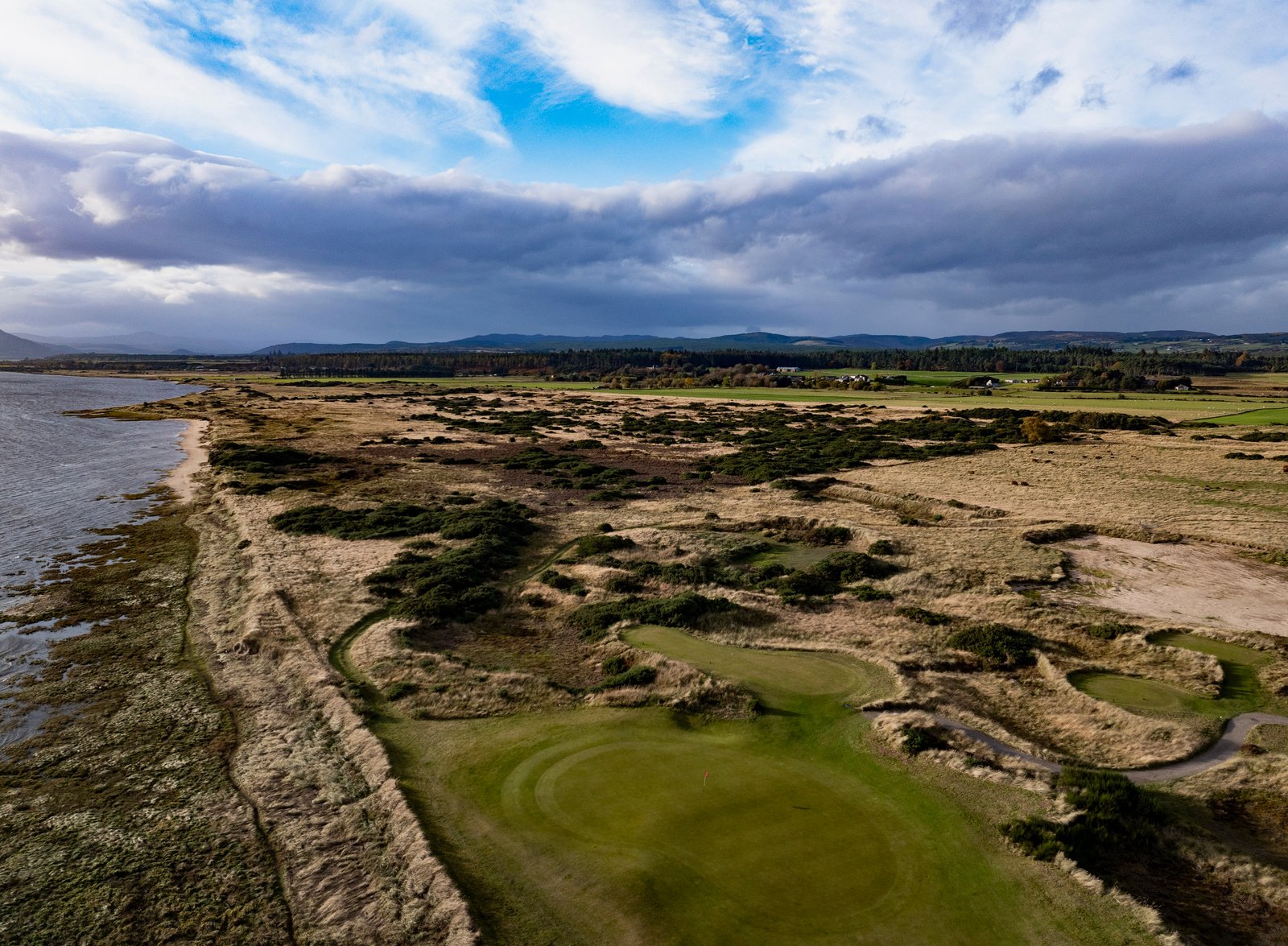
Royal Dornoch, the legendary Scottish links that has long held a place among the world’s most prestigious golf destinations, is poised for a significant expansion. The club has officially announced plans to construct a third 18-hole course on land adjacent to its existing Struie layout, a move that promises to redefine the golfing landscape of the Scottish Highlands.
While the project is rooted in traditional turf management and course architecture, the development process is being bolstered by a suite of modern technological advancements. The club’s management is leveraging data-driven decision-making tools to ensure that the new course honors the natural topography of the site while optimizing long-term sustainability.
Harnessing Data and Digital Mapping for Course Design
In an era where infrastructure development is increasingly reliant on precision, Royal Dornoch is utilizing high-fidelity geospatial mapping and terrain analysis to guide the routing of the new holes. By integrating Google Earth Engine and advanced satellite imagery, surveyors have been able to map the dramatic dunes and native fescue grasses with unprecedented accuracy.
This digital integration allows architects to visualize the flow of the course in a virtual environment before a single sod is turned. These digital twins serve as a critical bridge between classic design principles and modern environmental stewardship, ensuring that the course design minimizes soil disturbance and protects the delicate coastal ecosystem. Such technical rigor reflects a broader trend in the hospitality and leisure industry, where digital transformation is no longer optional but a fundamental requirement for large-scale capital projects.
Artificial Intelligence in Sustainable Land Management
Beyond the initial planning phase, Royal Dornoch is exploring how artificial intelligence can optimize the ongoing maintenance of the new facility. The club is looking into AI-driven irrigation systems that utilize real-time weather feeds—often integrated through Google’s cloud infrastructure—to monitor soil moisture levels and nutrient distribution.
By employing machine learning algorithms, the grounds crew can predict peak growth periods and drought cycles, allowing for precise water consumption. This approach aligns with global sustainability mandates, reducing the carbon footprint associated with maintenance machinery. As the club expands its footprint, the adoption of these AI-supported tools provides a template for how historic venues can modernize their operations without compromising the “natural feel” that defines the quintessential links experience.
The Digital Transformation of Golf Tourism
The announcement comes at a time when the golf tourism industry is undergoing a digital overhaul. Royal Dornoch’s expansion will be supported by an upgraded online ecosystem, utilizing advanced analytics to manage booking demand and player experience. Through the integration of Google Business Profile insights and refined search engine optimization, the club aims to streamline the international visitor journey, from initial discovery to the final putt.
Furthermore, the club is evaluating the use of mobile-first digital interfaces and augmented reality (AR) apps, potentially hosted on robust cloud platforms, to provide golfers with real-time course guides and historical context as they traverse the new fairways. This push toward “smart golf” ensures that while the sport remains anchored in the traditions of the game, the administrative and interactive layers are powered by the most sophisticated tech stacks available.
As construction gets underway, the global golfing community is watching closely. Royal Dornoch’s decision to blend its historic legacy with modern digital precision serves as a blueprint for the future of world-class sporting venues. By embracing the capabilities of AI, advanced mapping, and cloud-based management, the club is not only expanding its capacity but is also ensuring its relevance in a rapidly digitizing global market. The third course at Royal Dornoch is set to be more than just a new set of tees; it is a test case for how tradition and technology can successfully coexist in the high-stakes world of modern golf.
Disclaimer: This content is auto-generated for informational purposes only.
Source: Read Original News