








The Paradox of Russia’s Gasoline Imports
In a striking inversion of traditional global trade dynamics, Russia—a nation synonymous with energy dominance and colossal hydrocarbon reserves—has begun importing gasoline from India. This development, recorded by the Centre for Research on Energy and Clean Air (CREA), highlights a critical vulnerability in the Russian economy: the inability to refine its own crude oil into finished fuel products at pre-war levels.
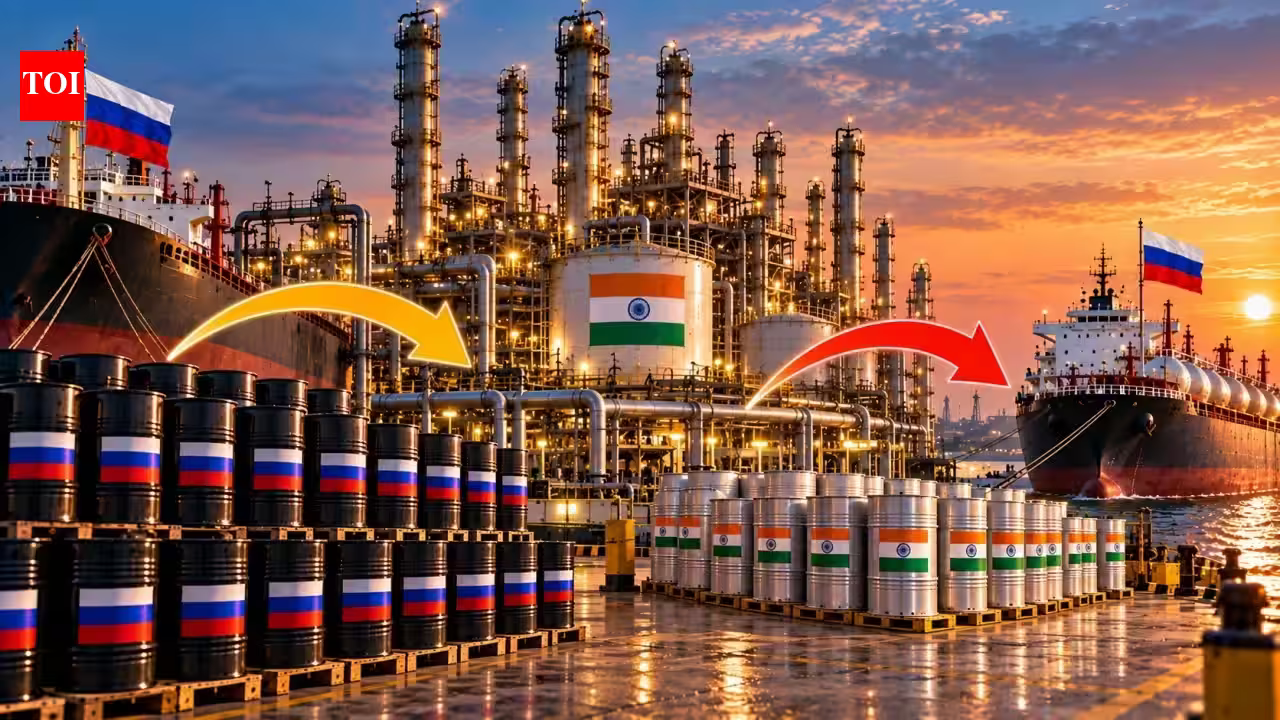
The data for August 2026 reveals a significant shift, with Russia importing 172,000 tonnes of oil products, nearly 70% of which originated from India. This figure is particularly notable because Russia is typically one of the world’s largest exporters of refined petroleum. When a country that historically supplies the global market begins to import its own refined output, it serves as a powerful indicator of internal infrastructure distress. The irony is compounded by the fact that the primary supplier, India’s Vadinar refinery, is partially owned by the Russian oil giant Rosneft. This creates a circular trade flow where Russian crude is shipped to India, refined, and then transported back to the Russian Arctic via circuitous, high-cost shipping routes.
Drivers Behind Russia’s Refining Crisis
The fundamental reason for this unusual trade pattern is the degradation of Russia’s domestic refining infrastructure. Sustained conflict in Ukraine has led to systematic disruptions, including long-range drone strikes on refineries, which have significantly hindered Russia’s capacity to process crude oil into gasoline and diesel. While Russia has attempted to mitigate these losses by relaxing quality standards and utilizing rail imports from neighboring countries, these measures have proven insufficient to meet domestic demand.
The use of the Vadinar refinery as a stop-gap solution underscores the severity of these technical and logistical hurdles. According to energy analysts, the logistics involved are both complex and costly, often requiring ship-to-ship transfers to avoid detection or to navigate the requirements of sanctioned vessels. While some might argue that these imports represent a negligible fraction of Russia’s total energy consumption—estimated at roughly 4% of domestic demand—the fact that they are occurring at all points to a structural breakdown that Moscow cannot yet solve internally.
Implications for the Indian Refining Sector
For India, the role of a “refiner of last resort” for Russia is a double-edged sword. While it demonstrates the massive capacity and agility of India’s refinery sector, it does not necessarily indicate a fundamental shift in India’s export geography. India’s petroleum exports remain overwhelmingly directed toward stable, established markets in Europe, the Middle East, and Southeast Asia.
Praveen Rai, Director at Grant Thornton Bharat, suggests that the August spike in exports to Russia should be viewed as an exceptional response to an emergency, rather than the start of a long-term commercial trend. India’s refiners are globally oriented, and their dependence on the Russian market remains minimal. The primary value for Indian firms lies in the refining margins gained by processing discounted Russian crude, which has become a staple input for many Indian refineries since the escalation of geopolitical tensions. As long as these refineries operate within international compliance frameworks, they continue to serve global markets without becoming inextricably tied to the volatile Russian domestic energy situation.
Geopolitical Risks and the Tariff Threat
The evolving stance of the United States toward energy trade with Russia introduces a layer of volatility that could alter this landscape. Specifically, legislative developments, such as the potential for significant tariffs on countries importing large volumes of Russian energy, present a tangible risk for India. If the United States were to impose steep tariffs or sanctions specifically targeting the trade of refined products derived from Russian crude, the cost-benefit analysis for Indian refineries would shift immediately.
Analysts suggest that even if the physical movement of fuel remains possible, the increased commercial friction—ranging from financing difficulties to insurance and shipping risks—could dampen the enthusiasm for these transactions. The concern for India is not merely the potential loss of a marginal export destination, but the broader economic impact of losing access to the discounted Russian crude that has supported Indian refinery margins for the past several years. If forced to pivot toward more expensive sources, such as crude from the Middle East, Africa, or the United States, Indian refiners would likely see their competitive advantage in the global refined-product market narrow.
Future Outlook for Global Energy Flows
The “round trip” of Russian crude oil—from the Russian oil fields to an Indian refinery and back as gasoline—is an anomaly in the history of oil trade, sustained by extraordinary circumstances. As it stands, there is no evidence that this will become a permanent, large-scale trade route. The lack of direct follow-up cargoes since August suggests that once temporary internal gaps are plugged, Russia may prefer to rely on other means to meet its fuel requirements.
However, the situation serves as a stark reminder of how kinetic warfare and economic sanctions have permanently altered the efficiency of the global energy supply chain. For India, the strategy moving forward will likely involve a delicate balancing act. Maintaining energy security by utilizing competitive, albeit controversial, feedstock requires careful navigation of the regulatory environment. While the Indian refining sector has proven its capability to handle the logistical complexities of such trades, the ultimate trajectory will depend on whether the global geopolitical climate allows for the continued, unhindered movement of refined products. Investors and policymakers should watch for signs of further logistical bottlenecks within Russia and any signaling from the US regarding trade sanctions, as these remain the two primary variables that will dictate the future of this specific energy corridor. In essence, while the Russian-Indian fuel trade is a fascinating case study in adaptive supply chains, it remains an outlier rather than a new standard for global energy trade.
Disclaimer: This content is auto-generated for informational purposes only.
Source: Read Original News