







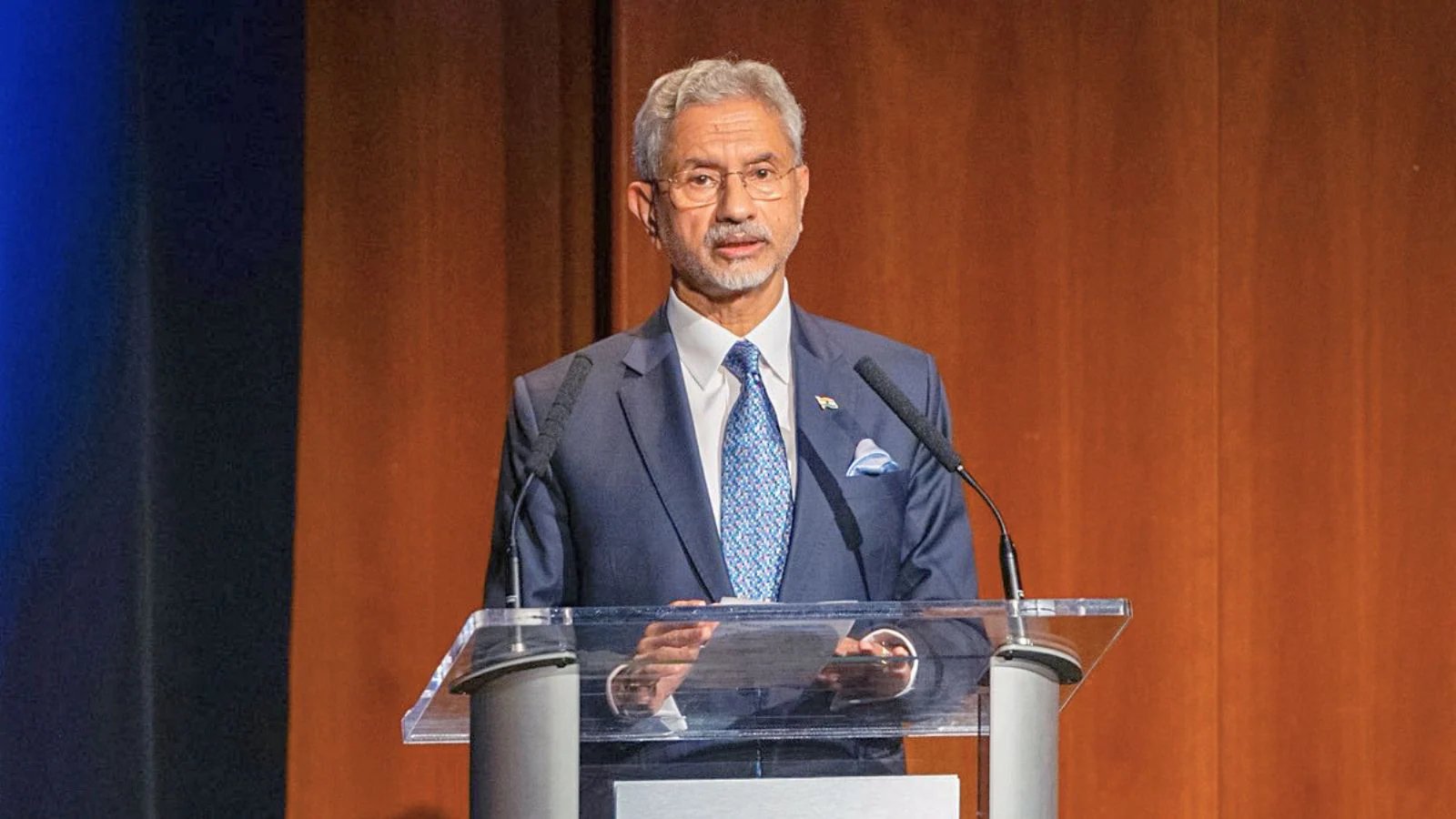
External Affairs Minister S Jaishankar Emphasizes India’s Security Concerns Amid Evolving US Ties
New Delhi: External Affairs Minister S Jaishankar has delivered a candid assessment of India’s diplomatic landscape, highlighting a fundamental friction point in its relationship with the United States: the divergent perspectives on regional security and the persistent threat of cross-border terrorism.
In a recent address, the Minister underscored that for India, the credibility of a strategic partnership is intrinsically linked to how a partner perceives its core security concerns. Without naming Pakistan, Jaishankar pointedly addressed the long-standing issue of state-sponsored terrorism that has plagued India for decades.
The Terror Challenge and Strategic Clarity
“What is particularly important for India is the issue of terrorism,” Jaishankar stated. “We feel there are very few countries which have been subjected to the kind of terrorism that we have from a neighbour as part of a deliberate, conscious policy.”
The Minister’s remarks come against the backdrop of the heightened tensions that defined the first half of 2025. Following the tragic killing of 26 tourists in Pahalgam, Jammu and Kashmir, by Pakistan-backed militants, India launched ‘Operation Sindoor.’ This decisive military action targeted terror infrastructure deep within Pakistani territory, once again laying bare the systemic support for extremism operating from across the border.
Jaishankar emphasized that any partner failing to acknowledge this reality creates a vacuum in the bilateral relationship. “If one of my primary concerns is not fully appreciated by my partner, then clearly there is an impact of that on the relationship to some extent,” he noted. The historical context—ranging from the harboring of Osama bin Laden in a Pakistani garrison city to ongoing concerns regarding terror funding—remains a sticking point for New Delhi.
US Domestic Dynamics and Global Diplomacy
Beyond the immediate security threats, Jaishankar reflected on the complexities of navigating Washington’s geopolitical priorities. He acknowledged that US foreign policy is often inextricably linked to its internal political climate.
“I think it’s also impacted, influenced at least by what’s happening within America,” the Minister observed. Successive US administrations have frequently engaged with Pakistan, often viewing Islamabad through the lens of logistical convenience or regional tactical objectives. India, however, has consistently presented empirical evidence to the global community regarding the source of insurgency in Jammu and Kashmir, urging a more grounded approach from its strategic partners.
Towards a Pragmatic Future
While acknowledging that negotiations on trade and tariffs remain areas of rigorous diplomatic effort, Jaishankar maintained a realistic outlook on the future trajectory of India-US relations.
“I would certainly hope for and expect the relationship to move on an upward trajectory, but I have to be real about the issues that we confront,” he said. He pointed out that while global powers often grapple with specific, difficult negotiations, clarity on security matters is non-negotiable for India.
The Minister’s statement coincides with ongoing international scrutiny of Pakistan’s financial systems. Despite being removed from the Financial Action Task Force (FATF) grey list in 2022, Pakistan continues to face warnings regarding money laundering and the persistent failure to fully dismantle terror financing networks.
As India continues to assert its strategic autonomy, Jaishankar’s message is clear: the strength of India’s alliances will be measured by the mutual recognition of, and empathy for, the security realities that define its existence.
Disclaimer: This content is auto-generated for informational purposes only.
Source: Read Original News