








ILO Strengthens Labour Rights and Community Support in Madhya Pradesh’s Cotton Sector
In a concerted effort to fortify the rights of workers in India’s agricultural heartland, partners of the International Labour Organization’s (ILO) RISE for Impact project have unveiled a strategic roadmap to sustain labour rights initiatives within Madhya Pradesh’s cotton-growing communities. Following high-level discussions in Indore and field-level workshops in Ratlam this August, stakeholders have pledged to move beyond temporary interventions toward building lasting, locally-anchored support systems.
The meetings, which brought together representatives from trade unions, the cotton industry, civil society, and local farming communities, addressed the systemic challenges facing the sector. Central to these discussions was the need to improve inter-agency coordination, bridge the gap between rural communities and government services, and tackle the root causes of child labour and seasonal migration.
Addressing the “Cultilabourer” Reality
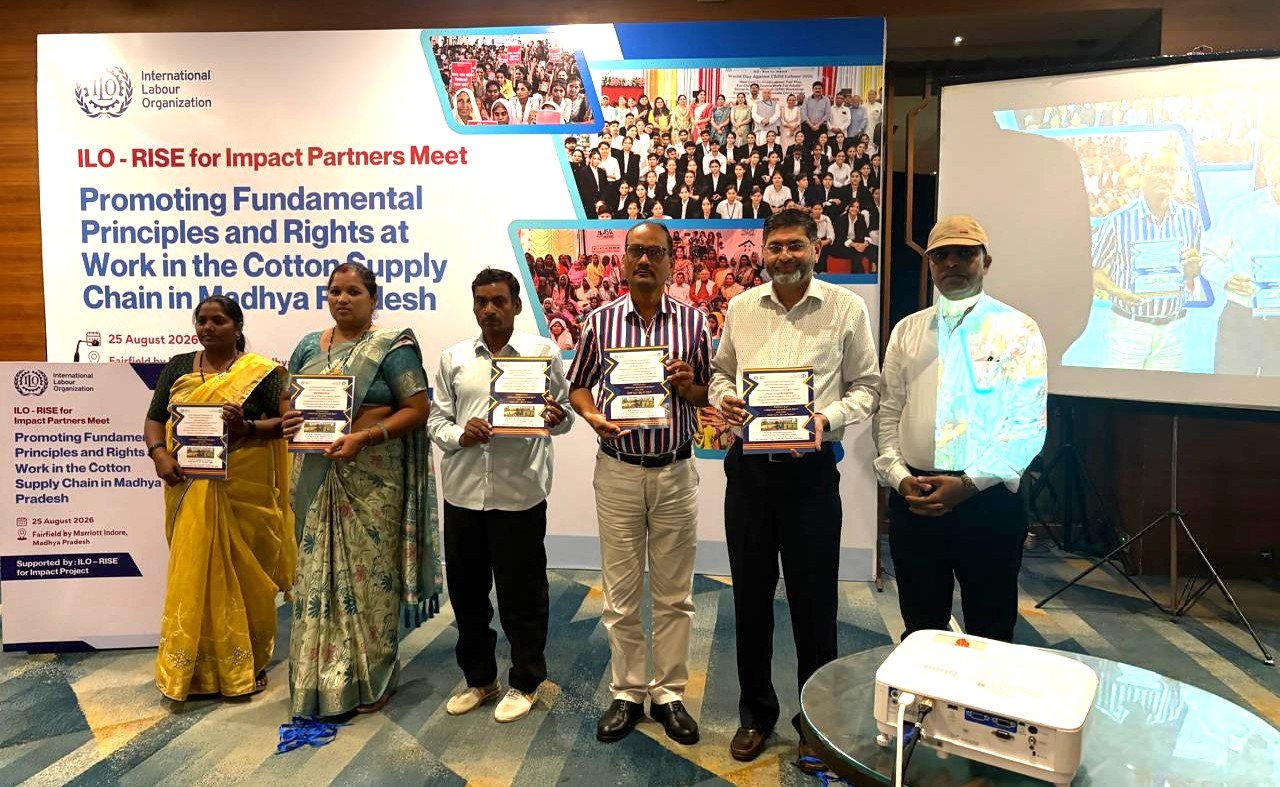
A significant milestone of the recent engagement was the launch of a joint report by the ILO and the Dr. B.R. Ambedkar University of Social Sciences (BRAUSS). The socio-economic assessment sheds light on the precarious position of smallholder farmers in Madhya Pradesh. The study introduces the term “cultilabourers” to describe families with extremely small landholdings who must rely almost exclusively on their own labour to survive. The research highlights how the fragmentation of agricultural land creates structural vulnerabilities that often leave these families susceptible to exploitation and economic instability.
Insaf Nizam, FPRW Specialist at the ILO Country Office for India, emphasized that protecting fundamental principles and rights at work (FPRW) requires deep, integrated collaboration. “Mainstreaming these rights in the rural sector necessitates effective cooperation among all stakeholders,” Nizam stated, noting that the project aims to link global labour standards with tangible, ground-level improvements.
Empowering Farmers and Promoting “Care Cooperatives”
The dialogue transitioned to the field in Ratlam, where over 100 farmers, along with members of farmer producer organizations and self-help groups, identified the practical hurdles to sustainable farming. Participants reported that labour shortages and the growing disinterest of educated youth in agriculture are threatening the future of the cotton industry. Furthermore, women farmers highlighted the “double burden” of managing both paid field work and unpaid household care, which often precludes them from accessing critical training and government support.
To address these gaps, the ILO introduced the concept of “care cooperatives”—member-owned enterprises designed to provide affordable, high-quality care services in areas where public infrastructure is thin. Bharti Birla, Enterprise Development Specialist at the ILO, noted that such models do more than provide a service; they formalize informal care work, improve wages for caregivers, and provide the community with a democratic platform to advocate for better working conditions.
A Path Toward Sustainability
The consensus among the RISE for Impact partners is clear: progress must be measured by the ability of communities to sustain their own rights. Moving forward, the project plans to map organizations by geographical reach, share training innovations, and establish clear referral mechanisms for labour grievances. By fostering these local mechanisms and integrating them with government agricultural finance and policy, the initiative aims to build a resilient framework that protects the rights of cotton workers long after the specific project cycle concludes.
As Madhya Pradesh looks to balance agricultural productivity with social responsibility, these community-led initiatives serve as a vital blueprint for the rest of the country’s agricultural sector, ensuring that growth does not come at the cost of human dignity.
Disclaimer: This content is auto-generated for informational purposes only.
Source: Read Original News