







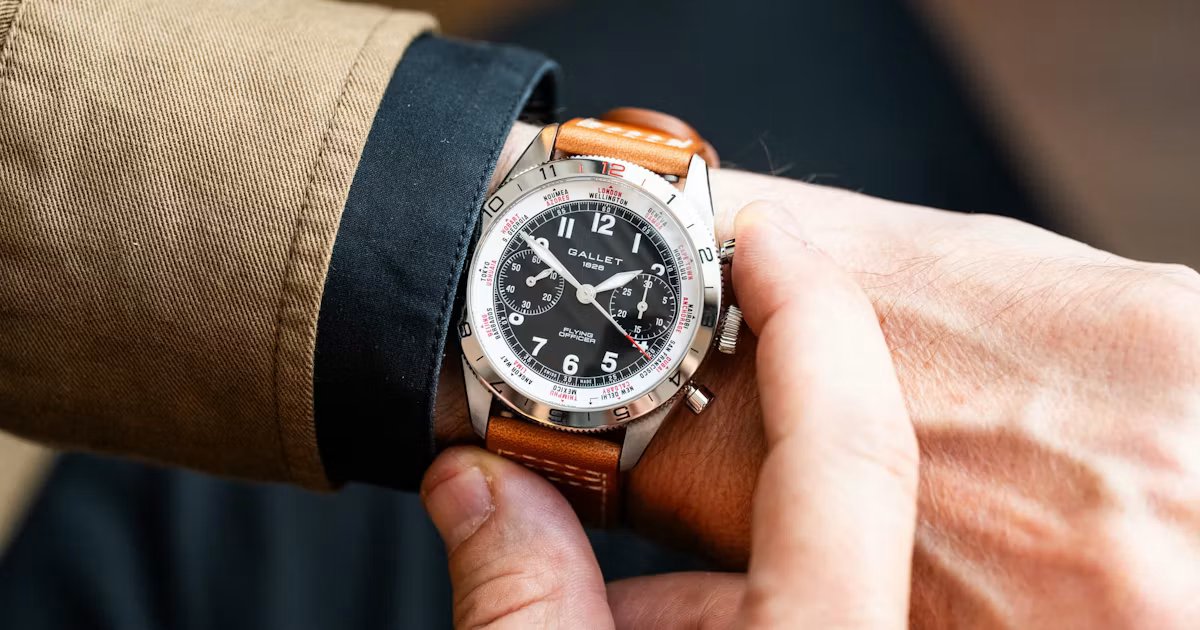
The Swiss watch industry is currently undergoing a structural transformation, one that mirrors the strategic shifts seen in the tech sector, where legacy hardware giants are increasingly turning to data-driven AI-assisted manufacturing and brand incubation to capture neglected market segments. The revival of the historic watch brand Gallet, under the stewardship of Breitling CEO Georges Kern and his House of Brands conglomerate, serves as a masterclass in leveraging institutional infrastructure to disrupt an industry that has largely abandoned the entry-to-mid-tier consumer.
## Filling the Void Left by Market Inflation
For years, mainstream luxury watchmakers have pursued a strategy of aggressive price hikes, moving their offerings further into the stratosphere of ultra-luxury. This has created a significant “vacuum” in the market. Toby Sutton, a prominent U.K.-based vintage watch dealer and the force behind the revival of the heritage brand Dennison, notes that this price inflation has alienated the everyday enthusiast.
“When you look at a lot of the mainstream brands, they’ve moved prices higher and higher,” Sutton explains. “It’s a huge market that’s been left by the big Swiss watch brands, so it is quite interesting to see some try and make a return.” By targeting this mid-tier space, Gallet is effectively executing a “market capture” strategy, filling a gap that traditional competitors have left wide open in their pursuit of higher margins.
## The “House of Brands” Tech-Infused Strategy
Gallet’s comeback is not merely a nostalgia play; it is a calculated deployment of Breitling’s massive manufacturing backbone. Just as Google utilizes its cloud infrastructure and AI frameworks to launch new hardware products—often sharing the same proprietary architecture across its Pixel and Nest lines—Gallet is tapping into Breitling’s internal supply chain.
This model relies on the same economies of scale that allow tech firms to optimize production costs. By sharing component procurement and logistics, Gallet can deliver high-quality, “adventure-themed” timepieces that would have been prohibitively expensive to manufacture as a standalone entity. According to Kern, this symbiotic relationship is the engine of the brand’s resurrection: “We could never have done this without Breitling. It would not be possible.” The physical manifestation of this integration is literally etched into the product; every Gallet caseback features the “Manufactured By Breitling” stamp, a direct nod to the brand’s technical heritage and manufacturing prowess.
## Scaling Through Retail Ecosystems
Much like the digital integration seen in modern tech ecosystems, where a new device is immediately available across a global distribution network, Gallet is leveraging Breitling’s existing footprint to gain immediate market dominance. The new brand will launch in approximately 150 of Breitling’s 300 retail locations worldwide.
This hybrid approach to retail is a strategic hedge against the volatility of the luxury market. By utilizing the existing traffic and brand loyalty associated with Breitling—and by applying precision manufacturing techniques that prioritize efficiency—Gallet is positioned to win market share rapidly. This is a departure from traditional horology, where new brands often struggle with distribution for years. By embedding itself within a proven ecosystem, Gallet is effectively bypassing the “startup phase,” using Breitling’s data, reputation, and logistical network to scale at a rate typically reserved for software-driven tech startups.
As the watch industry continues to navigate the pressures of inflation and changing consumer demographics, the Gallet model suggests that the future of heritage luxury lies in the ability to marry historical prestige with the hyper-efficient, integrated manufacturing standards of modern global enterprise.
Disclaimer: This content is auto-generated for informational purposes only.
Source: Read Original News