









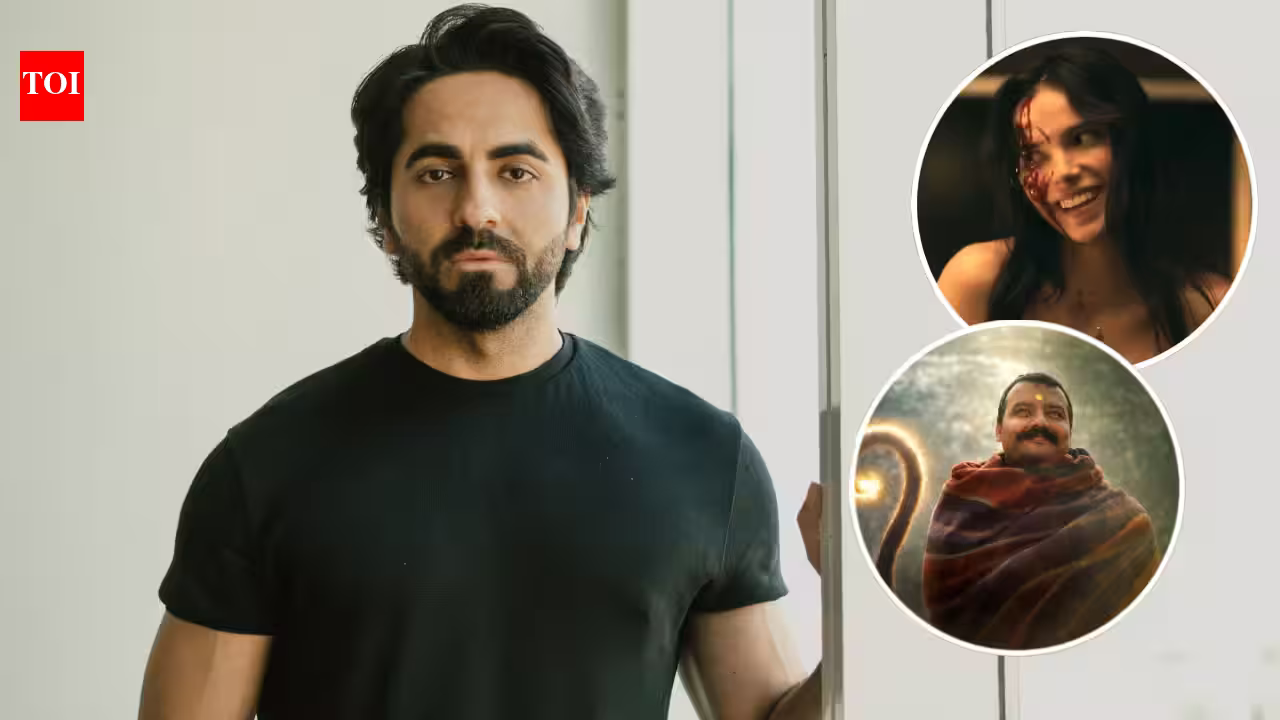
For over a decade, Ayushmann Khurrana has occupied a unique, almost proprietary space in the Indian film industry. While his contemporaries chased the sprawling, pyrotechnic-heavy spectacles that define the modern blockbuster era, Khurrana built an empire on the unconventional. He became the poster boy for the “middle-of-the-road” social drama—the kind of film that tackles taboo topics, provincial anxieties, and human frailties with a wink and a heartbeat.
However, in recent years, as the industry grappled with the seismic shift in viewer habits post-pandemic, the lines between “content-driven” and “star-driven” have blurred into a volatile cocktail of bloated budgets and diminishing returns. Standing at the podium at FICCI Frames in Mumbai, Khurrana didn’t just offer an opinion; he issued a manifesto for the future of Hindi cinema. The message was clear: it’s time to stop chasing the mammoth, and start chasing the heart.
The Return to Authenticity: Scaling Down to Connect
The industry is currently suffering from a peculiar case of “scale fatigue.” Audiences, exhausted by the relentless pressure of tentpole releases that demand astronomical ticket prices and three hours of auditory assault, are retreating to the intimacy of their own screens. Khurrana sees this as a pivotal moment for filmmakers to recalibrate.
“We need to be budget-friendly and connect more with people,” Khurrana noted, his tone devoid of the usual promotional fluff. He pointed to two films, Hanuman Ansh and Obsession, as benchmarks for this new reality. To the casual observer, these might seem like niche projects, but to Khurrana, they represent a vital survival strategy. By keeping costs manageable, the stakes shift. The pressure to generate massive opening day numbers—often engineered by star-studded marketing blitzes—evaporates, allowing the film to breathe, grow through word-of-mouth, and actually function as a narrative rather than a marketing exercise.
He acknowledged, with refreshing humility, that “it sounds simple, but it isn’t.” The difficulty lies in the industry’s addiction to the “event film” architecture. To walk away from the allure of the high-budget, high-concept project is a risky move, but one that Khurrana believes is necessary for the long-term health of the theater-going experience.
The Story as the Only Superstar
If you look back at the trajectory of Khurrana’s career—from the sperm-donation satire of Vicky Donor to the blind-man’s-bluff thriller Andhadhun—there is a singular golden thread: the story is the protagonist.
“I’ve always believed that films I do, the stories are bigger than the actor,” he remarked during his talk. “I always believed that the story is the superstar right from my first film.” It’s an easy sentiment for actors to parrot, but Khurrana has the track record to back it up. He has spent the last twenty years oscillating between various genres, testing the limits of what a “star vehicle” can look like. He admits to having dabbled in the “run-of-the-mill,” a rare moment of introspection that suggests he is well aware of the traps even the most thoughtful actors fall into when trying to please a broad market.
The actor’s pivot is not a move toward smallness, but toward “truth.” He argues that in an age of artificial intelligence, deepfakes, and hyper-polished visual effects, authenticity is the only currency that will hold its value. If a film can capture a human experience that feels raw, unvarnished, and relatable, the audience will find it—regardless of whether there’s an explosion in the trailer.
Udta Teer and the “Reverse Uno” Move
The most significant outcome of this philosophical pivot is his upcoming project, Udta Teer. By describing the film as a “reverse uno” moment, Khurrana isn’t just hinting at a surprise twist; he is positioning it as a strategic retreat to his roots.
The title itself suggests a sense of urgency and precision—an arrow in flight. For fans of his early work, there is a tangible sense of excitement surrounding this shift. After drifting into more complex, sometimes overly conceptual spaces, Khurrana seems eager to return to the grounded, character-led drama that made him a household name. He considers it “his genre,” and if the title is any indication, he’s aiming for a direct hit. The release date of October 9 is already being marked on the calendars of those who have been waiting for the “Ayushmann brand” of cinema to make its triumphant return to the big screen.
Can the Industry Follow Suit?
The question remains: will the rest of Bollywood listen? The industry is currently locked in an arms race of production design and casting, where the “success” of a film is often divorced from its quality. Khurrana’s call to action is a warning sign that the current model is unsustainable.
If actors of his stature continue to push for tighter budgets, shorter production schedules, and a renewed focus on the script, we might see the emergence of a new “Golden Age” of mid-budget Indian cinema. It’s a vision where theaters aren’t just warehouses for 300-crore blockbusters, but community spaces where people go to see themselves reflected on screen.
As the industry looks toward the final quarter of the year, all eyes are on Udta Teer. If Khurrana can prove that a focused, authentic story can dominate the box office without the safety net of an inflated budget, he won’t just have a hit movie—he will have provided a blueprint for an entire industry that has, for far too long, forgotten how to tell a story without shouting.
Whether he succeeds or stumbles, one thing is certain: Ayushmann Khurrana is no longer interested in competing for the loudest voice in the room. He’s interested in being the most honest one. And in today’s cinematic climate, that might just be the most radical choice of all.
Disclaimer: This content is auto-generated for informational purposes only.
Source: Read Original News