








Global Ozone Pollution Crisis: One-Third of World Population Exposed to Dangerous Air
A staggering 34 percent of the global population has been exposed to “extremely poor” air quality so far this year, according to a sobering new report released Wednesday by the European Union’s Copernicus Climate Atmosphere Monitoring Service (CAMS). The analysis, covering the first eight months of 2026, reveals a deepening crisis where climate change and industrial emissions are fueling a surge in ground-level ozone, posing a severe threat to public health on a planetary scale.
Ground-level ozone, which is formed when heat and sunlight react with pollutants from vehicles, industry, and wildfire smoke, is linked to chronic breathing problems, severe asthma attacks, and lung tissue damage. Despite decades of global efforts to reduce harmful air pollutants, ozone remains a stubborn and growing threat. Experts warn that as the planet warms, the conditions favoring the formation of this toxic gas are becoming more frequent.
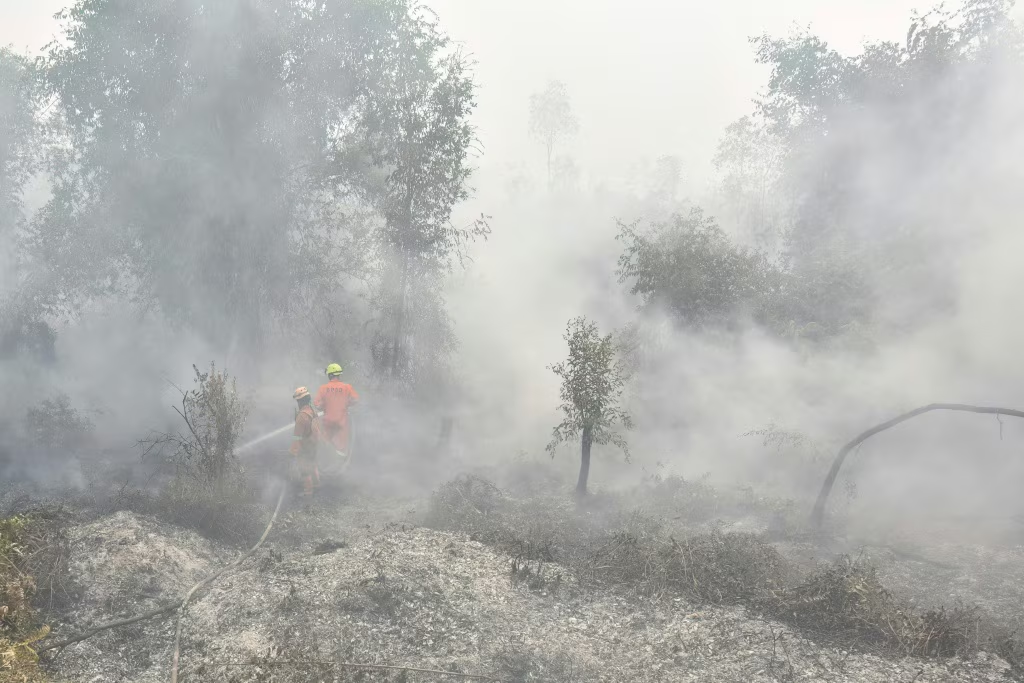
The CAMS report highlights the catastrophic synergy between record-breaking heatwaves and widespread wildfires. As regions across Europe and North America faced sweltering temperatures this year, smoke from wildfires was carried across borders, affecting communities thousands of miles from the source.
“Air pollution does not stop at borders,” said CAMS director Laurence Rouil. “It can travel thousands of kilometres, crossing continents and oceans and affecting air quality far from its source.”
Asia has emerged as the global epicenter of the crisis. According to the report, 53 percent of the Asian population has been breathing “extremely poor” air, driven by rapid industrialization, dense transport networks, and the burning of agricultural residue. Major urban centers, including New Delhi, Dhaka, Chongqing, and Lahore, have recorded ozone levels well above the World Health Organization’s (WHO) safety guidelines. The WHO recommends a maximum exposure of 100 micrograms of ozone per cubic meter over an eight-hour period; large swathes of the global population are currently living in conditions that far exceed this threshold.
The situation remains dire in the West as well. In North America, two-thirds of the population faced “poor” or “very poor” air quality this year. In Europe, despite stringent emissions regulations, ozone levels have proven difficult to curb. Officials at the European Environment Agency estimate that ozone pollution is linked to approximately 60,000 premature deaths annually on the continent.
While Oceania currently reports the cleanest air globally—with 66 percent of its population enjoying “good” air quality—the report warns that climate-driven events like the warming El Niño pattern, which is expected to peak later this year, could trigger more wildfires and worsen air quality in regions like Southeast Asia.
As the data confirms the persistent failure of current policies to effectively tackle ozone, the findings serve as a stark reminder that climate change is fundamentally altering the air we breathe, turning once-breathable environments into health hazards for billions of people.
Disclaimer: This content is auto-generated for informational purposes only.
Source: Read Original News