







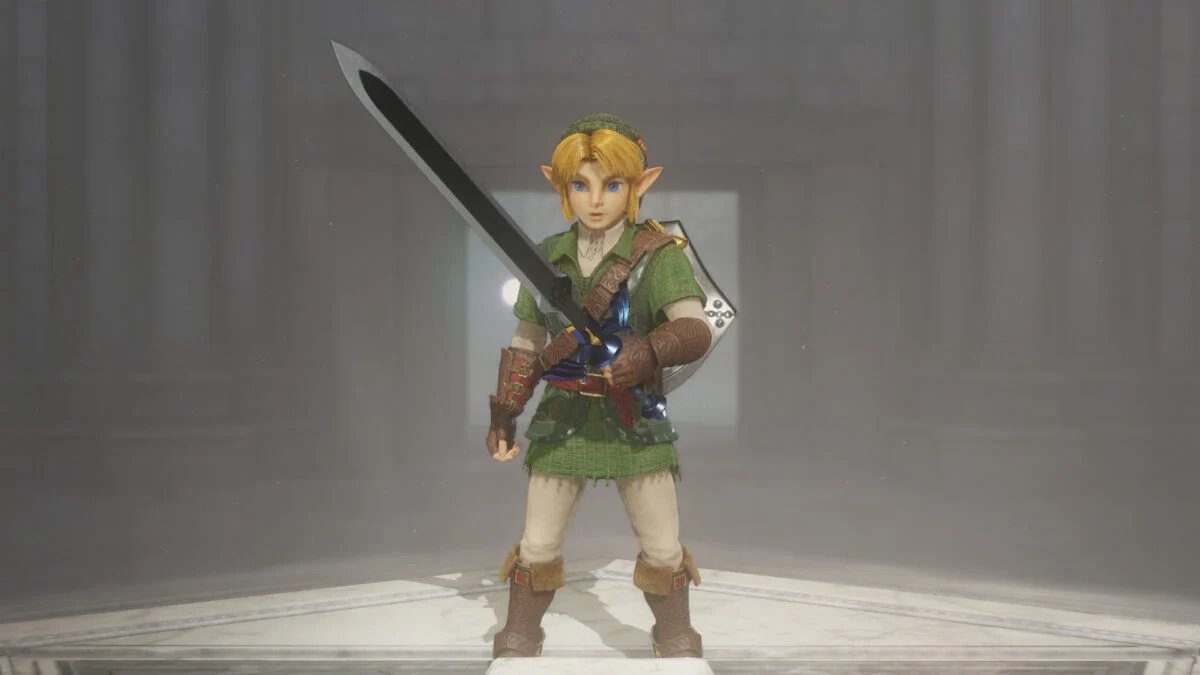
The release of The Legend of Zelda: Ocarina of Time for the Nintendo Switch 2, scheduled for November 5, 2026, represents a significant technical modernization of a title widely regarded as a pillar of game design. While the core narrative and structural DNA of the original experience remain intact, the remake introduces substantial mechanical overhauls and quality-of-life improvements that align the game with modern standards of interactivity and world-building.
Evolution of Movement and Traversal
One of the most immediate changes in the remake is the overhaul of Link’s mobility. In the original 1998 release, jumping was an automated process triggered by momentum at a ledge. The new version introduces a dedicated jump button, granting players manual control over navigation. This change necessitates a redesign of spatial awareness and platforming challenges.
Furthermore, swimming mechanics have been expanded to include a stamina-based system, allowing for underwater exploration without the cumbersome requirement of equipping and un-equipping heavy items like the Iron Boots. The inclusion of a sprint feature, activated by holding a button during a roll, adds a new layer of momentum to traversal. These adjustments facilitate faster movement across the game world, reflecting a design shift toward fluid, player-driven locomotion.
Environmental Interactivity and World Design
The remake takes advantage of increased processing power to enhance the fidelity of Hyrule’s geography. Hyrule Field has undergone a topographical shift; improvements in draw distance allow for more complex landscapes, replacing the large, empty plains of the original with detailed terrain, including new marshland areas and adjusted elevations for landmarks like Lon Lon Ranch.
Dungeon design also exhibits a shift toward causal realism. Rather than relying on static triggers where objects would appear or vanish without clear cause, the remake introduces physical animations—such as collapsing log bridges or mechanical switches that clearly manipulate stone platforms. This design approach creates a more consistent internal logic, making the environments feel like functional spaces rather than abstract puzzle rooms.
Modernized Interaction Systems
Technological updates extend to the character interactions and administrative tasks within the game. The transition to fully voice-acted cutscenes marks a departure from the grunts and text-based dialogue of the original, providing a more cinematic delivery for key narrative moments. Simultaneously, the game world now features more robust NPC density, particularly in urban areas like Castle Town, where the population has been significantly increased to create a sense of scale.
Integration of real-time lighting and temporal cycles is another highlight. In previous versions, time often paused when entering interior locations. In this remake, the transition between day and night persists even within towns, allowing for dynamic lighting shifts as the player moves through the world. The loading process has also been streamlined, with seamless transitions when entering shops or minor buildings, minimizing interruptions in exploration.
Hardware-Specific Features and UI Enhancements
The remake utilizes the Nintendo Switch 2 hardware to introduce sensory integration, specifically regarding the Ocarina. The game now includes microphone support, enabling players to hum, sing, or play an instrument to perform songs. This provides a tangible alternative to the traditional button-input sequences, catering to different playstyles and increasing immersion.
Other UI and equipment management updates include the mapping of Iron Boots to a dedicated button, resolving a common point of frustration for legacy players. The Lens of Truth has also been visually integrated as an equipable goggle set, ensuring that the player-character’s model matches the action being performed on screen. Even the inventory system has been adjusted; observed footage suggests an increased initial rupee cap of 200, compared to the original 99, which reduces the frequency of inventory management friction during early-game exploration.
Impact on the User Experience
By refining these mechanics, Nintendo has balanced the preservation of the game’s original identity with the requirements of a modern audience. The camera system, which previously relied on a snapping target mechanism, has been upgraded to a fully rotatable free camera. This change fundamentally alters how players interact with the environment, as they are no longer restricted to predetermined angles and can explore obscure or previously hidden viewpoints.
These updates collectively signal an intent to provide a more cohesive experience. By prioritizing seamless transitions, refined input control, and environmental responsiveness, the remake serves as both a restoration of a classic and a technical update that addresses the constraints of late-90s hardware. Players can expect a more responsive and immersive version of Hyrule that retains the challenges of the original while removing the technical barriers that have historically hindered accessibility.
Disclaimer: This content is auto-generated for informational purposes only.
Source: Read Original News