




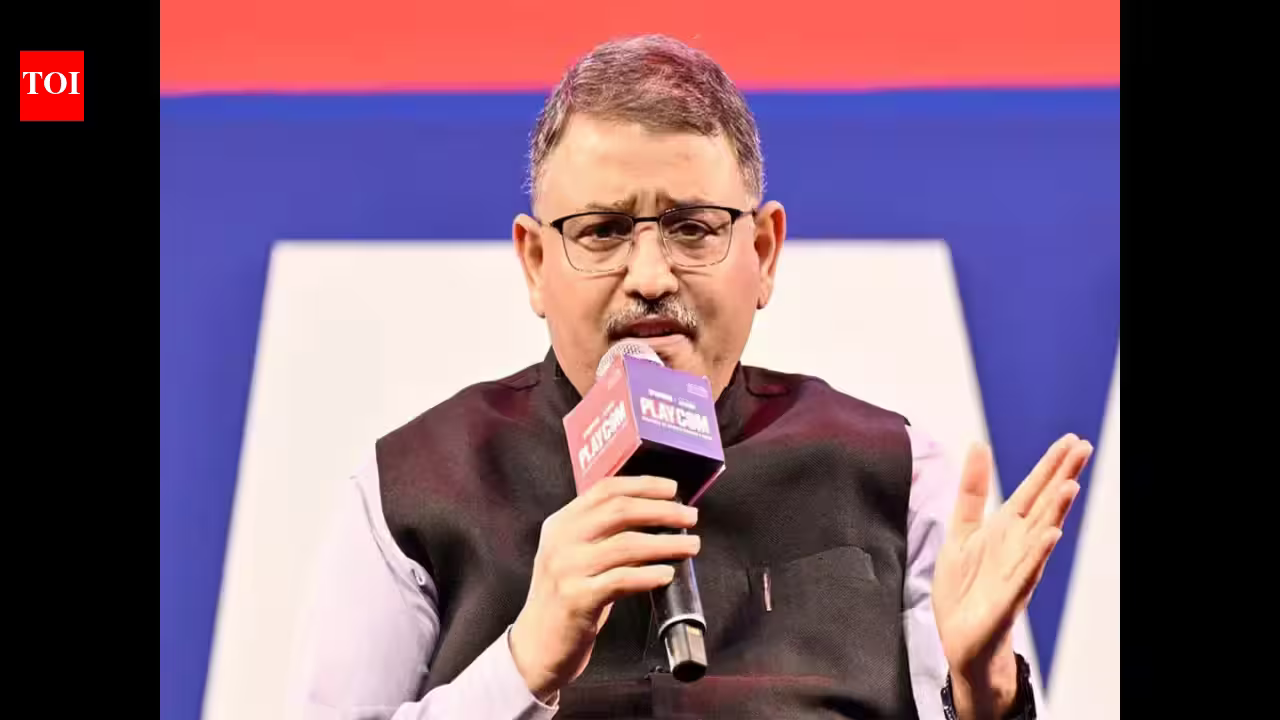
SHIFTS in the administrative landscape of Indian sports have taken center stage this week as top-ranking officials from the Ministry of Youth Affairs and Sports (MYAS) have opted to forgo their scheduled travel to the Asian Games in Aichi-Nagoya. The decision, led by Sports Secretary Hari Ranjan Rao, signals a strategic pivot toward domestic priorities, specifically the upcoming BRICS Traditional and Indigenous Sports Demonstration Games slated for October 12–13 in Ahmedabad.
The announcement comes at a pivotal moment in the Indian sporting calendar, as the nation balances its international competitive obligations with a growing ambition to establish itself as a premier global host for major multi-sport events.
Prioritizing Domestic Logistics
Sports Secretary Hari Ranjan Rao was initially penciled in to depart for Japan on September 28. However, recent developments indicate that he has officially cancelled his trip to remain in New Delhi to oversee the final operational phases of the BRICS demonstration event.
Internal sources within the Ministry have been quick to dispel any notions that the change in schedule is a reaction to India’s performance on the field in Aichi-Nagoya. Rather, the move is being characterized as a necessary management decision to ensure the seamless execution of the Ahmedabad event.
“Secretary Sports, being the senior-most officer of the Ministry, decided to monitor the preparation of the Games personally,” a source familiar with the matter stated. “Given the limited window of time remaining before the opening ceremonies, it would have been logistically difficult to manage the high-level oversight required for such a significant international event while based in Japan.”
Austerity and Administrative Efficiency
The ministry’s decision to keep its senior leadership at home also aligns with a broader internal policy of austerity. Throughout the current fiscal cycle, the Sports Ministry has maintained a lean approach to travel, intending to keep official contingents limited to only essential personnel.
While the Asian Games remain a marquee event, the absence of the top brass does not mean the ministry lacks representation. Col. NS Johal, CEO of the Target Olympic Podium Scheme (TOPS), remains on the ground in Aichi-Nagoya to support the Indian contingent. With the closing ceremony for the Asian Games scheduled for October 4, his presence ensures that the interests of the athletes are well-represented as they conclude their campaigns.
The Stakes of the BRICS Games
The BRICS Traditional and Indigenous Sports Demonstration Games represent far more than a simple exhibition of athletic prowess. Coordinated through a high-level partnership between the Ministry of Youth Affairs and Sports, the Ministry of External Affairs (MEA), and the Government of Gujarat, the event is designed to serve as a cultural and diplomatic bridge.
Approximately 2,000 participants—including athletes, officials, and cultural ambassadors from nine nations, including China, Russia, Iran, and Bolivia—are expected to converge on Ahmedabad. The Games will focus on showcasing the heritage, indigenous sports, and cultural practices that define the member nations.
For the Indian government, this is a dress rehearsal of sorts. With India’s formal bid to host the 2036 Olympic Games and its commitment to hosting the Commonwealth Games in 2030, the administrative success of the Ahmedabad event is being viewed as a benchmark.
Building a Global Sporting Legacy
The emphasis on Ahmedabad as a host city is no coincidence. By concentrating resources and administrative attention on the upcoming BRICS event, the Ministry is signaling its long-term commitment to upgrading India’s sports infrastructure and organizational capacity.
Hosting successful international events is viewed as critical to the country’s global image. Every facet of the BRICS Games—from security and hospitality to venue management—will be scrutinized by international observers, as the Ministry seeks to prove that it possesses the logistical expertise required for the significantly larger requirements of an Olympic bid.
As the dust settles on the Asian Games, all eyes within the sporting administration are now fixed firmly on the Sardar Patel-led sporting ecosystem in Gujarat. While the athletes in Japan have occupied the headlines, the bureaucrats back home in New Delhi are quietly preparing for a future where India is not just a participant in the global sporting arena, but a primary stage-setter for the world’s greatest sporting spectacles.
Disclaimer: This content is auto-generated for informational purposes only.
Source: Read Original News