







The Strategic Pivot to Flex-Fuel Technology
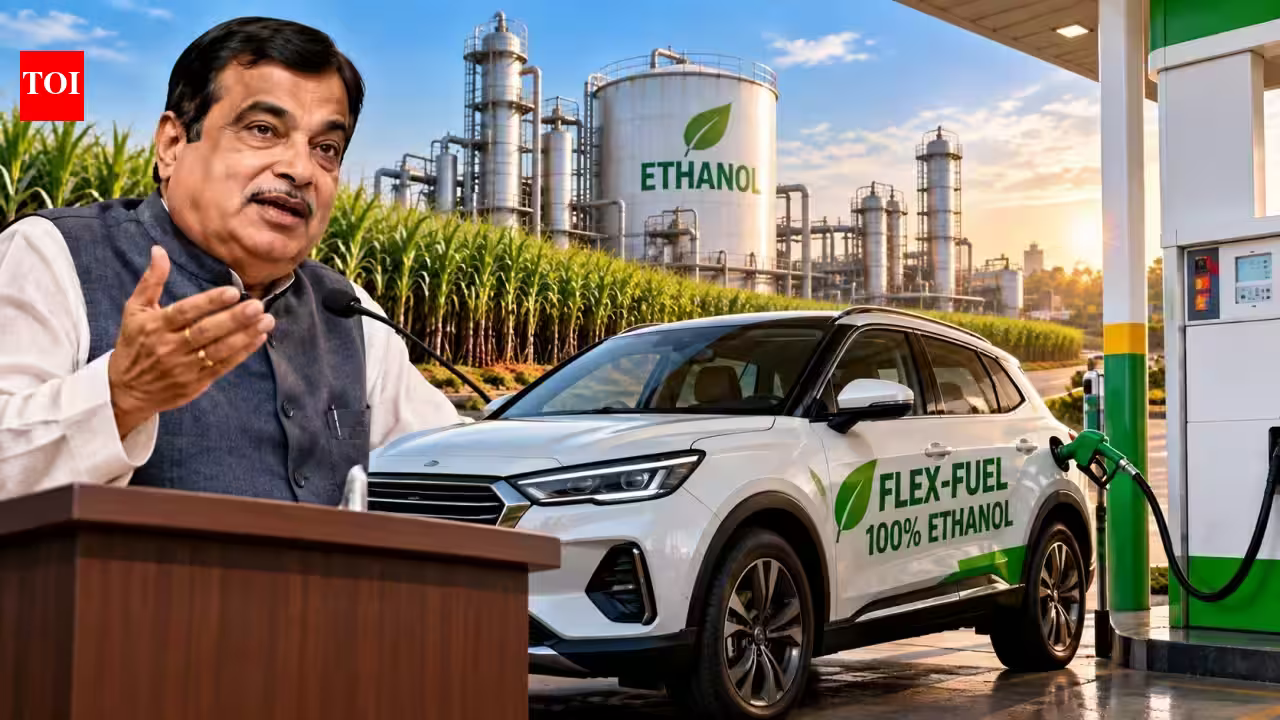
The Indian automotive landscape is undergoing a profound transformation driven by the dual mandates of energy security and environmental sustainability. Central to this shift is the promotion of flex-fuel engines, a technology designed to operate on a flexible blend of gasoline and ethanol, or even 100 percent ethanol (E100). Union Minister for Road Transport and Highways, Nitin Gadkari, has emphasized that this technological evolution is not merely an environmental preference but an economic necessity. By decoupling the automotive sector from a complete reliance on fossil fuels, India aims to mitigate the immense fiscal burden posed by its annual petroleum import bill, which currently stands at approximately Rs 22 lakh crore.
Flex-fuel engines represent a significant leap from the E20 standards currently being standardized across the nation. While E20 mandates a 20 percent ethanol blend in petrol, the shift to E100-capable engines allows for a completely indigenous fuel ecosystem. This transition is underpinned by the concept of the farmer as an ‘urja data’ (energy provider). As ethanol production scales, agricultural commodities like maize and sugarcane find robust demand in the energy sector, directly bolstering rural incomes. The surge in maize prices, which nearly doubled following the expansion of the ethanol mandate, serves as a testament to the socioeconomic potential of this transition. By integrating agriculture with heavy industry, India is effectively pursuing a model of ‘swadeshi’ (indigenous) energy independence.
The Intersection of Agriculture and Energy Economics
The economic viability of ethanol as a primary fuel source hinges on the efficient utilization of agricultural surplus. In the Indian context, this creates a circular economy where the output of the farm sector sustains the mobility needs of the urban population. When farmers pivot to producing feedstocks for biofuels, they are not only contributing to food security but also participating in a multi-billion-dollar energy market. This alignment reduces the volatility associated with crude oil imports, which are inherently tied to global geopolitical tensions and fluctuating currency valuations.
Furthermore, the conversion of organic waste into fuel represents a critical dimension of this strategy. Projects currently operational in cities like Nagpur, which process thousands of tons of waste into CNG, exemplify the scalability of this model. If replicated across the country, these initiatives could turn urban waste management into a profitable energy-generating sector. This multifaceted approach—combining ethanol-based mobility with waste-to-energy conversion—is designed to create a more resilient macroeconomic framework, insulating India from the risks inherent in a fuel-import-dependent model.
Scaling Public Transportation for a Growing Economy
While the focus on personal vehicle technology is vital, the government’s push for a modern, accessible public transport network is equally significant. The disparity in bus availability—India currently maintains a ratio of roughly two buses per 1,000 people, against a target requirement of eight—highlights an enormous opportunity for industrial and infrastructure growth. The PM e-Bus Sewa scheme, with its massive allocation of Rs 57,000 crore, is structured to bridge this infrastructure deficit. By prioritizing the deployment of 10,000 electric buses, the government is addressing the dual challenges of urban congestion and high carbon emissions in the transport sector.
The business imperative behind this expansion is clear: public transport must be perceived as a convenient, affordable, and high-quality utility rather than a last-resort option. By mandating that ticket prices remain significantly lower than those of traditional diesel-powered buses, the government is incentivizing a modal shift in commuting behavior. Moreover, the design standards for these vehicles—ensuring accessibility for senior citizens and individuals with disabilities—reflect a commitment to inclusive economic development. As the automobile industry works toward the production of two lakh buses over the next three years, the domestic manufacturing sector stands to gain a competitive edge in design, safety, and sustainable technology.
Employment Generation Through Mobility Reform
A frequently overlooked aspect of the government’s current transport policy is its potential as a massive engine for job creation. Legislative changes, such as the 2019 amendments to the Motor Vehicle Rules, have unlocked significant employment opportunities by allowing private vehicle owners to integrate their assets into the taxi and transport economy. According to official estimates, these policy reforms have already facilitated the employment of millions of drivers across the two-wheeler, autorickshaw, and car segments.
If these provisions were to be adopted uniformly across all Indian states, the impact on the labor market could be transformative, potentially creating up to 12 crore employment opportunities. This model of decentralized, tech-enabled entrepreneurship demonstrates how regulatory reform in the transport sector can serve as a catalyst for broader economic growth. By removing barriers to entry for vehicle operators, the government is not only improving transport accessibility but is also formalizing a large, unorganized workforce, providing them with stable pathways to financial independence.
The Technological Horizon: Beyond Petrol and Diesel
India’s roadmap toward a diversified energy portfolio extends beyond ethanol and battery-electric vehicles. The active exploration of hydrogen as a clean energy carrier is a cornerstone of the long-term mobility vision. Hydrogen-powered vehicles, exemplified by early adoption in pilot projects, represent a technological frontier that could solve the challenges of range and charging time associated with traditional electric vehicles, particularly for heavy-duty commercial transport and buses.
As India moves toward the third position globally in the automotive market, the need for stringent safety and environmental standards becomes paramount. The focus on setting up vehicle scrapping and testing centers is a logical step toward modernizing the nation’s fleet. Removing aging, inefficient, and polluting vehicles from the roads is essential for realizing the full benefits of newer, cleaner technologies. By combining advanced, locally produced fuels like ethanol with state-of-the-art vehicle manufacturing and aggressive public transport expansion, India is positioning itself to be a global leader in the sustainable mobility sector. This comprehensive strategy, which balances the interests of the agricultural sector, the industrial workforce, and the commuting public, offers a blueprint for a balanced, self-reliant, and sustainable national economy.
Disclaimer: This content is auto-generated for informational purposes only.
Source: Read Original News