







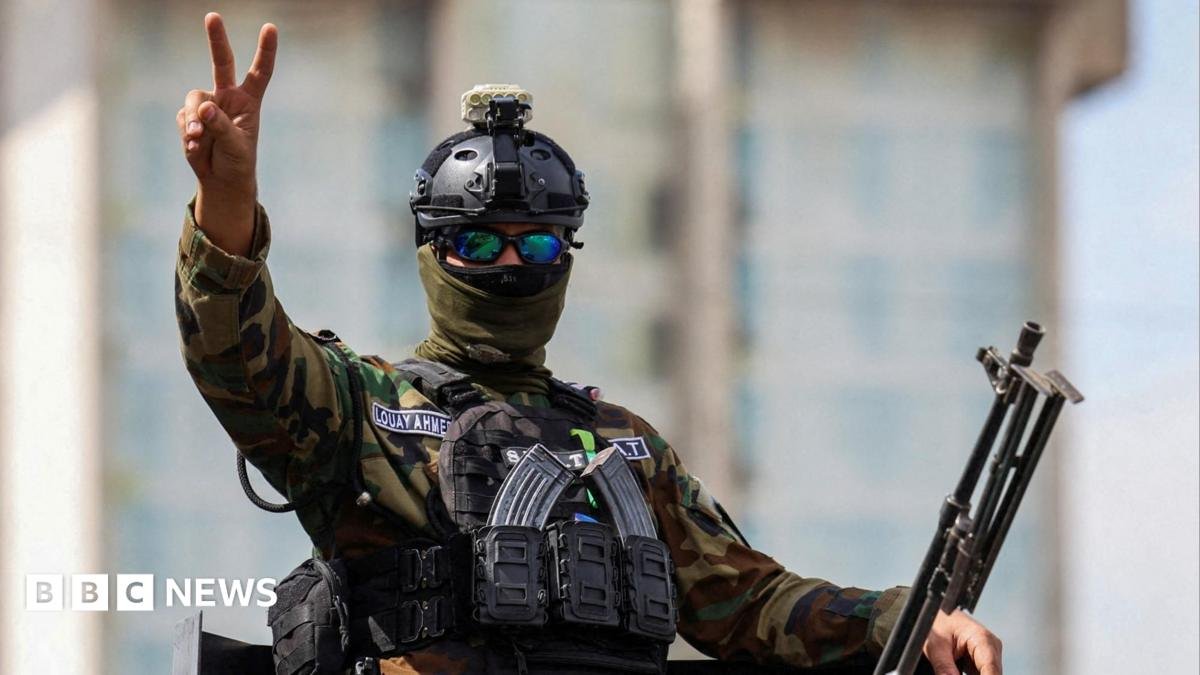
ERBIL, Iraq — British and American military personnel have officially concluded their mission in Iraq, marking the end of a long-standing military presence that has spanned over three decades of conflict and instability. The Ministry of Defence (MoD) confirmed the withdrawal on Wednesday, formally closing a chapter characterized by intense regional warfare and the persistent threat of Iranian-backed militias.
The final pullout from the coalition air base in Erbil comes after months of escalating tensions. Since the outbreak of war between the US, Israel, and Iran earlier this year, the base had become a primary target for hostile forces. At the height of the US bombing campaign against Iran, coalition defenses were under constant duress, at times facing up to 28 drone and missile strikes in a single day.
For the RAF Regiment gunners tasked with protecting the site, the environment was harrowing. In the first six weeks of the conflict alone, British forces were credited with shooting down more than 100 attack drones launched by Iranian-backed militias. The intensity of the threat was such that transport aircraft frequently had to circle the base in holding patterns, waiting for a lull in drone activity before attempting a landing.
The withdrawal follows the departure of hundreds of NATO troops from Baghdad earlier this March. While the mission in Iraq is officially over, the MoD emphasized the long-term impact of the coalition’s work. Since its inception, the mission provided training and assistance to more than 111,000 Iraqi Security Forces, including 21,000 Peshmerga fighters in the Kurdistan Region. Additionally, the RAF conducted thousands of sorties, successfully striking over 2,300 Islamic State (IS) targets.
Despite the exit, the Pentagon maintains that its regional commitment is not entirely finished. US Central Command announced that the coalition’s joint taskforce remains operational, with its command structure relocated to Jordan. Furthermore, both US and UK forces will continue counter-IS operations from the air, particularly over neighboring Syria, where the UN estimates that approximately 3,000 IS fighters remain active.
This withdrawal marks the third time Western forces have pulled out of Iraq since the 1991 Gulf War. The legacy of the coalition’s presence is deeply complex; after the initial 1991 deployment, troops returned in 2003 for the controversial invasion of Iraq, which sparked a brutal sectarian insurgency that claimed the lives of nearly 4,500 US personnel and 179 British soldiers.
When the last of the forces left in 2011, it was envisioned as a permanent end to the involvement. However, the rise of IS forced a return just three years later. As the last transport planes depart Iraqi soil this week, the long-term security implications for the region remain uncertain, with the coalition shifting to a more distant, intelligence-led posture.
Disclaimer: This content is auto-generated for informational purposes only.
Source: Read Original News