





“Don’t blame me for keeping the board order in suspense. I had it on chess-results right from September 1.”
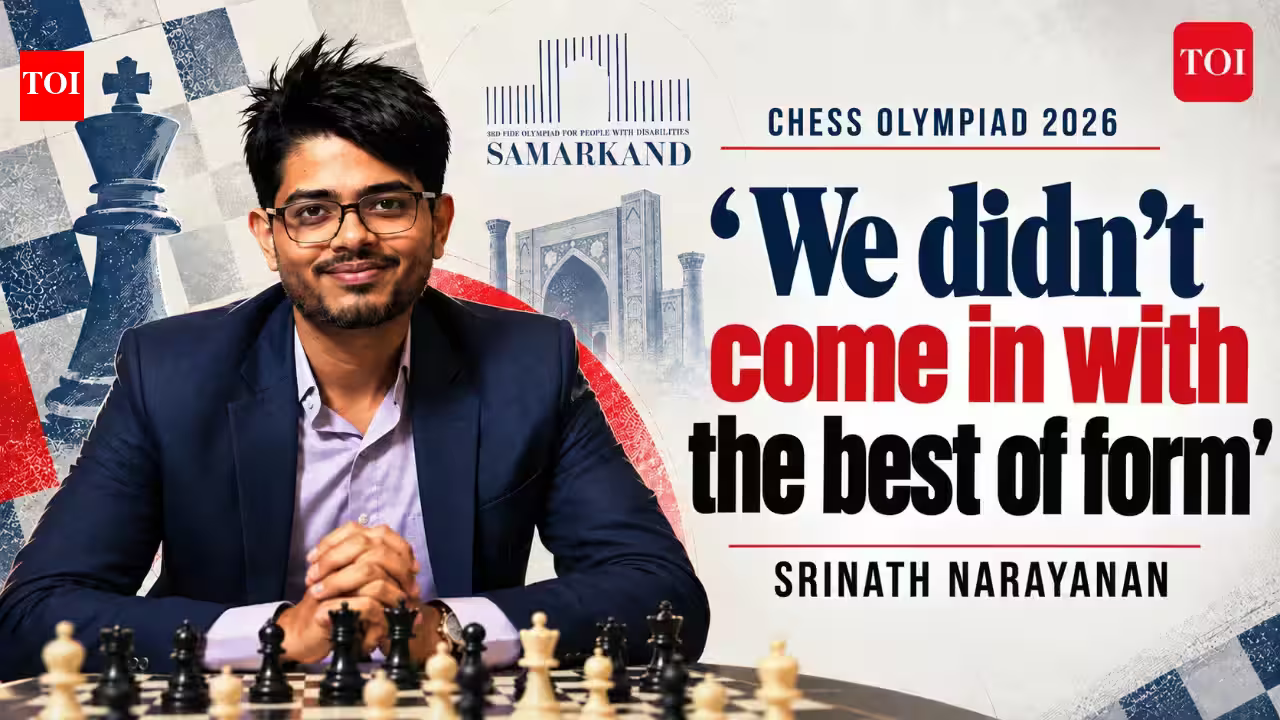
With a lighthearted social media post and a knowing laugh, Indian chess team captain Srinath Narayanan addressed the elephant in the room that had preoccupied followers of the game for weeks leading up to the 46th Chess Olympiad. In a sport where the board order is traditionally dictated by Elo ratings, the placement of World Champion Dommaraju Gukesh on Board 4—rather than the traditional top-board slot he held during India’s historic 2024 gold-medal campaign—was a decision that sent ripples through the international chess community.
Coming off a hard-fought silver-medal finish in Samarkand, the Indian team returned home not with heads bowed, but with a nuanced perspective on their performance. Sitting down with TimesofIndia.com, Narayanan pulled back the curtain on the tactical deliberations, the psychological hurdles his players faced, and why he firmly rejects the narrative that India “missed” the gold.
How Gukesh’s Board Four was Secured
The decision to shift the World Champion down the order was the culmination of weeks of intense consultation. Narayanan revealed that he didn’t reach the conclusion alone, relying on the counsel of veteran Grandmaster Harikrishna and his own dedicated coaching staff.
The impetus for the change stemmed from a troubling dip in form during the earlier Chennai Grand Masters tournament. While rising stars like Arjun Erigaisi and Nihal Sarin were flourishing, Gukesh had struggled to find his rhythm on home soil.
“When someone is going through a bad form like this, they are mentally recuperating, almost like how you come back from a physical injury,” Narayanan explained. “You can’t immediately start physically exerting yourself with the most challenging physical tasks; you have to build towards it. Similarly, mentally, Gukesh had to build towards that.”
In Samarkand, the strategy showed signs of success. Gukesh navigated a ten-game stretch with seven wins and two draws, ultimately securing a silver medal for his performance on Board 4. While a final-round loss to Hungary’s Gleb Dudin was a blemish, the captain sees the tournament as a vital step in Gukesh’s preparation for his upcoming World Championship clash against challenger Javokhir Sindarov.
Looking Ahead to the World Title
With the world title showdown looming, the Olympiad served as a litmus test for Gukesh’s current state. Despite the high-pressure environment, Narayanan believes his ward is trending upward.
“I think Gukesh is in a much better mental space after the Olympiad,” Narayanan noted. Addressing the upcoming match against Sindarov, the coach was characteristically measured. “It will be close, not as one-sided as what the ratings reflect. Javokhir enters with a lot of confidence, but that can change if there’s an early good result for Gukesh. In a match setting, opening preparations get neutralized; it’s going to be a very close, very interesting one.”
Life Inside the Camp: Culture and Chemistry
Beyond the technical board moves, the Indian camp was defined by a culture of trust and shared ritual. The grueling schedule—comprising five hours of play and four hours of preparation daily—could easily have broken a less cohesive unit. Instead, the team leveraged the camaraderie built since their 2022 partnership.
“Every player is a lot of fun, and everyone genuinely cares so much about each other,” said Narayanan. The team established a routine to stay grounded: outdoor sports like padel, daily team walks, and a “man-of-the-match” ritual that helped maintain morale even when individual results wavered.
This spirit proved critical after the tournament’s most painful moment: Nihal Sarin’s heartbreaking queen blunder in a winning position against Nodirbek Yakubboev in round six. That loss, which effectively handed the momentum to eventual victors Uzbekistan, was a heavy blow. Yet, the team’s reaction was unity, not recrimination. A rest day following the match allowed the team to reset collectively, proving that their strength lies as much in their emotional intelligence as it does in their tactical acumen.
The Board-to-Board Picture
Narayanan was quick to highlight the grit displayed by his lineup. He lauded Praggnanandhaa, who led on Board 1 and earned an individual bronze, noting that his play was far superior to what the raw scoresheet suggests. Similarly, Arjun Erigaisi’s tournament was a tale of two halves; after a shaky start, he emerged as a consistent force, proving he truly belongs at the highest level of world chess.
“If we take the first two rounds out, both [Arjun’s] results and his play were at a pretty high level,” the captain observed, reflecting on a tournament that saw his team narrowly miss out on the top prize.
Silver Won, or Gold Missed?
As the dust settles on the Samarkand campaign, the overarching question remains: is a silver medal a success or a disappointment? Narayanan remains steadfast in his refusal to view the result through a lens of regret.
“It’s really important to realize that we have won silver rather than missing gold, because it’s unrealistic to win gold every single time,” he emphasized. “There is no rational reason to have that kind of expectation. There are other teams who are incredibly strong, investing and practicing the same way as us.”
For Narayanan, the fact that India could secure silver while arguably not playing at their absolute peak is the ultimate indicator of the squad’s immense depth. “We were clearly playing our best chess during the 2023-24 period, and considering we were not in the best of our form here and still won silver, that shows how good the team is. At our best, we are going to win gold, by a big margin. But even when we are not at our best, we can still win silver.”
In the high-stakes world of international chess, that resilience may be the most valuable asset of all.
Disclaimer: This content is auto-generated for informational purposes only.
Source: Read Original News