






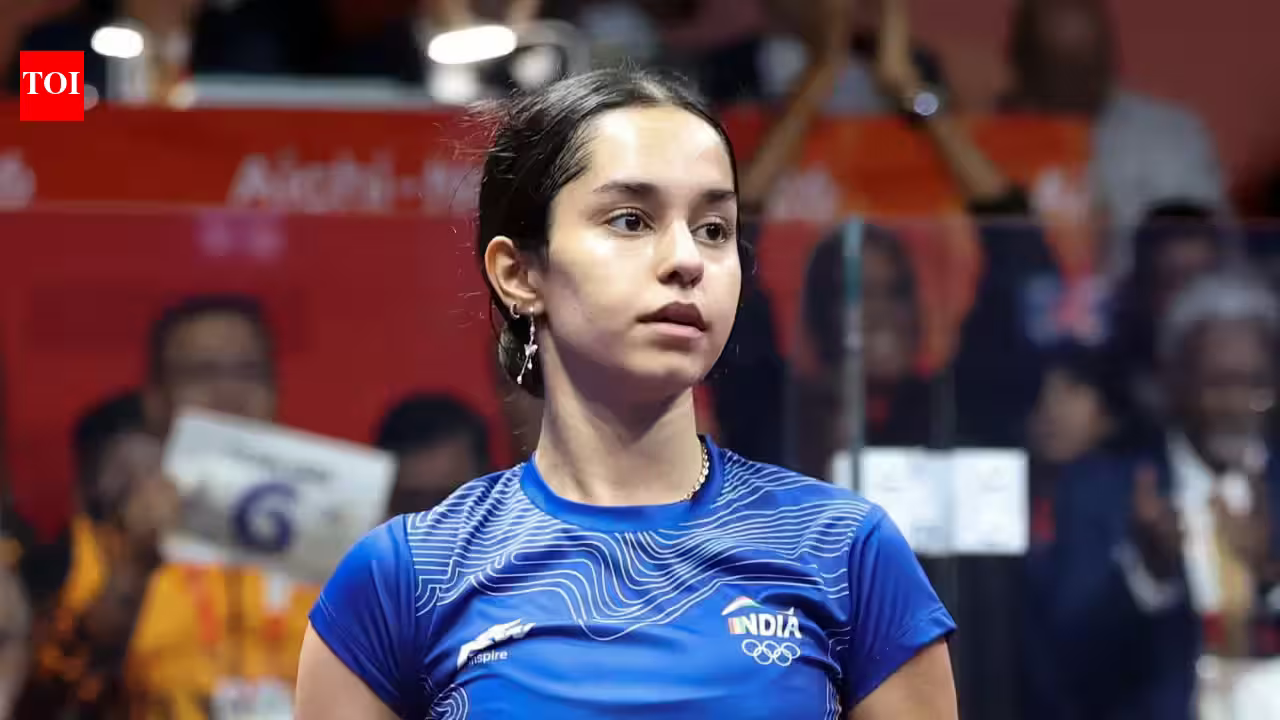
AICHI-NAGOYA — The drama of the Asian Games reached a fever pitch on Thursday as the Indian women’s squash team battled through a heart-wrenching semifinal showdown against Hong Kong. In a contest defined by momentum shifts and near-misses, India ultimately bowed out with a 1-2 defeat, securing a hard-earned bronze medal that punctuates what has been a remarkably productive campaign for the nation’s squash contingent.
While the loss prevents India from advancing to the gold-medal match, the result adds to a glittering collection of honors for the squad. The bronze medal brings India’s squash tally at the Aichi-Nagoya Games to four, building on the momentum established by Anahat Singh and Abhay Singh, who previously captured silver in the singles events, alongside the mixed doubles bronze secured by the veteran duo of Joshna Chinappa and Velavan Senthilkumar.
Anahat’s Heartbreak: A Lead Slips Away
The opening act of the semifinal was nothing short of a psychological rollercoaster. The weight of expectations fell on the shoulders of the teenage sensation, 18-year-old Anahat Singh, who faced off against Hong Kong’s Sin Yuk Chan.
For the majority of the match, it appeared that the rising Indian star was cruising toward an opening victory. Anahat displayed a maturity beyond her years, clinically dispatching the first two games 11-9 and 11-8. The script seemed written for an Indian advantage when Anahat surged to a 10-6 lead in the fourth game, holding four consecutive match points.
However, squash is a sport of razor-thin margins. Chan, refusing to succumb to the pressure, embarked on a miraculous comeback, reeling off consecutive points to snatch the fourth game 13-11. The momentum shift was visceral. In the decisive fifth game, Anahat found herself trailing 7-9 before clawing her way back to parity at 9-9. Despite saving a match point with a clinical backhand drop, Anahat could not stave off the persistent Hong Kong challenger. Chan held her nerve to close out the decider 12-10, handing Hong Kong a 1-0 lead that left the Indian camp reeling.
Tanvi Khanna Keeps Hope Alive
With the team staring down the barrel of elimination, Tanvi Khanna emerged as the catalyst for a potential comeback. Tasked with keeping India’s final aspirations alive against Ka Yi Lee, Khanna endured a difficult start, dropping the opening game 4-11.
The match evolved into a tactical war of attrition. Khanna began extending the rallies, successfully drawing errors from Lee’s racket. The second game proved to be the turning point of the tie, with Khanna fighting through a tense 13-11 scoreline to level the match. Her tenacity shone brightest in the third game, where she overturned a 3-7 deficit to win 11-9, effectively turning the tables on her opponent.
The fourth game was a masterclass in grit. After trailing 4-1 early on and fighting back from a 7-9 hole, Khanna showed remarkable composure under fire. She saved a game point and navigated a high-stakes finish to close out the match 4-11, 13-11, 11-9, 13-11. Her victory provided a much-needed lifeline, forcing the semifinal to a decisive third match.
Joshna Chinappa Falls in Decider
The fate of the tie rested with one of the most storied names in Indian squash, Joshna Chinappa. Facing off against Ho Tze Lok, the veteran was expected to lean on her vast experience to guide India into the finals.
However, Ho Tze Lok proved to be a formidable physical presence, dominating the court from the opening rally. Chinappa appeared to struggle with the pace set by her opponent, dropping the first two games 11-4 and 11-7 as the Hong Kong player dictated play.
In a display of pure defiance, Chinappa mounted a late surge in the third game. With her back against the wall, she saved five match points, turning a blowout into a nail-biting finish. The capacity crowd was on the edge of its seat as Chinappa forced errors, but Ho eventually closed the door on the match at 11-9 in just 21 minutes.
Looking Ahead
The result, while disappointing for the players, reinforces India’s growing stature as a regional powerhouse in the sport. The bronze medal is not merely a consolation; it is a testament to the depth and resilience of a team that fought until the very last rally.
As the dust settles on the women’s event, the Indian contingent will have little time to dwell on the result. With the men’s team semifinal scheduled for later today, there is still ample opportunity for the Indian squad to add to their medal haul in Aichi-Nagoya. Given the tenacity displayed by the women’s team this morning, the men will undoubtedly be looking to channel that same competitive spirit as they seek a spot in the championship final.
Disclaimer: This content is auto-generated for informational purposes only.
Source: Read Original News