








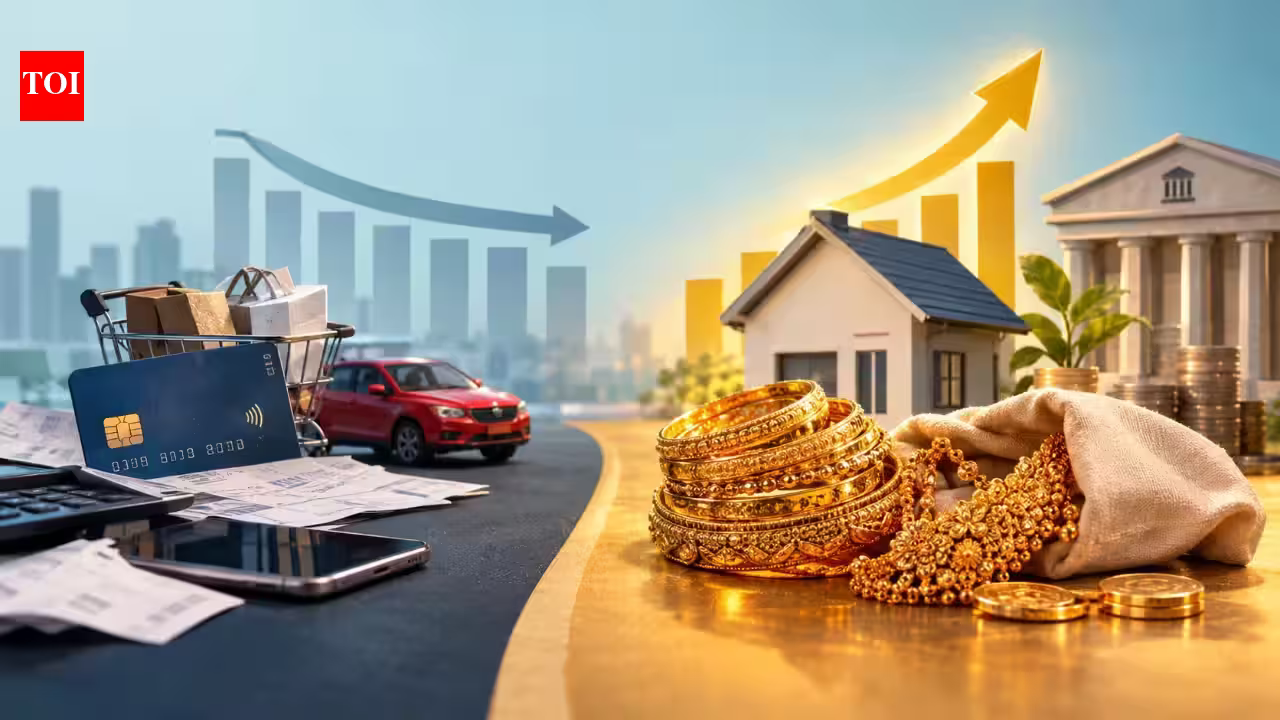
Shifting Patterns in the Indian Credit Landscape
The Indian banking sector is currently witnessing a significant structural recalibration in credit disbursement. Recent sectoral data from the Reserve Bank of India (RBI) underscores a pronounced departure from the consumption-led credit boom that characterized the post-pandemic years. While total outstanding credit has reached Rs 223.9 lakh crore—reflecting a steady 19.1% year-on-year growth—the composition of this incremental lending signals a more cautious approach to discretionary spending among Indian households.
For several years, the surge in credit card usage and consumer durable financing acted as a primary engine for retail growth. However, as of August 2026, the velocity of this expansion has decelerated sharply. Credit card outstandings grew by a modest 3.6% year-on-year, and consumer durable loans rose by a mere 2.4%. These figures indicate that the urban consumer, previously comfortable with leveraging debt for lifestyle upgrades and household appliances, is now tightening their belt. This cooling effect is a critical metric for businesses and investors, as it suggests a shift in household savings behavior and a potential stabilization in the household debt-to-income ratio.
The Resilience of Secured Lending and Gold Monetization
While discretionary lending has entered a slow lane, secured borrowing has emerged as the anchor of the banking system. The most striking trend in recent months is the explosive growth of gold-backed loans. With an 83.2% year-on-year increase in outstanding gold-backed credit, reaching Rs 5.6 lakh crore, the importance of this instrument cannot be overstated.
In the first five months of the current fiscal year, gold loans accounted for roughly Rs 98,096 crore of incremental credit, matching the contribution of home loans almost exactly. This development is significant within the Indian economic context, where gold acts as a traditional store of value. When households face liquidity constraints or choose to defer traditional bank loans, they are increasingly leveraging their physical gold assets to access credit. This pivot toward collateralized borrowing over unsecured personal lines reflects a prudent risk-mitigation strategy by both borrowers and lenders. Banks, faced with rising concerns over credit card delinquency, find gold-backed portfolios significantly more secure and easier to manage during cycles of economic volatility.
Banking Sector Strategy: Risk Aversion and NBFC Synergy
The data also reveals a deliberate shift in how banks are deploying capital across the broader economy. Incremental lending data shows that banks are increasingly channeling funds into lower-risk segments and institutional lending. The surge in lending to Non-Banking Financial Companies (NBFCs), which rose 37.5% year-on-year to Rs 21.6 lakh crore, indicates that banks prefer to offload the complexities of retail credit origination to specialized financiers.
By increasing their exposure to NBFCs and public financial institutions, banks are essentially refining their balance sheet structures to prioritize stability over high-margin, high-risk consumer lending. This trend is further supported by the 43.2% growth in advances against fixed deposits. The rise of these instrument-backed loans suggests that many borrowers are prioritizing liquidity without liquidating their long-term savings, opting for low-interest secured overdrafts instead of high-interest unsecured personal loans. For the banking sector, this represents a transition toward a more conservative credit culture that focuses on balance-sheet security rather than aggressive, consumer-focused growth.
The Vehicle Loan Exception and Infrastructure Impact
Amidst the slowing demand for consumer durables, the automotive sector has shown surprising resilience. Vehicle loans grew by 19.7% year-on-year, adding over Rs 37,000 crore to bank books in just five months. This divergence between consumer durables and the automotive segment is telling. It suggests that while households may be hesitant to take on credit for luxury household items or electronics, the necessity of personal mobility remains a top priority.
The sustained demand for vehicle financing implies that despite inflationary pressures, the demand for personal transportation—which is viewed as a functional necessity rather than a discretionary purchase—remains robust. This trend is likely supported by the ongoing expansion of road infrastructure and the integration of suburban zones into city hubs, making personal vehicle ownership a core requirement for workforce participation. For manufacturers and financiers, this segment remains a vital growth pillar that has successfully resisted the overall cooling of the retail credit market.
Macroeconomic Implications for the Coming Quarters
The cooling of discretionary consumer credit carries significant implications for the Indian macroeconomic outlook. The transition from unsecured consumption-led growth to secured, asset-backed borrowing signals a maturing retail credit market. While this may lead to a temporary deceleration in the consumption of white goods and lifestyle services, it builds a healthier foundation for the long term. Reduced reliance on high-cost credit card debt lowers the interest burden on households, potentially freeing up cash flow for essential spending and long-term investment.
Furthermore, the strength of corporate credit and infrastructure-related lending highlights that the supply side of the economy remains energized. As banks pivot away from riskier retail portfolios, they are providing ample capital to the corporate and industrial sectors, which is essential for sustained gross domestic product growth. Analysts should monitor whether the current trend of gold-backed and fixed-deposit-backed lending continues, as it serves as a reliable barometer for household sentiment. If the current trajectory persists, the banking sector will likely see improved asset quality and reduced non-performing assets (NPAs) in the retail segment, albeit at the cost of slower growth in short-term fee-based income. The Indian credit market is evidently undergoing a necessary transition, moving toward a balanced model where credit is increasingly tethered to tangible assets rather than speculative or lifestyle-driven consumption.
Disclaimer: This content is auto-generated for informational purposes only.
Source: Read Original News