





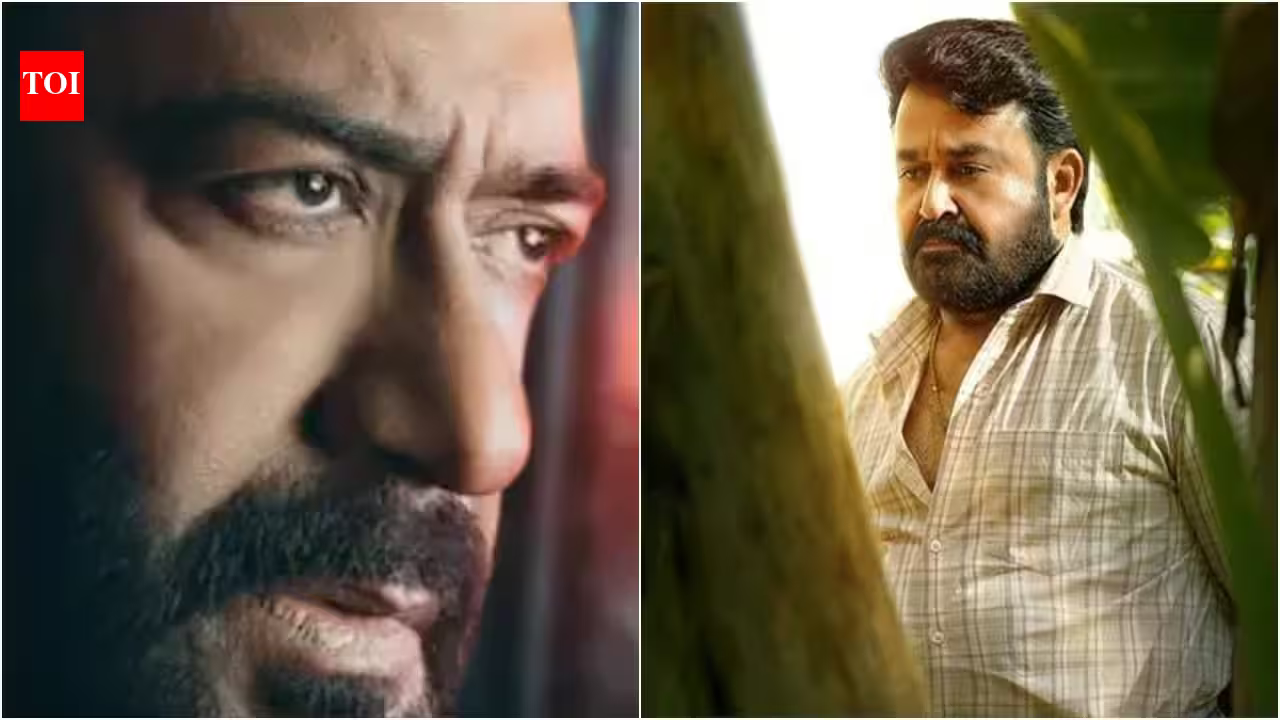
The “Drishyam” phenomenon is, quite frankly, one of the most fascinating case studies in contemporary Indian cinema. What began as a tight, nail-biting Malayalam thriller in 2013 has morphed into a sprawling cross-language saga, a cultural touchstone that has transcended regional borders to become a pan-Indian obsession. As Ajay Devgn’s Drishyam: The Conclusion hits the silver screen, the conversation has once again drifted back to its roots—to the rain-slicked landscapes of Kerala and the man who started it all, Mohanlal.
For those who have followed the saga from the very beginning, this moment feels like a collision of worlds. With two massive iterations now competing for the audience’s attention—one in the darkened halls of our multiplexes and the other readily available in our living rooms via streaming—the debate over which “Georgekutty” (or “Vijay Salgaonkar,” as the Hindi audience knows him) reigns supreme is reaching a fever pitch.
The Evolution of a Master Manipulator
Mohanlal’s return as Georgekutty in the latest Malayalam installment, Drishyam 3: The Past Never Stays Silent, serves as a masterclass in understated acting. In an industry that often celebrates high-octane histrionics, Mohanlal has chosen a different path for this character. He plays Georgekutty not as a criminal mastermind in the traditional sense, but as a man whose greatest superpower is his crushing ordinariness.
Watching the cast—Meena, Ansiba Hassan, and Esther Anil—return to their roles feels less like watching a movie and more like checking in on a family you’ve known for a decade. The chemistry remains the bedrock of the franchise. It is this emotional tether that makes the suspense work; if we didn’t genuinely care about the survival of the Salgaonkar/Georgekutty clan, the elaborate schemes and psychological games would ring hollow.
A Critical Look at the Malayalam Narrative
The critical reception of the latest Malayalam entry has been nuanced, reflecting the difficulty of extending a story that many felt was already perfect by the end of the second film. Our colleagues at ETimes awarded the film three stars, noting that while the technical polish—from Satheesh Kurup’s atmospheric cinematography to Anil Johnson’s haunting, evocative score—is impeccable, the narrative is fighting an uphill battle.
The central critique is one of pacing. When you revisit a story for a third time, the “wow” factor of the initial cover-up has naturally dissipated. The challenge for director Jeethu Joseph was to raise the stakes without feeling repetitive, and while the performances remain grounded and sincere, the screenplay occasionally struggles under the weight of its own legacy. It’s a classic sequel dilemma: how do you add a new layer to a canvas that is already fully painted? For die-hard fans, the journey is worth the watch, even if it lacks the punchy, lightning-in-a-bottle momentum of the original.
Ajay Devgn and the Hindi Interpretation
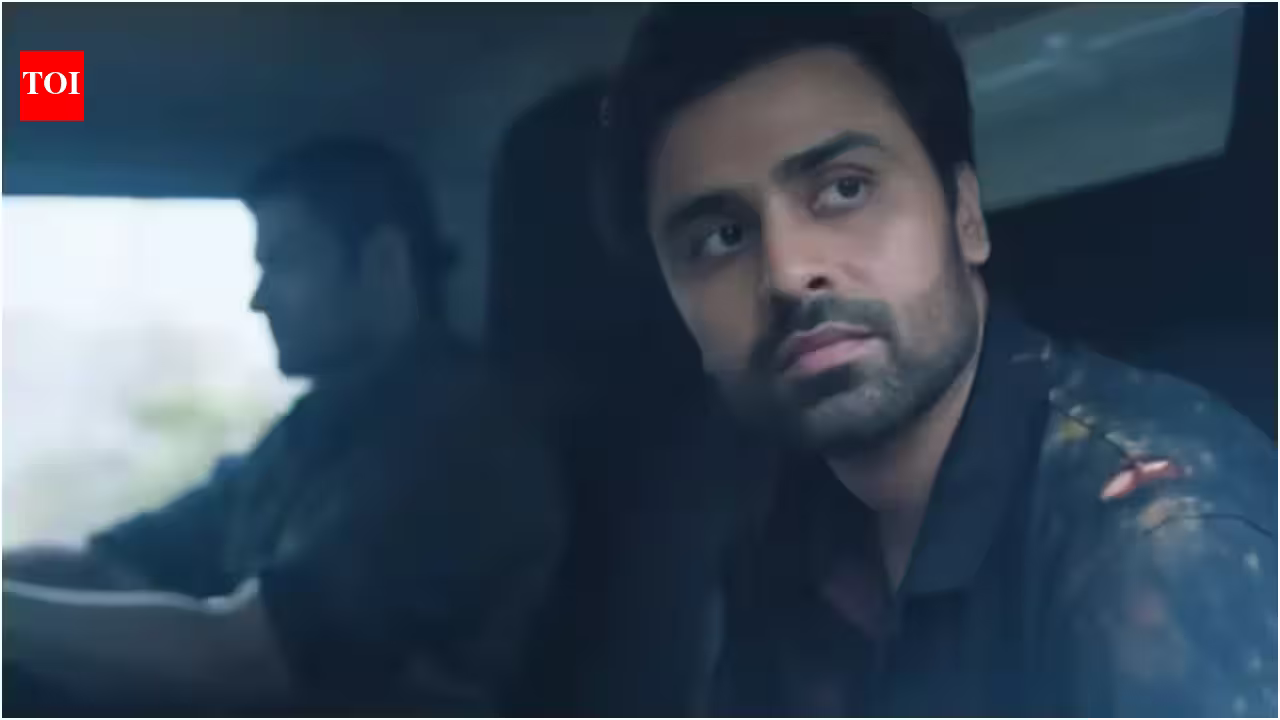
While Mohanlal navigates the psychological depth of the Malayalam original, Ajay Devgn is currently dominating the box office conversation with Drishyam: The Conclusion. Directed by Abhishek Pathak, this version takes the familiar beats of the franchise and wraps them in a high-stakes, big-budget aesthetic that the Hindi-speaking audience has come to expect.
Devgn’s Vijay Salgaonkar feels sharper, perhaps a bit more guarded, reflecting the high-gloss, high-tension world of Bollywood thriller production. The return of Tabu as the indomitable IG Meera Deshmukh adds a layer of intellectual friction that remains the most compelling element of the Hindi franchise. With heavy hitters like Jaideep Ahlawat and Prakash Raj joining the fold, the film aims for a grander scale of confrontation. The question on everyone’s lips isn’t just “what happens next?” but “can this version stick the landing in a way that satisfies the massive expectations of a pan-Indian audience?”
The Streaming vs. Theatrical Dilemma
In the current entertainment landscape, we are uniquely privileged to have access to both versions simultaneously. For the cinephile, this is a rare opportunity to witness the same narrative DNA manifest in two different cultural contexts. Mohanlal’s Drishyam 3 is currently streaming on Amazon Prime Video, providing an accessible gateway for those who want to see how the story concludes in its original home.
Meanwhile, the theatrical release of the Hindi counterpart offers that traditional, communal viewing experience—the collective gasp in a packed theater when the twist is revealed, the shared tension of a climax unfolding on a massive screen. The shift in how we consume these stories—from the living room couch to the Dolby-surround sound theater—significantly changes the “feel” of the mystery.
The Legacy of the Franchise
Ultimately, whether you find yourself gravitating toward the nuanced, earth-toned realism of Jeethu Joseph’s Malayalam masterpiece or the polished, adrenaline-fueled spectacle of the Bollywood conclusion, the “Drishyam” franchise has achieved something remarkable. It has kept a story about a humble cable-TV operator protecting his family relevant for over ten years.
As we look at the box office numbers and the streaming metrics, one thing is clear: the hunger for a well-crafted crime thriller hasn’t waned. We are a culture obsessed with the “perfect crime,” and as long as Georgekutty and Vijay Salgaonkar are willing to keep the secrets of the past buried, we will be right there in the audience, waiting to see if they can escape the consequences of their choices for one more day. The conclusion may be here, but the legacy of the “Drishyam” files is likely to stay in our collective consciousness for years to come.
Disclaimer: This content is auto-generated for informational purposes only.
Source: Read Original News