









Engineering Triumphs and Operational Milestones
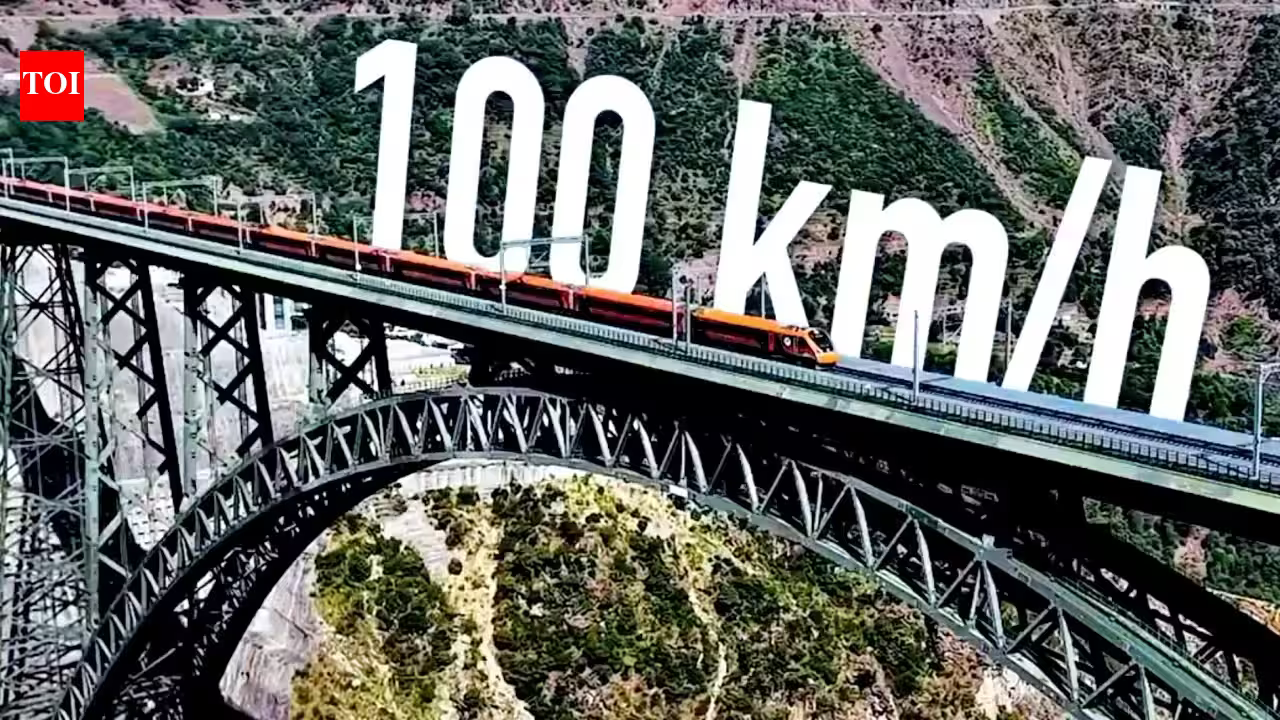
The recent achievement of increasing the maximum permitted speed on the Katra-Banihal railway section to 100 kmph signifies a major advancement in the modernization of India’s transport infrastructure. This 111-km stretch, a critical component of the Udhampur-Srinagar-Baramulla Rail Link (USBRL) project, has now demonstrated its operational resilience by facilitating high-speed transit across some of the most challenging geographical terrains in the world. The successful traversal of the Chenab and Anji bridges at this speed by the Vande Bharat Express validates the structural integrity of the project, which was designed to overcome the limitations posed by the Himalayan mountain range.
For the Indian Railways, this development is not merely a technical performance metric; it represents the culmination of decades of strategic planning and engineering ingenuity. By increasing the speed limit, the transit time between Jammu and the Kashmir Valley is significantly reduced, creating a more efficient logistics chain and enhancing the quality of travel for both tourists and local residents. This move brings the region closer to the national economic mainstream, fostering better integration and accessibility.
The Strategic Significance of the USBRL Project
The USBRL project stands as one of the most complex infrastructure endeavors in the history of independent India. Spanning 272 kilometers and constructed at a total cost of approximately Rs 43,780 crore, the project is essential for ensuring all-weather connectivity to the Kashmir Valley. Historically, travel to this region was frequently disrupted by harsh winter conditions and the challenging topography of the Himalayas. The completion of this rail link serves as a permanent solution to these geographical bottlenecks.
The sheer scale of the project is evident in its technical specifications. With 36 tunnels covering a combined length of 119 kilometers and 943 bridges, the infrastructure represents a monumental feat of civil engineering. The project serves as an economic lifeline for the region, facilitating the movement of local goods, agricultural produce, and essential supplies. By bridging the physical gap between Kashmir and the rest of the country, the railway is expected to catalyze growth in trade, industry, and regional commerce, providing a predictable transport schedule that air and road travel often struggled to maintain.
Specialized Rail Technology for Extreme Environments
Operating high-speed train services in the Himalayan region requires more than just track connectivity; it demands a radical departure from conventional rolling stock design. The introduction of a specially configured Vande Bharat Express on the Katra-Srinagar route highlights the commitment of Indian Railways to technological adaptation. These train sets are engineered to function in sub-zero temperatures, withstanding conditions that could otherwise paralyze standard railway equipment.
Key technical enhancements include heated windshields to prevent fogging and ice accumulation, advanced HVAC systems designed to maintain internal cabin temperature against external freezing, and insulated toilet facilities to prevent freezing of pipes. Safety remains paramount, especially in a seismically active zone. The incorporation of seismic dampers allows the train to manage vibrations and external shocks effectively, ensuring the safety of passengers while the train traverses high-altitude corridors. This specialized approach ensures that the service remains reliable throughout the year, regardless of the seasonal fluctuations in the mountainous region.
The Chenab and Anji Engineering Landmarks
The Chenab Rail Bridge and the Anji Khad Bridge are the crown jewels of the USBRL project, serving as critical touchpoints for the 100 kmph speed milestone. The Chenab Bridge, rising 359 meters above the riverbed, holds the title of the world’s highest railway arch bridge. Standing significantly taller than the Eiffel Tower, the bridge is a masterpiece of material science and structural design. Its ability to withstand wind speeds of up to 260 kmph and its projected service life of 120 years reflect the robust standards applied to modern Indian infrastructure.
Similarly, the Anji Khad Bridge represents India’s first foray into cable-stayed railway bridge construction. Spanning 725 meters and supported by 96 high-tensile cables, the bridge crosses a deep valley that would have been inaccessible through traditional methods. These structures are not only functional bridges but also indicators of India’s growing capability to execute high-stakes civil projects in extreme conditions. The use of specialized structural steel, capable of maintaining integrity across a wide thermal range, demonstrates an adherence to global safety and durability standards.
Economic Impact and Future Prospects
The transition to a 100 kmph speed limit on this section is expected to have a tangible impact on the regional economy of Jammu and Kashmir. Improved connectivity typically leads to increased footfall in the tourism sector, which is a significant contributor to the state’s GDP. With shorter transit times, the valley becomes more accessible to business travelers and domestic tourists, potentially extending the tourist season throughout the year.
Furthermore, the integration of Kashmir into the national rail network allows for the cost-effective transport of local agricultural commodities, such as apples and saffron, to larger markets in Northern India. This reduction in logistics costs can lead to higher profit margins for local farmers and traders. From an industrial perspective, the reliability of the rail link makes the region a more attractive destination for investments in hospitality, retail, and manufacturing sectors. As the Indian Railways continues to monitor the performance of these high-speed services, the USBRL project will likely serve as a blueprint for future infrastructure developments in difficult mountainous terrain across the Indian subcontinent.
The milestone reached on the Katra-Banihal section is a clear indicator that Indian infrastructure is entering a phase of rapid modernization. By combining advanced engineering, weather-resistant technology, and strategic project management, the nation is successfully dismantling the barriers that once isolated one of its most vital regions. The shift toward higher operating speeds is merely the beginning, as the sustained performance of this rail link will undoubtedly pave the way for further upgrades, reinforcing the role of the railway as the backbone of India’s long-distance transport network.
Disclaimer: This content is auto-generated for informational purposes only.
Source: Read Original News