









The Strategic Complexity of Crude Oil Procurement
India, as the world’s third-largest crude oil importer, operates in a high-stakes environment where energy security and fiscal responsibility are inextricably linked. With approximately 88% of the country’s crude requirements met through imports, the national economy is highly sensitive to price volatility, supply chain disruptions, and shifting geopolitical landscapes. For Indian refiners, the selection of crude is far more than a simple comparison of headline discounts; it is a sophisticated, data-driven exercise that balances technical feasibility with macroeconomic risk.
Refiners must analyze a multitude of variables to determine the net profitability of any given cargo. These include the total duration of the voyage, freight costs, insurance premiums, and the specific yield profile of the crude—such as the ratio of high-value transport fuels like diesel, petrol, and jet fuel versus low-value residual products. Furthermore, the processing cost is a critical differentiator. Sophisticated Indian refineries are capable of handling heavier, high-sulfur crude, but these varieties often demand more intensive hydrogen treatment and energy expenditure. Consequently, a lower purchase price for heavy crude, such as Venezuela’s Merey 16, may be offset by higher processing costs or logistical delays, rendering it less attractive than a slightly more expensive but lighter, easier-to-process grade like Russia’s Urals.
Analyzing the Economic Impact of Russian Crude
The post-2022 geopolitical landscape fundamentally altered India’s import patterns. As Western nations curtailed their procurement of Russian energy, India emerged as a primary destination for discounted barrels. The surge in imports from Russia, which grew from a negligible market share of under 2% to nearly 45% of India’s total intake, served as a crucial buffer for the Indian economy during periods of global inflation.
Industry estimates indicate that this shift resulted in significant cumulative savings, calculated at approximately $12 billion between April 2022 and June 2025. However, this advantage is not static. Analyses show that the landed-price benefit of Russian crude has experienced a steady decline, contracting from an average of $13 per barrel in fiscal 2023 to roughly $2.30 per barrel in fiscal 2025. By late July 2026, the discount narrowed even further to just $1-2 per barrel. This narrowing margin serves as a stark reminder to market participants: procurement strategies based on historical discounts are insufficient for future planning. The economic reality is that the “Russian advantage” is diminishing, necessitating a more rigorous, forward-looking evaluation of every new procurement cycle.
The Dual Threat of New US Trade Legislation
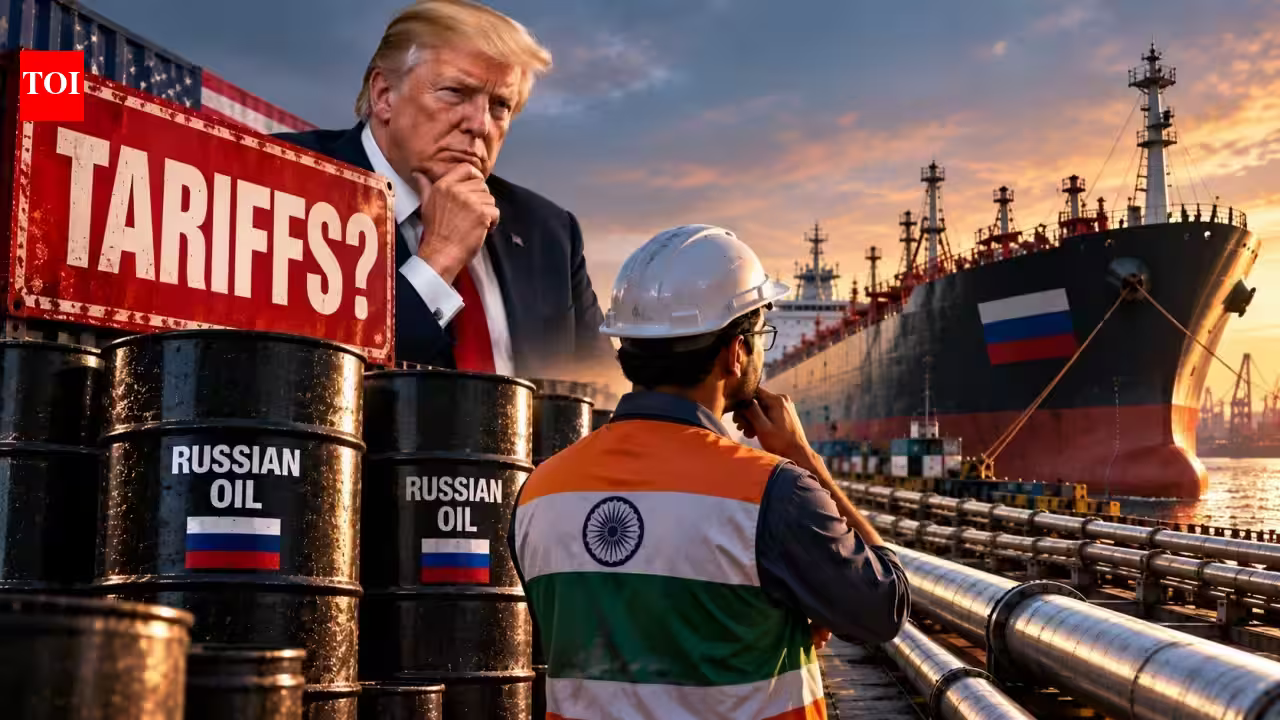
The landscape of energy procurement now faces a potential shift due to the introduction of the Lindsey O. Graham Sanctioning Russia and Iran Act of 2026. This legislation introduces the possibility of steep tariffs on goods originating from countries that continue as primary buyers of Russian energy. While the act does not impose a direct 100% surcharge on every barrel of oil landing at an Indian port, it creates significant secondary exposure for India’s broader export economy.
India’s total goods exports to the United States reached $86.5 billion in fiscal 2026. The legislation effectively forces policymakers to weigh the shrinking savings from Russian oil against the substantial risks to Indian exporters. If the implementation of such tariffs leads to even a modest decline in export volumes, the aggregate economic loss could easily dwarf the remaining marginal gains from buying Russian crude. Furthermore, the act places increased pressure on financial and shipping networks, potentially inflating transaction costs or causing supply chain bottlenecks. In a commercial context, if the transaction costs and export-related risks associated with Russian trade exceed the savings on a per-barrel basis, the fiscal logic for maintaining current import volumes becomes unsustainable.
Navigating the Path Toward Portfolio Diversification
In response to these developments, a flexible and diversified procurement strategy is essential. An abrupt exit from any major supplier—including Russia—is rarely the most efficient path, as it can lead to supply shortages and higher costs for replacement cargoes in an already tight global market. Instead, Indian refiners should focus on building a robust, multi-source portfolio that spans the Middle East, the Americas, and Africa.
A truly resilient strategy relies on maintaining contract structures that allow for volume adjustments based on shifting market conditions. By continuously stress-testing supply sources against fluctuating freight costs, potential insurance premiums, and the risk of payment interruptions, Indian firms can ensure they are not overexposed to any single geopolitical actor. This strategy also opens doors for diplomatic and economic negotiation. India is well-positioned to seek calibrated treatment or waivers from the United States by demonstrating a commitment to diversifying its energy basket and expanding its purchase of American energy products, where price and logistics permit.
Strategic Outlook for Indian Energy Policy
Looking ahead, the focus must shift from the volume-driven procurement of the past to a value-driven, risk-adjusted approach. The multibillion-dollar savings realized during the initial phase of the Russia-Ukraine conflict were a fortunate byproduct of a changing market; however, relying on those gains as a long-term strategy is no longer viable. The forward-looking question for decision-makers is whether each additional barrel contributes to the overall stability of the Indian economy or creates a hidden liability.
Effective energy management in India now requires a synthesis of refinery-level technical capacity and high-level macroeconomic analysis. Where discounts remain substantial and the risks to the wider export sector are mitigated, continued trade is rational. However, where margins are thin and the risk of systemic trade damage is high, active reduction of dependency is the more prudent course. By maintaining this analytical rigor, Indian energy firms can protect their bottom lines while supporting the country’s broader economic objectives, ensuring that energy security remains a foundation for growth rather than a source of vulnerability. The ultimate goal is to maintain a balance that secures affordable energy while safeguarding the nation’s vital commercial interests in an increasingly interconnected and volatile global market.
Disclaimer: This content is auto-generated for informational purposes only.
Source: Read Original News