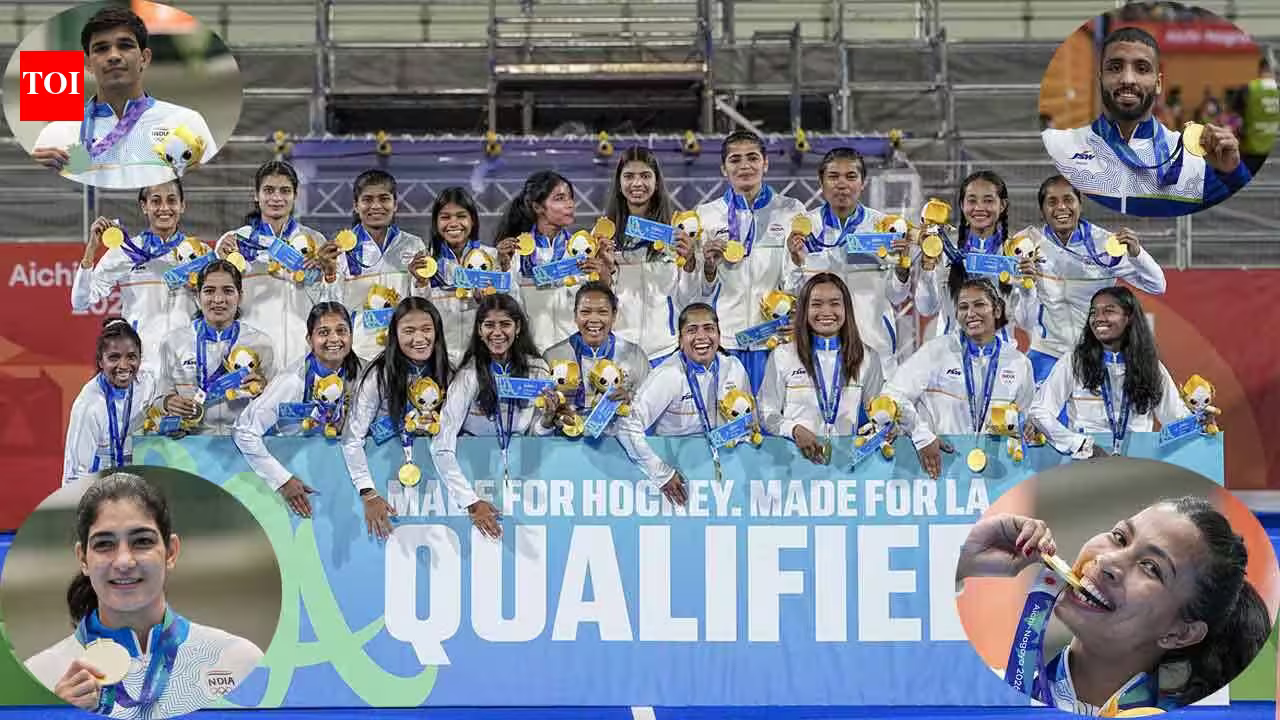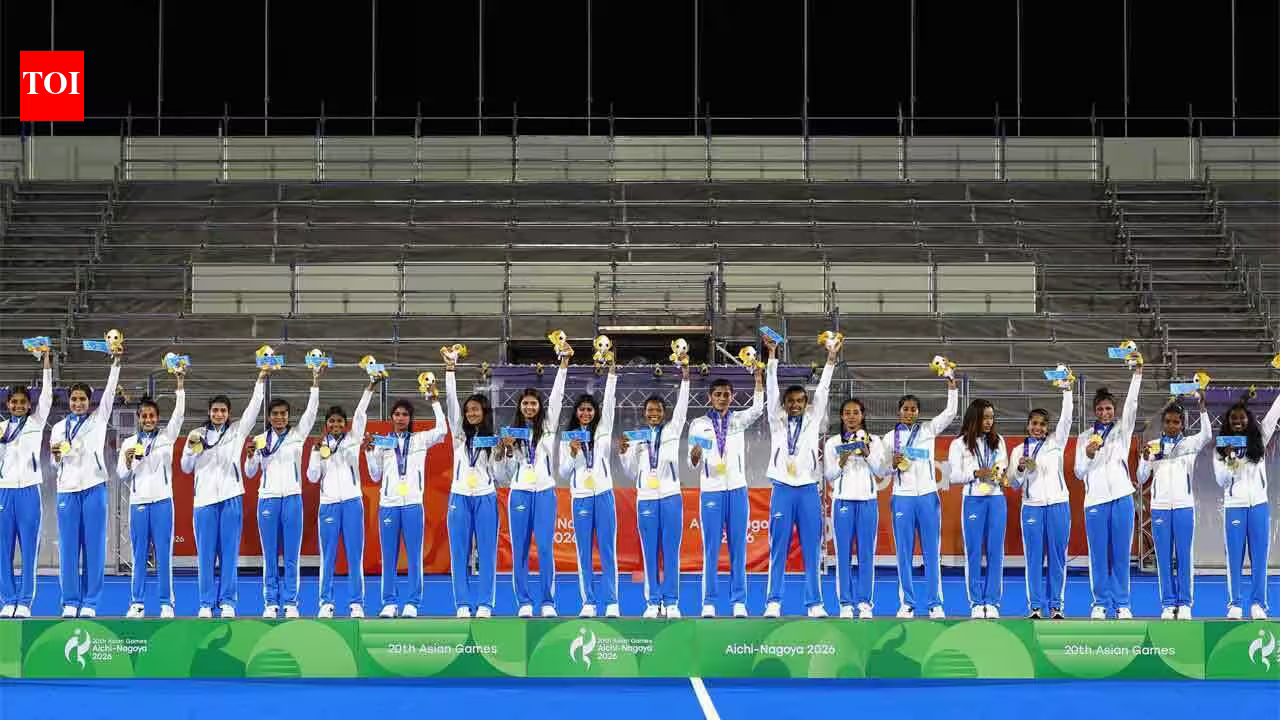







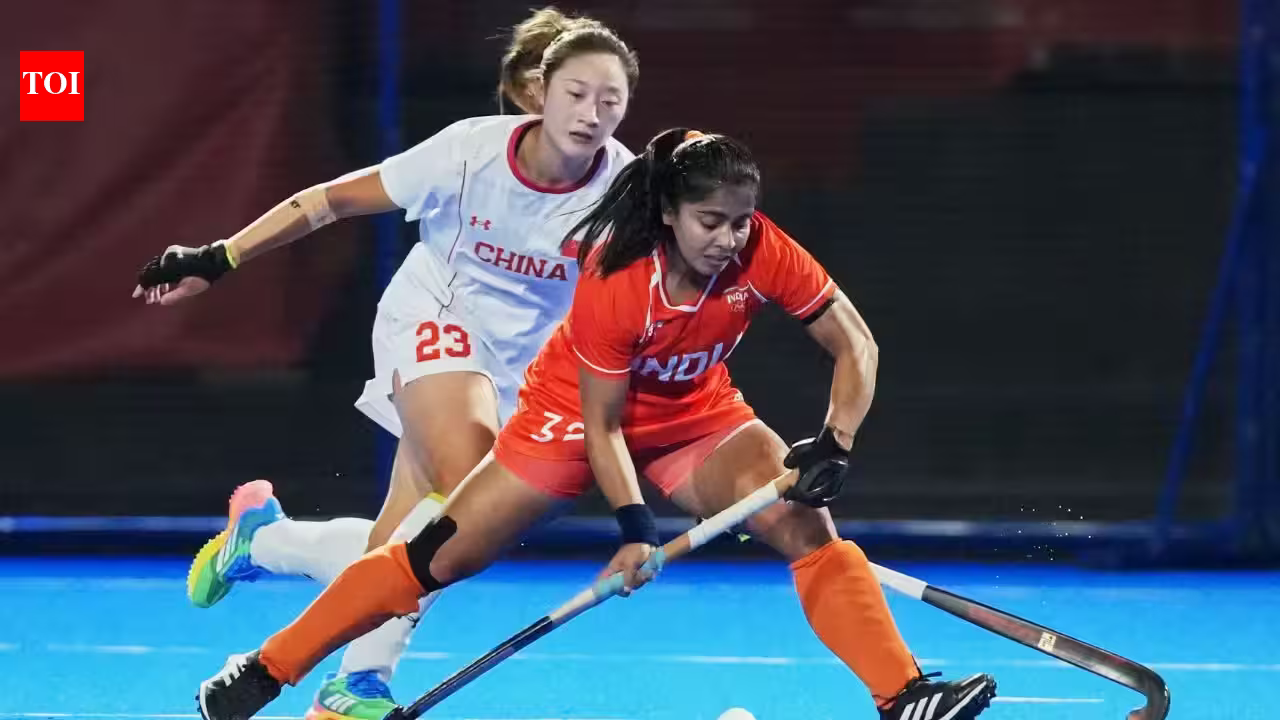
FORTY-FOUR YEARS of heartache, near-misses, and agonizing silver medals were swept away in a single, emphatic stroke on Friday evening in Nagoya, as the Indian women’s hockey team etched their names into the history books. In a masterclass of defensive grit and clinical finishing, India edged past defending champions China 1-0 to claim the Asian Games gold medal, a feat they had not achieved since the inaugural women’s hockey tournament at the 1982 Games.
Beyond the prestige of the continental title, the victory serves a dual purpose that will shape the future of Indian hockey: it confirms India’s direct qualification for the 2028 Los Angeles Olympics, effectively silencing any doubts regarding their standing on the world stage.
Lalremsiami’s Moment of Magic
The final, held under intense pressure in Japan, began as a cagey affair. China, looking to leverage their status as defending champions, signaled their intent immediately. In the opening five minutes, the Chinese forward line swarmed the Indian circle, forcing the backline into a frantic sequence of tackles. India’s defense, however, remained disciplined, refusing to yield to the early onslaught.
As the Indian side found their rhythm, they began to dictate the pace of the midfield transition. The breakthrough came in the 10th minute, a moment that will undoubtedly be replayed for years to come. Lalremsiami, displaying the predatory instincts that have made her a talismanic figure for the squad, picked up the ball in a dangerous area. With little room to maneuver, she unleashed a thunderous reverse hit that soared into the roof of the net, leaving the Chinese goalkeeper helpless.
That 1-0 lead proved to be the bedrock of India’s success. While China dominated possession for the remainder of the first quarter, they found no way past an Indian wall that seemed determined to defend the lead with their very lives.
Savita Punia: The Wall of Nagoya
If Lalremsiami provided the spark, captain and goalkeeper Savita Punia provided the soul of the performance. The second quarter saw the most critical juncture of the match when China was awarded a penalty stroke following a defensive lapse in the Indian circle. The tension in the arena was palpable as Zhang Ying stepped up to take the shot, looking to restore parity.
Savita, a veteran of countless high-stakes battles, remained unflappable. As Zhang struck the ball toward the bottom left, Savita moved with lightning reflexes, diving horizontally and producing a sensational one-handed save. It was not just a save; it was a psychological blow to the Chinese team, who realized that breaking this Indian defense would require more than just technical precision—it would require a miracle.
The momentum continued to fluctuate throughout the middle stages of the game. In the 28th minute, a surging run by Navneet Kaur almost doubled India’s lead. After dispossessing a Chinese midfielder, Navneet danced past her marker and threaded a dangerous pass toward the attacking circle, only for a last-ditch interception from a Chinese defender to clear the danger.
Defensive Fortitude Under Pressure
As the game bled into the third and fourth quarters, the narrative shifted entirely toward the resilience of the Indian squad. Trailing by a single goal, China threw caution to the wind, mounting wave after wave of attacks. The Indian players could be seen throwing their bodies on the line, blocking shots, and intercepting crosses with a desperate, collective intensity.
The midfield, led by the tactical brilliance of the coaching staff, successfully disrupted China’s flow, forcing the opponents into rushed shots and unforced errors. Even as the clock ticked down toward the final hooter, the Indian defense refused to drop their guard, maintaining their shape and composure despite the deafening roar of the home-like atmosphere favoring the favorites.
When the final whistle sounded, the emotional release was immediate. For the players who had endured the heartbreak of silver-medal finishes in 1998 and 2018, this was more than just a victory—it was a vindication of their lifelong commitment to the sport.
A New Dawn for Indian Hockey
This gold medal marks a watershed moment for Indian women’s hockey. Since their last gold in 1982, the team had often been cast as the “nearly-men” of the Asian circuit, repeatedly falling at the final hurdle. Today’s performance suggests a fundamental shift in the team’s mindset—a move from merely competing to winning under the most grueling circumstances.
With the Asian Games gold in the bag, the focus now pivots toward the international calendar. By securing the direct Olympic ticket to Los Angeles 2028, the team gains the luxury of a long-term development cycle, free from the stresses of qualifying tournaments.
As the Indian contingent stood on the podium, draped in tricolor flags with gold medals around their necks, they stood not just as champions of Asia, but as a team transformed. The 44-year wait is over, but for this golden generation, the journey to cementing India’s place among the global hockey elite has only just begun.
Disclaimer: This content is auto-generated for informational purposes only.
Source: Read Original News