





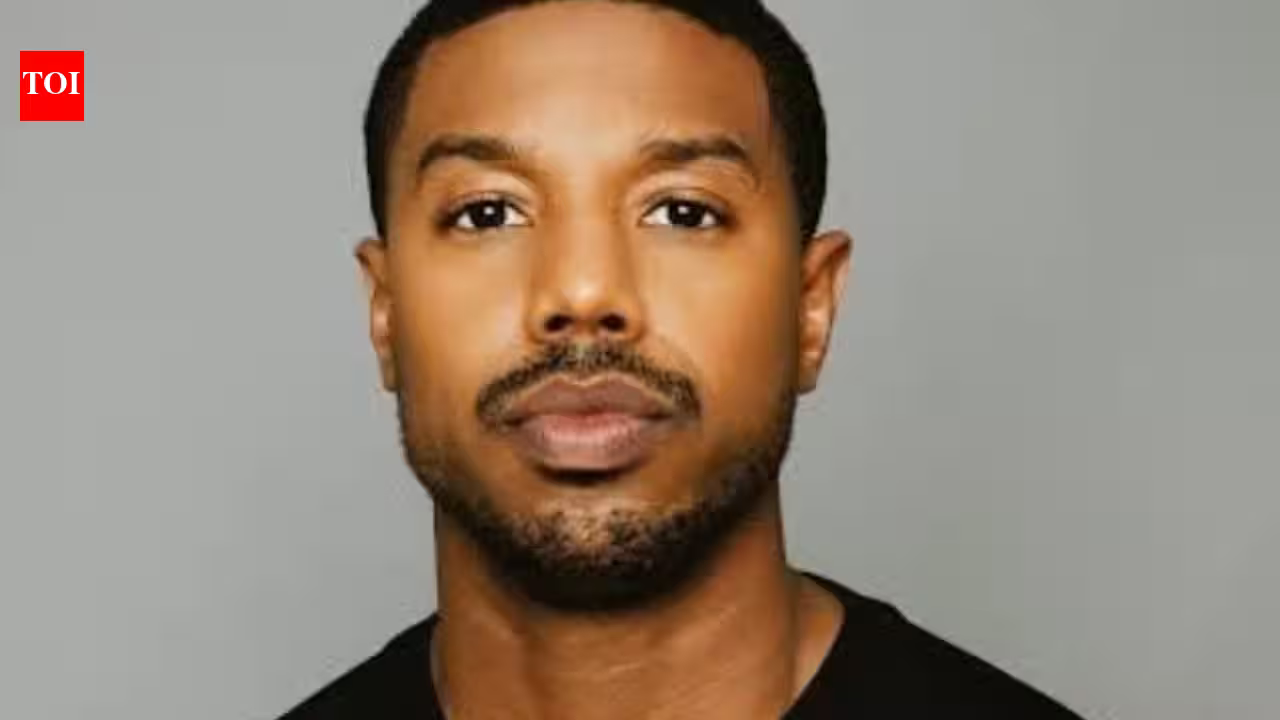
The red carpet at the 2026 Critics Choice Awards was, as expected, a whirlwind of high-fashion statements and industry buzz. But amidst the clamor of camera shutters and the breathless questioning of Hollywood’s elite, Michael B. Jordan offered a moment of grounded clarity that felt less like a soundbite and more like a manifesto. When asked about his trajectory for the coming year, the Creed star didn’t pivot to box office projections or his next high-octane franchise project. Instead, he distilled his philosophy into a singular, resonant ambition: “Continue to try to be the best version of yourself.”
It is a sentiment that sounds simple—perhaps even cliché—until you look at the man saying it. Jordan, whose career has been a masterclass in calculated, disciplined evolution, isn’t talking about the frantic, performative self-optimization that dominates social media feeds. He’s talking about the quiet, grueling work of iterative progress. In an industry that demands constant reinvention, Jordan’s message serves as a reminder that the most significant growth rarely happens in the spotlight; it happens in the margins of our daily lives.
What is the meaning of the quote by Michael B. Jordan?
At its core, Jordan’s mantra is an antidote to the “all-or-nothing” mentality that plagues modern ambition. We live in a culture that fetishizes the “glow-up”—the overnight transformation, the dramatic weight loss, the sudden meteoric rise. Jordan’s words pivot away from this unsustainable narrative. By emphasizing the phrase “continue to try,” he acknowledges that life is not a linear climb toward a summit of perfection, but a jagged, non-linear trek.
The beauty of this perspective lies in its flexibility. It makes room for the human condition—for the days when productivity hits a wall, when goals feel unreachable, and when the “best version of yourself” feels lightyears away. When we strip away the demand for giant, film-worthy leaps, we are left with the small, compounding interest of daily choices. Whether it’s how we tackle a challenging professional hurdle or how we navigate a difficult conversation with a loved one, the “best version” is simply the version that is slightly more honest, more focused, or more intentional than the one we were yesterday.
Why is the quote relevant today?
We are currently living in the “Highlight Reel Era.” Every time we unlock our phones, we are bombarded with the curated successes of others. It’s an environment designed to foster comparison, making it dangerously easy to mistake someone else’s mid-season for your own beginning. When you measure your internal progress against the polished external presentation of your peers, you are guaranteed to feel like you are falling behind.
Jordan’s focus on the individual journey acts as a vital recalibration. By shifting the goalpost from “being better than them” to “being better than I was,” he offers a path toward sustainable mental health. It’s a message that resonates deeply with audiences who are exhausted by the performance of success. It turns the focus inward, encouraging us to use our own past experiences as the only true benchmark. When you stop competing with the world and start competing with your own history, you reclaim agency over your trajectory.
The Architecture of a Career: Early life of Michael B. Jordan
To understand why Jordan speaks with such authority on the subject of self-growth, one has to look at the foundations he laid long before he became a household name. Born in 1987 in Santa Ana, California, and raised in the grit of Newark, New Jersey, Jordan’s path was anything but a straight line to superstardom. He began as a child model and commercial actor, a grind that teaches rejection and resilience early on.
Those early years were characterized by a steady, almost workmanlike approach to the craft. Roles in iconic series like The Wire—where his portrayal of the doomed yet deeply human Wallace broke hearts across the country—and his transformative stint on Friday Night Lights as Vince Howard weren’t just stepping stones; they were laboratories. In these roles, Jordan wasn’t just playing characters; he was learning how to command a screen, how to inhabit the moral complexities of his subjects, and how to operate within a cast ensemble. He was, in essence, practicing the very philosophy he now espouses: consistently showing up and refining his instrument.
The Breakthrough and the Blueprint
The true turning point in his narrative arrived with 2013’s Fruitvale Station. Directed by his longtime collaborator Ryan Coogler, the film was a visceral, devastating portrayal of Oscar Grant’s final hours. For Jordan, it was the moment the industry stopped seeing him as a “promising young actor” and started viewing him as a heavyweight presence. He carried the weight of the tragedy with a quiet, devastating restraint that silenced any skepticism about his range.
That performance set a high bar, one he would later clear and elevate with his turn as Erik Killmonger in Black Panther. It is difficult to overstate the impact of that performance; he managed to turn a comic book villain into a figure of tragic, profound dimension, effectively stealing every scene he occupied. By consistently choosing roles that demand both emotional vulnerability and physical prowess—from the grueling training of the Creed series to the dramatic gravity of Just Mercy—Jordan has demonstrated a career path that mirrors his personal philosophy. He doesn’t stay in one lane; he expands his boundaries.
As we look toward 2026, the takeaway from Michael B. Jordan is clear. Whether you are an A-list actor or someone simply trying to navigate the complexities of a changing world, the secret isn’t in finding a magic solution. It’s in the persistence of the attempt. It’s about the refusal to settle for who you were yesterday, and the courage to iterate, one small, conscious choice at a time. After all, the best version of yourself isn’t a destination—it’s the company you keep on the way.
Disclaimer: This content is auto-generated for informational purposes only.
Source: Read Original News